Push Wagons vs Ride-On Cars for Multi-Kid Toddlers
Comparing push wagons and ride-on cars for toddlers aged 1–2 in sibling households, including sharing, tipping risk, indoor use, storage space, supervision and everyday practicality.
Compare prices and availability
Check current prices and availability for this guide on eBay.
As an eBay Partner, we may be compensated if you make a purchase.
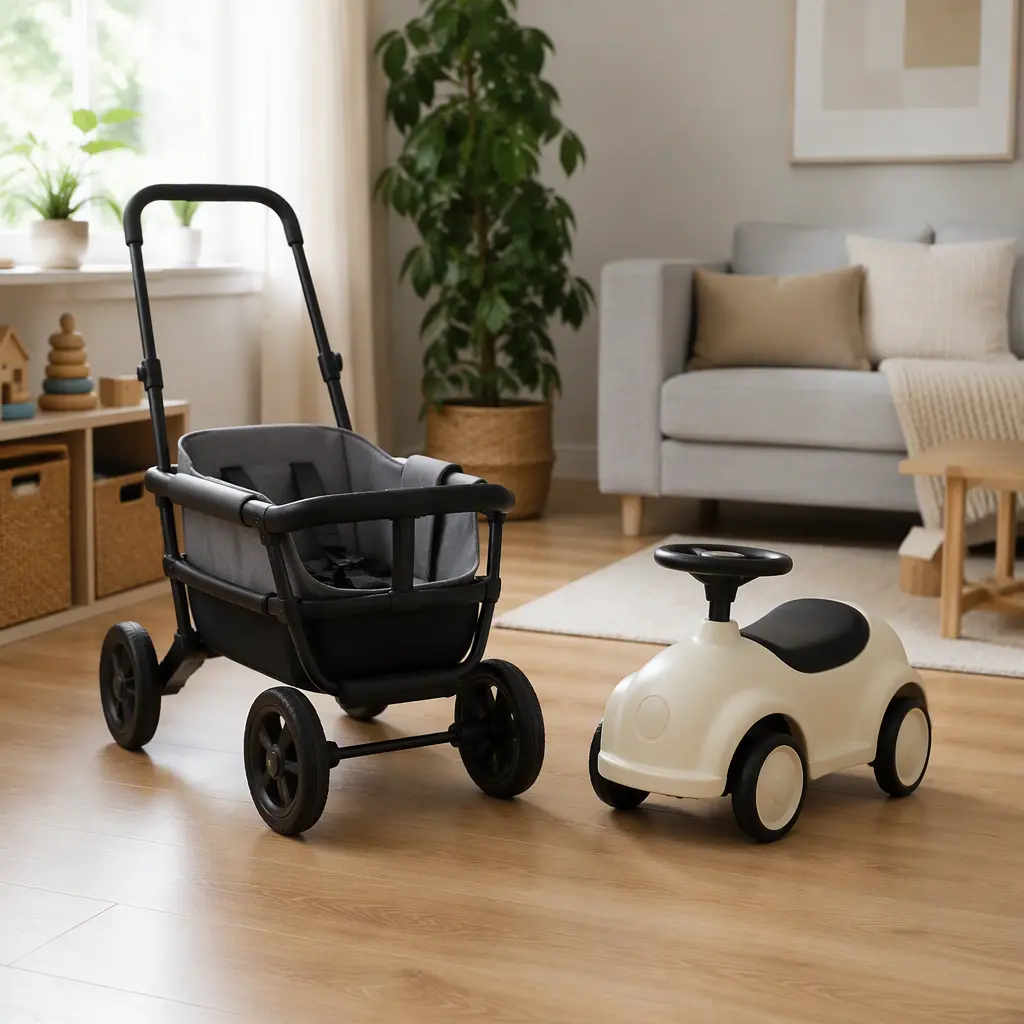
For households with more than one toddler, ride-on toys can become either a shared activity or a daily argument over turns. Push wagons and ride-on cars are both popular for children aged 1–2, but they work very differently once siblings, limited floor space and indoor play are part of the picture. Push wagons usually focus on transporting toys or carrying one child while another pushes, while ride-on cars are designed around independent movement and simple gross motor play. Choosing between them often comes down to how much space is available, how closely children need supervision, and whether the toy needs to work indoors as well as outside.
What to look for
For toddlers between 1 and 2 years old, stability and ease of use matter more than speed or extra features. Multi-kid households also benefit from toys that reduce conflict rather than create it. Some ride-ons are narrow and easy to tip during fast turns, while some wagons become awkward indoors because of their turning radius or storage footprint. Parents often find that the most practical option is the one that fits naturally into daily routines rather than the toy with the most accessories.
- Wide wheel bases generally feel steadier for new walkers and early riders.
- Push handles can help older siblings guide younger toddlers, but they also require closer supervision indoors.
- Low seating heights are easier for 1-year-olds to climb on and off independently.
- Hard plastic wheels may slide on smooth indoor flooring and create more noise.
- Wagons usually take up more storage space than compact ride-on cars, especially in apartments.
- Ride-on cars encourage independent leg movement and coordination but are harder to share at the same time.
- Removable toy storage compartments can make cleanup easier in shared play areas.
- Lightweight toys are easier for parents to move but may slide more during active play.
Age suitability
Children at the younger end of this age range often need slower, steadier toys with predictable movement. Around 12 months, many toddlers are still learning balance and may use ride-on toys more as support while standing or pushing. Push wagons can suit this stage because they move at walking speed and often involve cooperative play with a sibling. By closer to age 2, many toddlers enjoy the independence of ride-on cars and can steer more confidently around furniture or outdoor paths. Temperament matters too. Active toddlers who constantly climb may outgrow simple wagons quickly, while cautious children sometimes prefer wagon-style play because it feels more stable and social.
Options compared
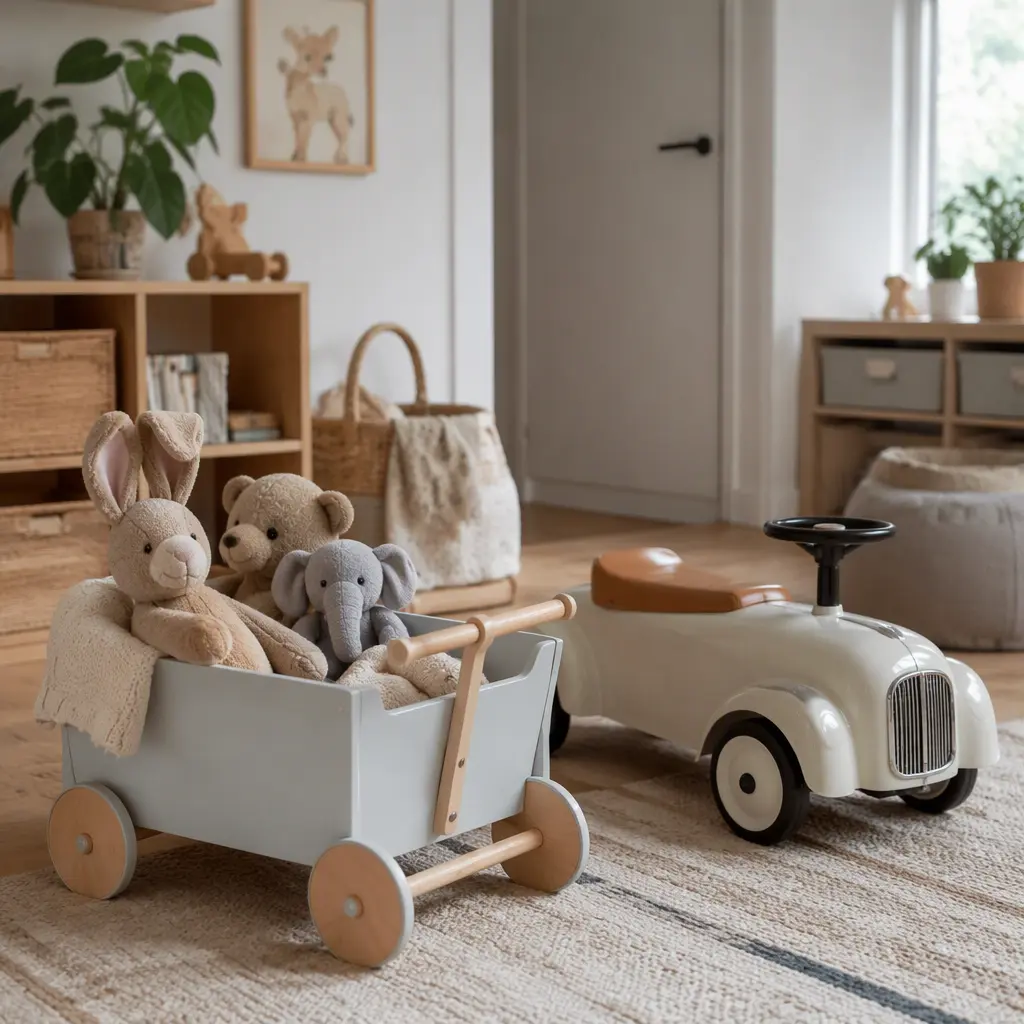
Push wagons tend to work best for sibling households where children are close in age and enjoy interactive play together. One child can push while the other rides or transports toys, which can reduce waiting turns. Wagons also suit toddlers who are still developing confidence with walking because the activity is slower and less focused on steering skills. The trade-off is size. Even compact wagons can be awkward in narrow hallways or smaller living rooms, and some are difficult to store once playtime ends.
Ride-on cars are usually easier to maneuver indoors and often fit better in apartments or smaller homes. They encourage independent movement and leg coordination, making them appealing for energetic toddlers who like constant motion. However, most ride-on cars are designed for one child at a time, which can create conflicts in sibling households unless families plan for turn-taking or eventually add a second toy. Ride-on cars can also become noisy on hard flooring, especially with rigid plastic wheels.
- Push wagons suit cooperative play, toy transport and slower indoor movement.
- Ride-on cars suit independent toddlers who enjoy active movement and steering.
- Wagons generally require more floor and storage space.
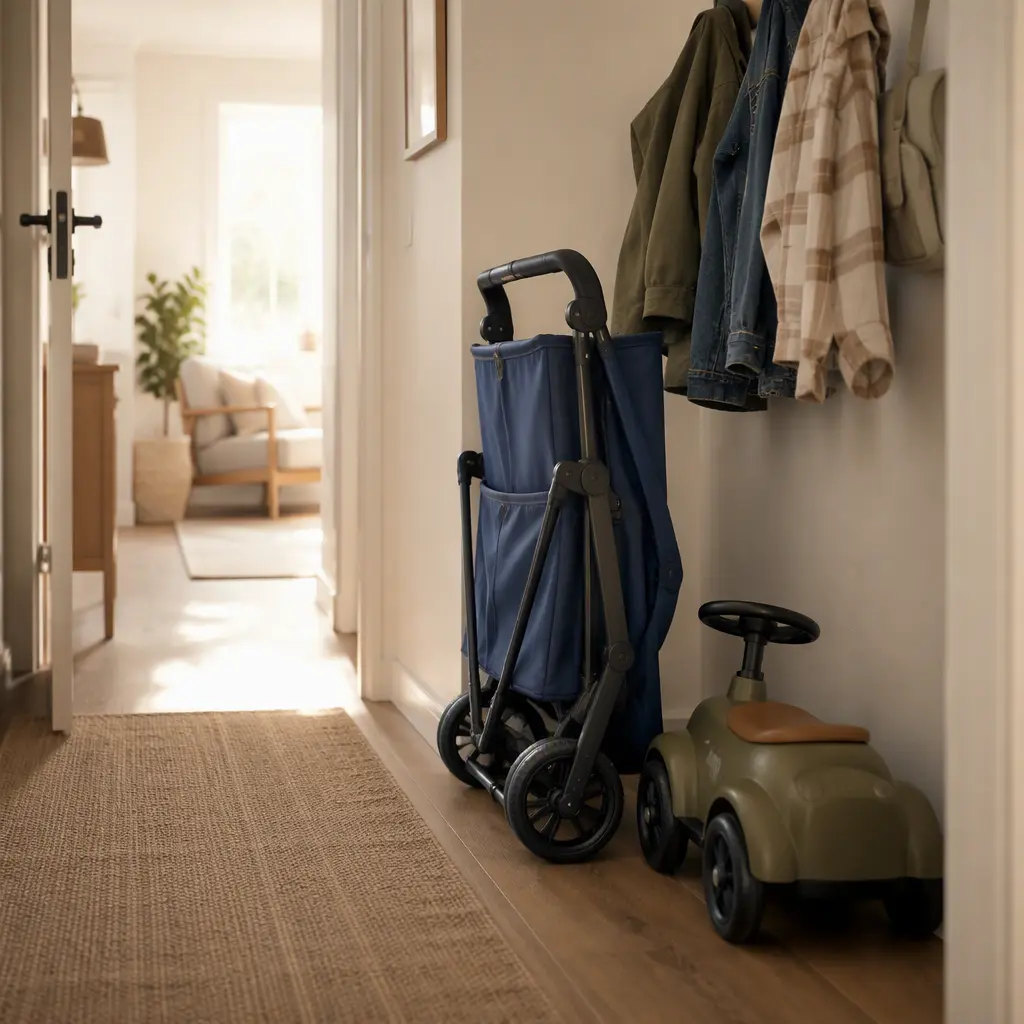
- Ride-on cars are often easier to carry, stack or tuck into closets.
- Wagons may feel steadier for cautious toddlers or new walkers.
- Ride-on cars can become frustrating for siblings if only one child can use the toy at a time.
- Indoor households may prefer quieter wheels and compact turning ability over large outdoor-style designs.
- Families with mixed ages sometimes prefer wagons because older siblings can help push younger toddlers safely.
Frequently asked questions
Are push wagons safer than ride-on cars?
Neither option is automatically safer. Stability depends on wheel spacing, seat height, floor surface and how the toy is used. Push wagons often move more slowly, which can reduce sudden tipping, but children can still fall while climbing in or out. Ride-on cars can tip during sharp turns or if toddlers lean heavily to one side.
Which option works better in small apartments?
Compact ride-on cars are usually easier to manage in smaller homes because they turn more tightly and store more easily. Push wagons can feel bulky indoors, especially if they cannot fold or stand upright when not in use.
Do toddlers actually share wagons better?
Many families find wagons easier for shared play because the activity naturally involves two roles: riding and pushing. That does not remove all disagreements, but it can reduce direct competition compared with a single-seat ride-on car.
Are ride-on toys too noisy for indoor use?
Noise levels vary depending on wheel material and flooring. Hard plastic wheels on tile or hardwood can become loud during repeated indoor use. Softer wheels are often quieter and gentler on floors, although they may not roll as smoothly outdoors.
Should outdoor use affect the decision?
Yes. Families with safe outdoor space may get more long-term use from larger wagons or sturdier ride-ons designed for sidewalks and patios. Indoor-focused households often benefit more from compact, lightweight toys that are easier to move and store daily.
For most sibling households with toddlers aged 1–2, the better choice depends less on appearance and more on how the toy fits everyday family life. Push wagons often support shared play and slower movement, while ride-on cars usually save space and encourage independent activity. Looking closely at storage, indoor flooring, supervision needs and how children typically play together can make the decision much easier before another large toy enters the house.