Push Tractors vs Ride-On Cars for Uneven Yards
Compare push tractors and ride-on cars for 3–5 year olds using uneven lawns or gravel paths. Learn about traction, tipping risk, storage, durability and supervision needs before buying.
Compare prices and availability
Check current prices and availability for this guide on eBay.
As an eBay Partner, we may be compensated if you make a purchase.
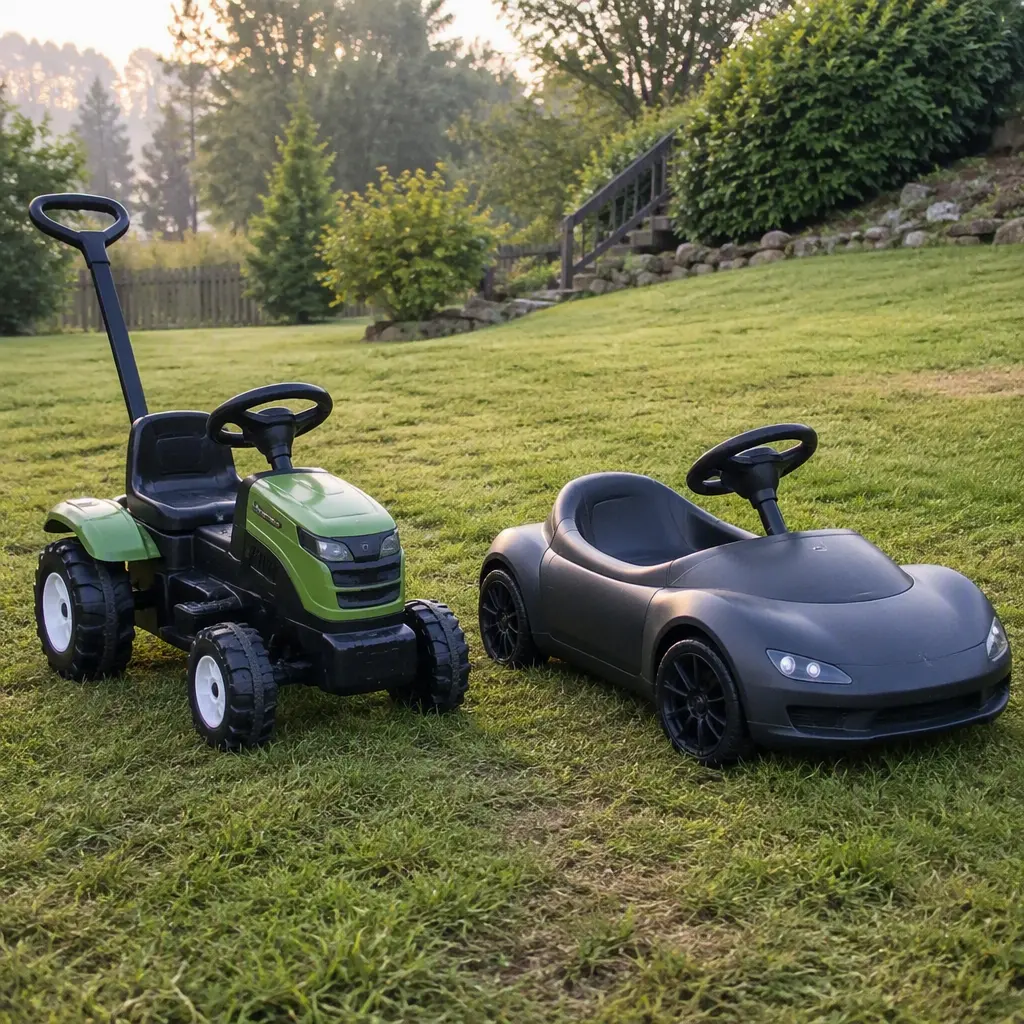
Choosing between a push tractor and a ride-on car for a bumpy backyard is less about style and more about how the toy handles uneven ground. In yards with patchy grass, tree roots, gravel edges or slight slopes, wheel design and body shape can affect stability, steering and how often children get stuck. For children aged 3–5, both toy types can support active outdoor play without screens, but they suit different spaces and play habits. Parents also need to think about outdoor storage, cleaning, supervision and whether the toy can realistically move across the surfaces already in the yard.
What to look for
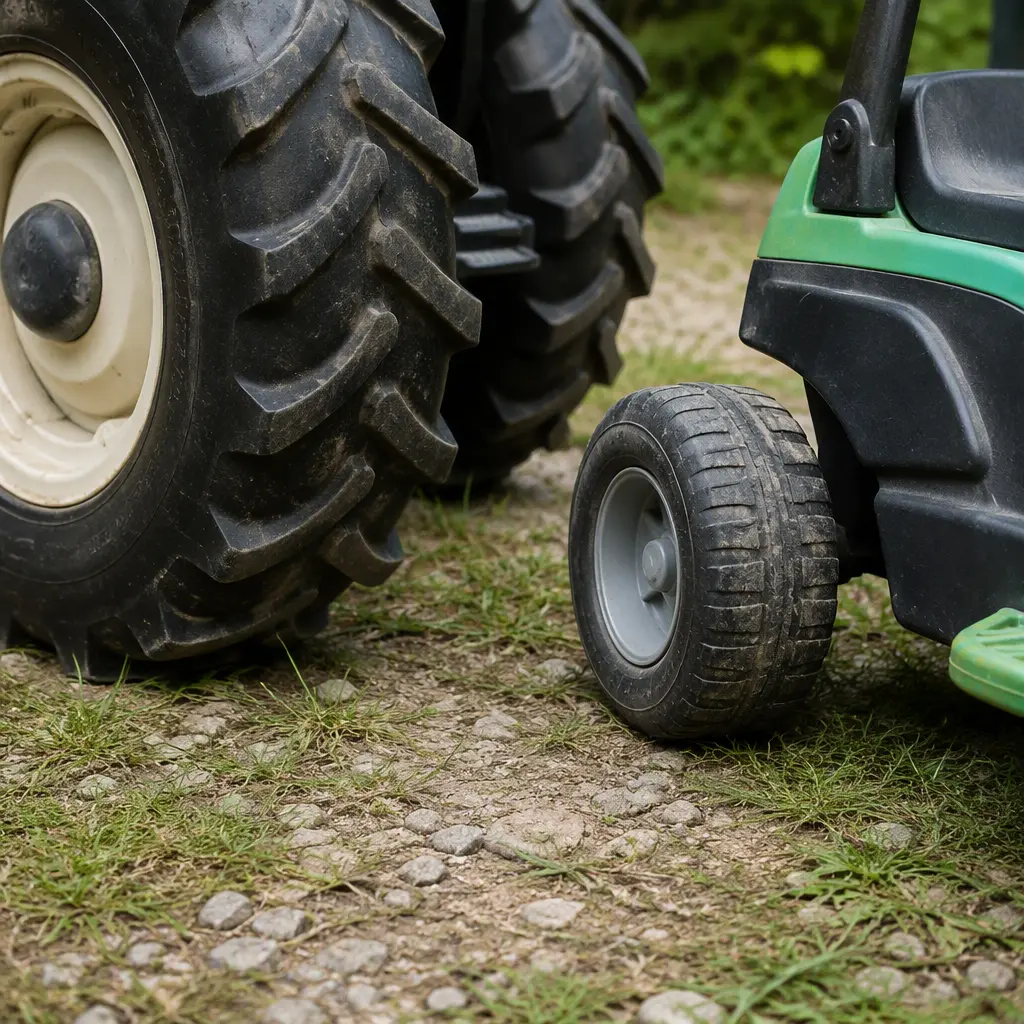
For uneven yards, wheel size and ground clearance usually matter more than decorative features. Push tractors are typically built with larger rear wheels and a higher seat position, which can help them roll over thicker grass or shallow bumps more easily. Ride-on cars often sit lower to the ground, which may improve balance on flat patios but can create problems on rough lawns where the underside catches on bumps. Steering range also matters. Some ride-on cars turn sharply indoors but become awkward on grass because small front wheels sink or drag.
- Larger wheels generally handle grass, packed dirt and shallow ruts better than small hard wheels.
- A lower center of gravity can reduce tipping risk, especially on slight slopes or uneven paving.
- Wide wheel spacing usually improves stability for children who lean while steering.
- Textured wheels may grip damp grass better than smooth plastic wheels.
- Lighter toys are easier for children to push uphill but may slide more on slopes.
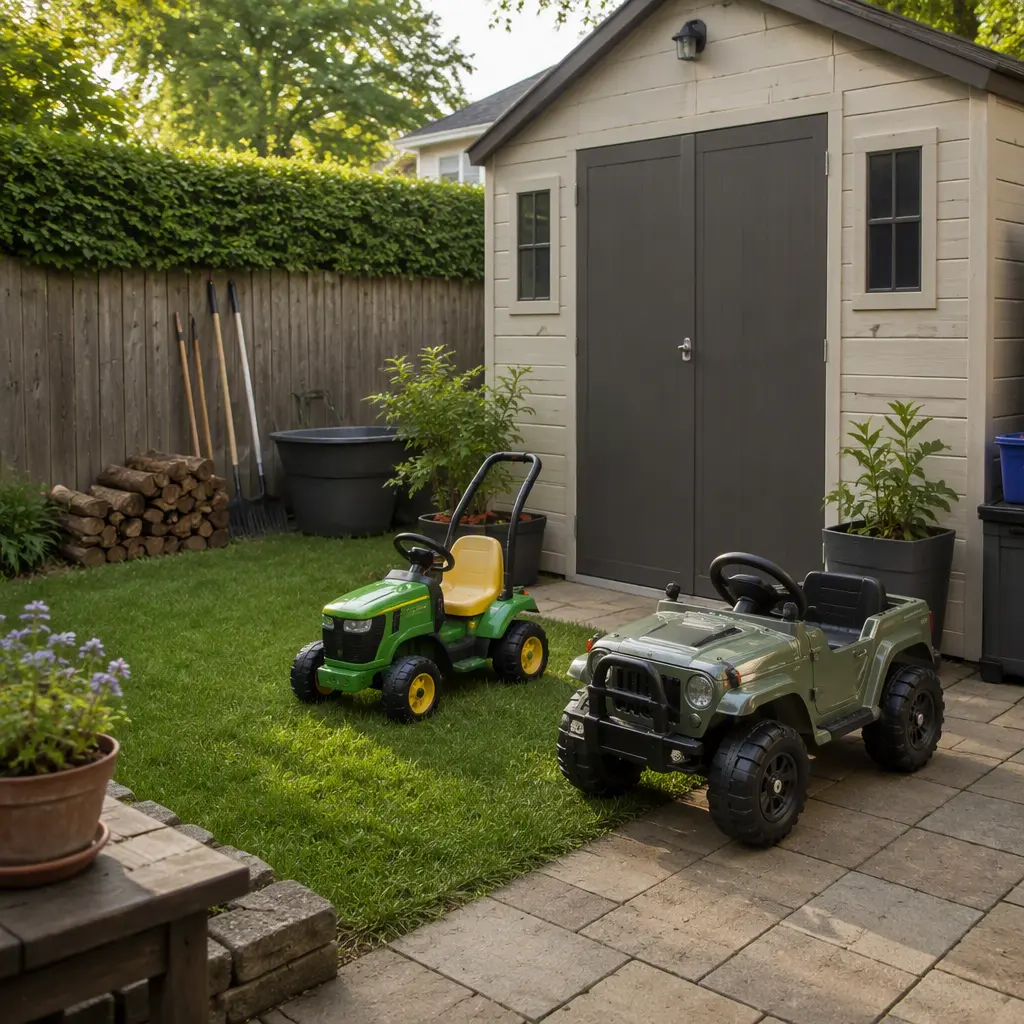
- Check outdoor storage space before buying, especially for bulkier tractor styles.
- Simple wipe-clean surfaces are helpful if the toy will stay outside regularly.
- Avoid oversized ride-ons if narrow gates, sheds or patios limit storage space.
Age suitability
For 3–5 year olds, the safest and most practical option is usually one that matches both the child’s confidence and the yard surface. Younger preschoolers often manage push tractors well because the upright seating position and slower pace encourage controlled movement. Some children also enjoy the pretend-play aspect of hauling toys or copying garden work. Ride-on cars can suit children who prefer steering games or smoother movement on patios and driveways, but they may frustrate children if the yard is mostly thick grass. Taller or more physically confident 5 year olds may handle larger pedal tractors or heavier ride-ons more comfortably than younger children with shorter legs or less balance control.
Options compared
Push tractors usually work best in larger yards with mixed terrain. Their bigger wheels and taller bodies often cope better with grass, uneven soil and small garden paths. Many children also use them for imaginative farm or construction play, which can extend interest beyond simple riding. The trade-off is storage size. Tractor-style toys tend to take up more shed space and may be awkward on narrow patios or apartment courtyards. They can also become muddy more quickly because children often drive them through dirt or damp grass.
Ride-on cars are often easier to store and may feel more stable on smooth surfaces such as decking, concrete or compacted paths. Their lower seating position can help cautious children feel secure while scooting or pedaling. However, smaller wheels may struggle in thicker lawns, causing frequent stops or tipping when one wheel catches on a bump. Parents with uneven yards sometimes find that ride-on cars work best when there is at least one flat riding area available. For families with limited outdoor space, a compact ride-on car may still be the more practical option even if grass performance is weaker.
- Choose a push tractor if the yard has thick grass, mild bumps, packed dirt or room for larger toys.
- Choose a ride-on car if most riding will happen on patios, paved paths or smoother lawns.
- Avoid very tall tractor designs for children who are still unsteady climbing on and off independently.
- Avoid small hard-wheeled ride-ons for rough gravel or heavily uneven ground.
- For shared sibling play, simpler steering systems are often easier for different ages to manage.
- If outdoor storage is limited, measure shed or porch space before choosing larger pedal toys.
Frequently asked questions
Are push tractors safer on grass than ride-on cars?
They can be more stable on rough grass because larger wheels usually roll over bumps more smoothly. However, safety still depends on speed, supervision and whether the yard includes slopes, loose gravel or hidden holes.
Do ride-on cars tip over easily on uneven lawns?
Low ride-on cars are often stable on flat surfaces, but small wheels can catch in dips or thick grass. Sharp turns on sloped ground may also increase tipping risk, especially for heavier children leaning sideways while steering.
Which option is easier to store outdoors?
Compact ride-on cars are usually easier to fit into small sheds or covered patios. Push tractors often have wider rear wheels and longer bodies that need more storage room. Weather exposure can also fade plastic over time if toys remain outside year-round.
Are pedal-powered toys better than foot-to-floor ride-ons for uneven yards?
Pedal-powered tractors may move more efficiently through grass because children can keep momentum without constantly pushing with their feet. Foot-to-floor toys can be harder to move on thick lawns, especially for younger preschoolers.
What surfaces should children avoid?
Steep slopes, loose stones, wet decking and driveways with vehicle access are usually poor choices for ride-on toys. Even stable toys can slide or lose traction when surfaces are slick or sharply uneven.
For most uneven yards, push tractors tend to handle rougher ground more effectively, especially when grass is thick or the surface changes often. Ride-on cars can still work well in smaller spaces with flatter riding areas and easier storage needs. The best choice depends on how the toy will actually be used day to day, not just how it looks in product photos.