Push Trikes vs Balance Bikes for Cautious Toddlers
A parent-focused guide to choosing between push trikes and balance bikes for hesitant toddlers aged 1–2, with practical advice on confidence, safety, storage, noise and supervision.
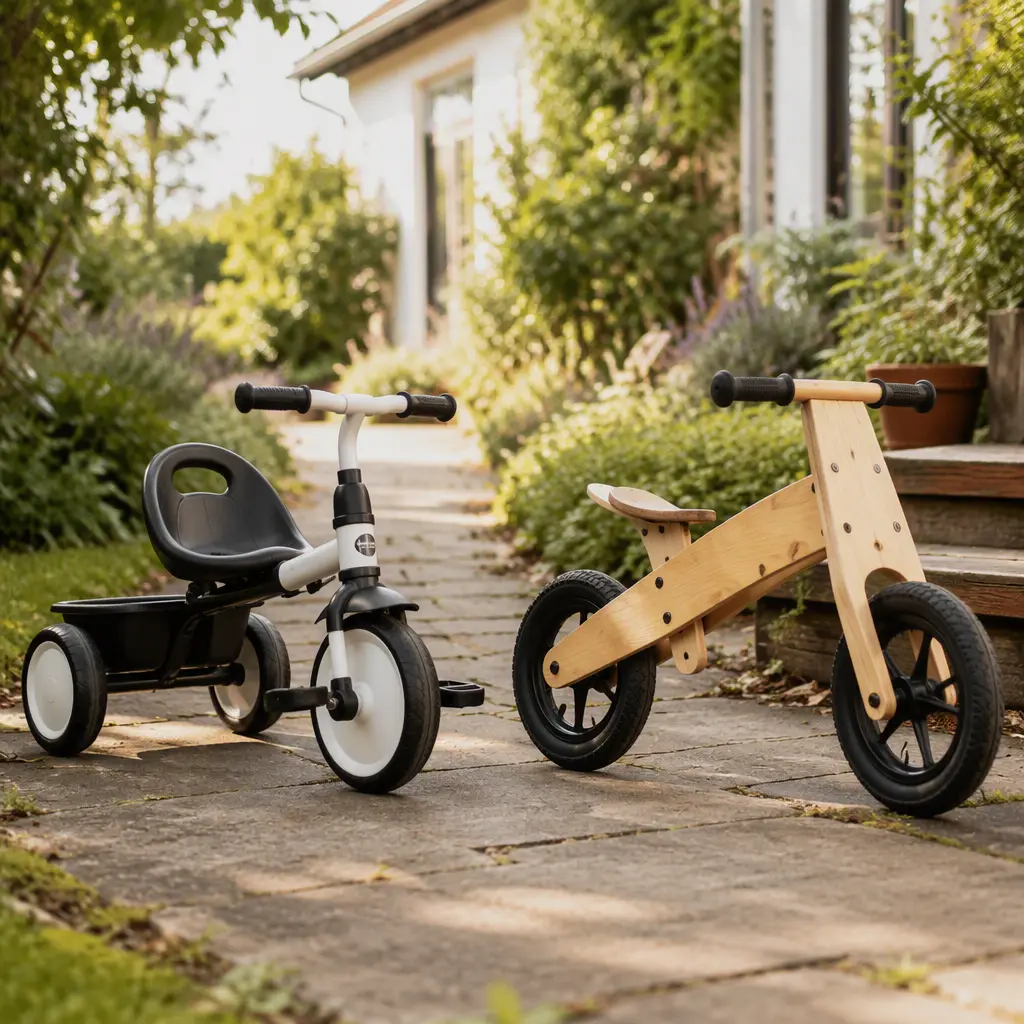
Compare prices and availability
Check current prices and availability for this guide on eBay.
As an eBay Partner, we may be compensated if you make a purchase.
For cautious toddlers, the choice between a push trike and a balance bike is often less about speed or milestones and more about confidence. Both can support coordination and outdoor play for children aged 1–2, but they encourage different skills and suit different temperaments. Push trikes usually feel more secure at first because an adult can steer or assist, while balance bikes encourage independent movement and body awareness earlier. Parents deciding between them often need to weigh reassurance against freedom, especially if a child is hesitant around movement, uneven ground or new physical challenges.
What to look for
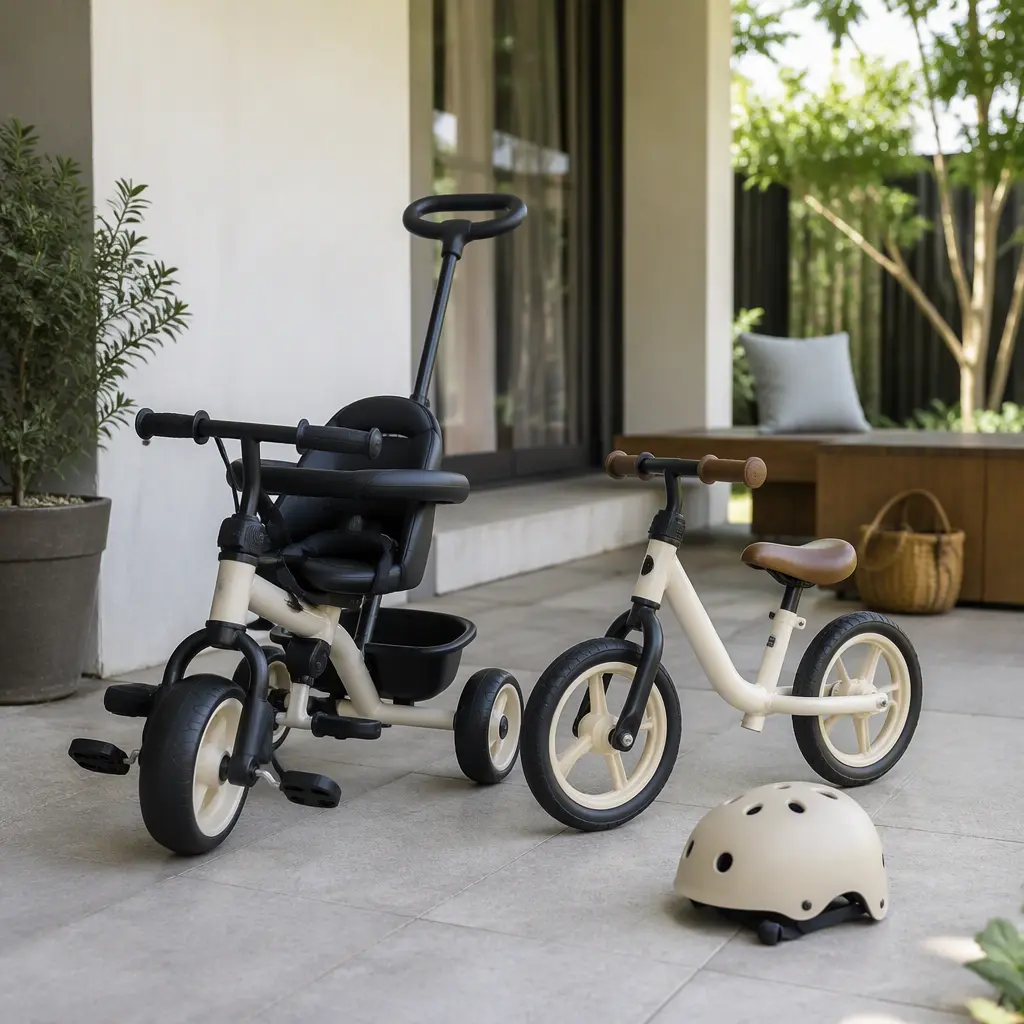
The right first ride-on should match a toddler’s size, confidence level and typical play space. A cautious child may respond better to low seats, stable frames and slow, predictable movement. Parents should also consider practical issues that become noticeable quickly, including storage space, portability and whether the toy works indoors as well as outdoors. Heavier ride-ons can feel sturdy but may be difficult for a toddler to reposition independently. Lightweight options are easier to manage but sometimes feel less planted on rough ground.
- Low seat height so both feet can stay flat on the ground
- Wide turning range without tipping too easily
- Quiet wheels if the toy will be used indoors
- Simple steering and limited controls for younger toddlers
- Light enough for parents to carry when a child loses interest mid-walk
- Weather-resistant materials if stored in a garage or balcony area
- Easy-to-clean surfaces for muddy parks or snack-time spills
Age suitability
For most children between 12 and 24 months, push trikes are usually the easier starting point. They often include adult steering handles, footrests or supportive seating that help toddlers feel secure while they learn how movement works. This can reduce anxiety for children who dislike instability or become frustrated when they cannot control a toy immediately. Balance bikes generally suit toddlers closer to the upper end of the age range, especially once they can walk steadily, stop themselves confidently and tolerate small falls without becoming distressed. Some very small balance bikes are marketed for younger toddlers, but fit matters more than age labels alone. A child whose feet cannot comfortably reach the ground is unlikely to gain confidence quickly.
Options compared
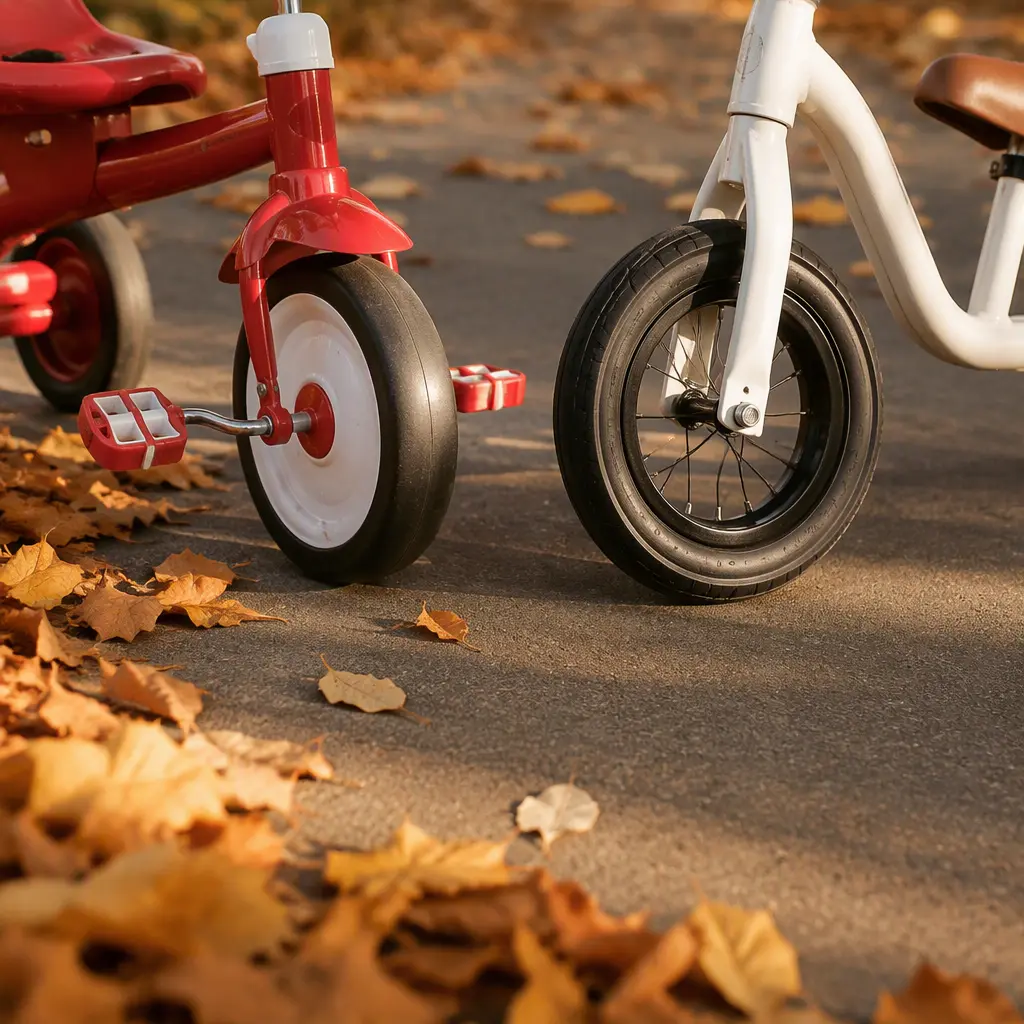
Push trikes are usually the more reassuring option for nervous parents and hesitant riders. The adult handle allows caregivers to guide direction and pace, which can help a child relax instead of focusing on balance. This makes push trikes useful for longer walks, parks and busy outdoor spaces where parents may want more control. They also tend to feel familiar because the riding position resembles a stroller or seated ride-on. The trade-off is that some toddlers become passive riders and rely heavily on adult steering instead of learning independent balance and coordination.
Balance bikes encourage toddlers to trust their own movement earlier. Instead of pedalling, children push with their feet and gradually learn balancing skills naturally. For confident toddlers, this can build independence quickly. For cautious children, though, the learning curve may feel intimidating at first. A balance bike generally works best for toddlers who already enjoy climbing, running or exploring playground equipment. Parents should also consider terrain. Balance bikes usually perform better on smooth paths and open spaces, while push trikes can be easier for slower neighbourhood walks. Storage is another practical difference: compact balance bikes are often easier to carry and fit into small homes or car boots than bulkier push trikes with parent handles.
- Push trikes suit toddlers who want reassurance, support and slower-paced outdoor rides.
- Balance bikes suit toddlers who already move confidently and enjoy independent play.
- Push trikes are often easier for nervous parents during walks near traffic or crowds.
- Balance bikes usually take up less storage space and can feel less bulky indoors.
- Push trikes may involve more adult involvement over time.
- Balance bikes can help prepare children for pedal bikes later, but early readiness varies widely between children.
Frequently asked questions
Is a balance bike too advanced for a cautious 1-year-old?
For many toddlers around 12 months, yes. Some children enjoy sitting and walking with a balance bike very early, but cautious toddlers often prefer the security of a push trike or stable ride-on first. The key sign of readiness is confidence while walking and stopping independently.
Do push trikes delay balance skills?
Not necessarily. Push trikes build steering awareness, coordination and outdoor confidence. However, they do not teach balancing in the same direct way a balance bike does. Some families eventually move from a push trike to a balance bike once a child becomes more adventurous.
Which option works better indoors?
Small balance bikes with soft wheels are often quieter and easier to manoeuvre indoors. Push trikes can be bulky in smaller homes and may leave marks on walls or furniture during turns. Checking wheel material and turning radius can make a noticeable difference for apartment living.
Are wooden ride-ons better than plastic ones?
Wooden ride-ons are often chosen for their appearance and sturdy feel, while plastic models may be lighter and easier to wipe clean. Neither material is automatically better for all families. Weight, wheel quality and fit matter more than the frame material alone.
How long will a toddler use each type?
Usage varies widely by growth and interest. Some toddlers outgrow small push trikes quickly once they want more independence, while lightweight balance bikes can remain useful into the preschool years. Adjustable seat heights can extend usability, especially during periods of rapid growth.
For cautious toddlers, the best choice is usually the one that encourages relaxed, repeat play rather than pushing skills too early. Push trikes can provide a comfortable introduction to outdoor movement and shared walks, while balance bikes often reward children who are ready for more independence. Matching the ride-on to a child’s temperament, available play space and family routine tends to matter more than choosing the trendiest option.