Desktop Pinball Kits vs Marble Runs for Tweens
Choosing between a desktop pinball kit and a marble run for ages 9–12? This guide compares build difficulty, storage, replay value, noise, durability and supervision needs.
Compare prices and availability
Check current prices and availability for this guide on eBay.
As an eBay Partner, we may be compensated if you make a purchase.
Desktop pinball kits and marble runs both appeal to tweens who enjoy building, experimenting and hands-on play away from screens. The two categories overlap in some ways, but they create very different experiences once the initial build is complete. Pinball kits usually focus on mechanical design, precision and cause-and-effect gameplay in a compact footprint. Marble runs tend to emphasize creativity, engineering experimentation and rebuilding larger layouts over time. For parents deciding between them, the most useful comparison points are usually build complexity, how much space the toy occupies during and after play, how durable the finished structure feels, and whether the toy still holds attention after the first weekend.
What to look for
For ages 9–12, the right choice depends less on advertised difficulty and more on how a child likes to play. Some tweens enjoy following detailed instructions and fine-tuning a finished result. Others prefer open-ended experimentation and redesigning the structure repeatedly. Storage matters too. Marble runs can spread across floors and shelves, while desktop pinball kits often stay contained on a table once completed. Parents may also want to consider noise levels, the likelihood of missing pieces, and whether younger siblings will interfere with the build.
- Look for build complexity that matches patience level, not just age guidance. Dense mechanical kits can frustrate kids who prefer fast results.
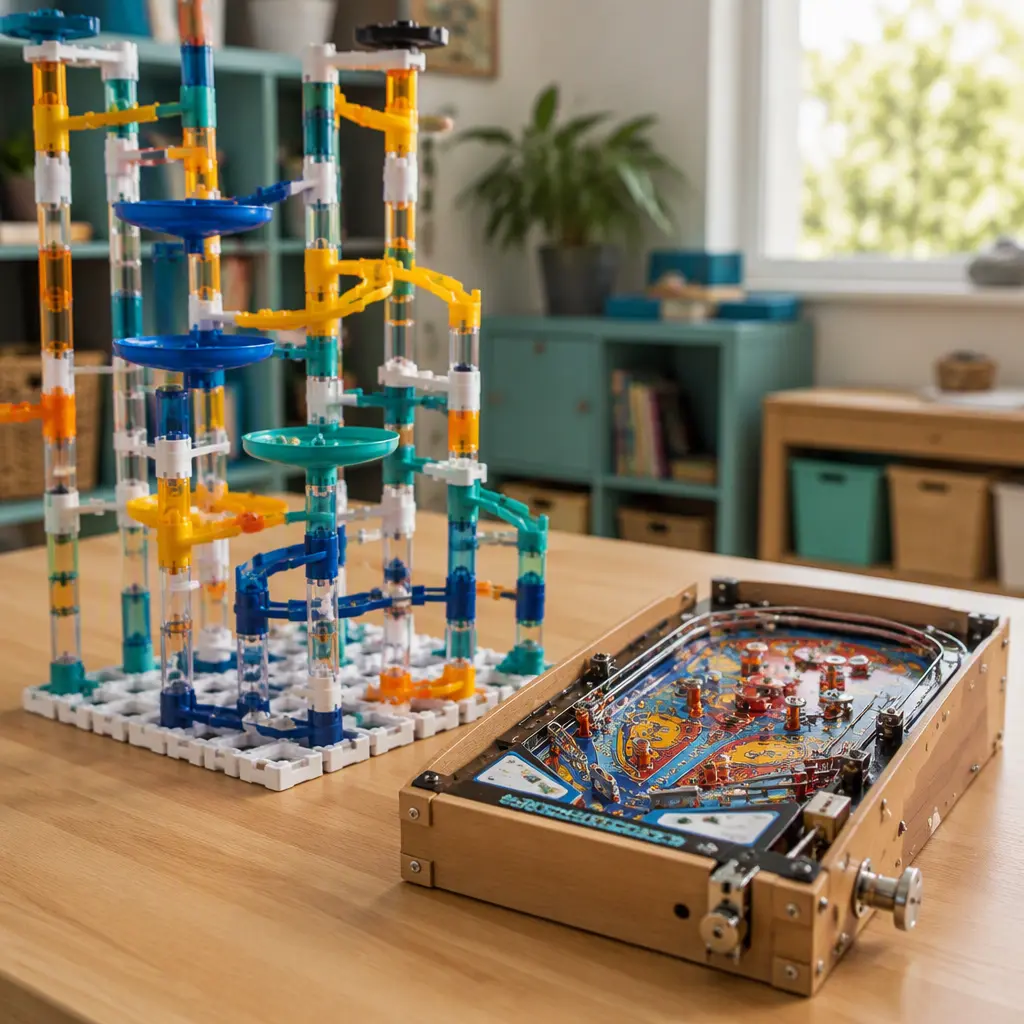
- Check how modular the toy is. Marble runs with interchangeable sections usually support longer-term replay and redesign.
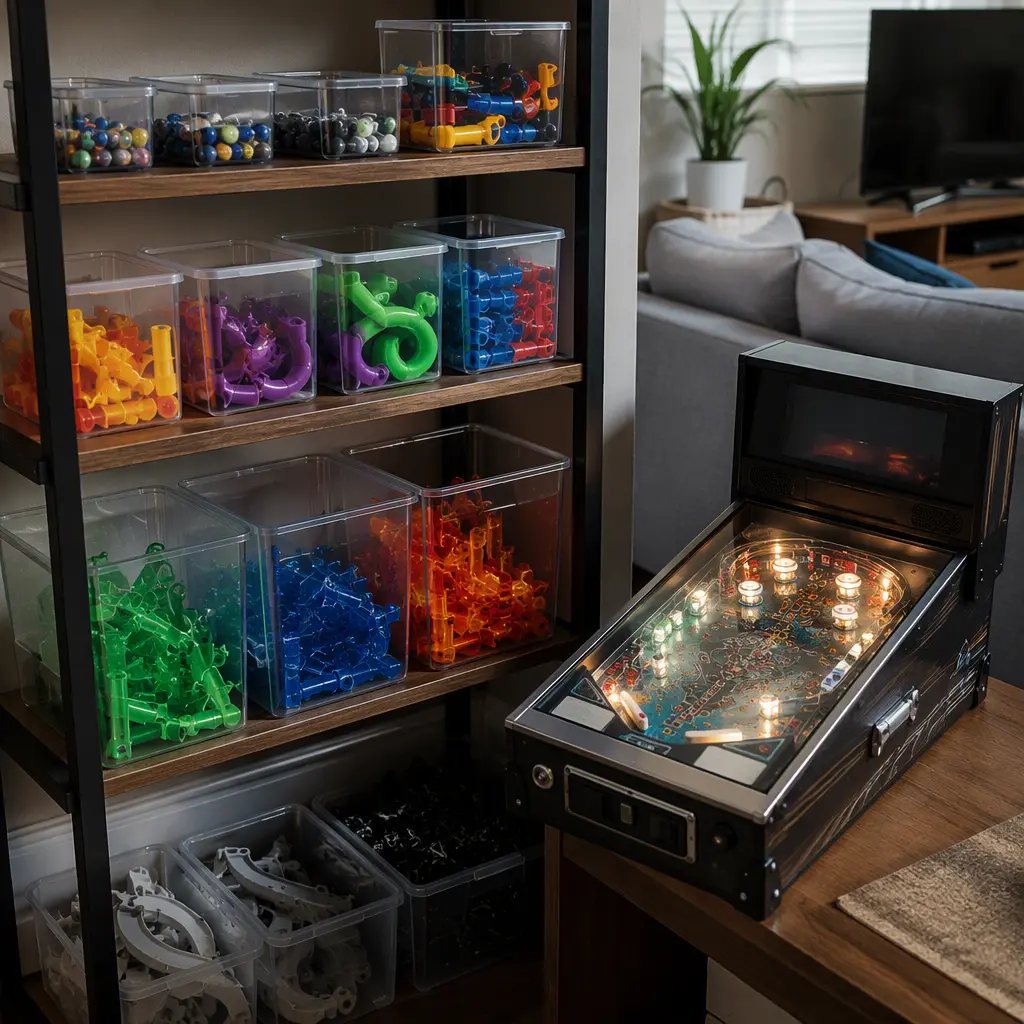
- Consider storage before buying. Large marble runs may need dedicated bins or shelf space between sessions.
- Think about noise. Repeated marble drops and plastic tracks can become loud on hard floors or tabletops.
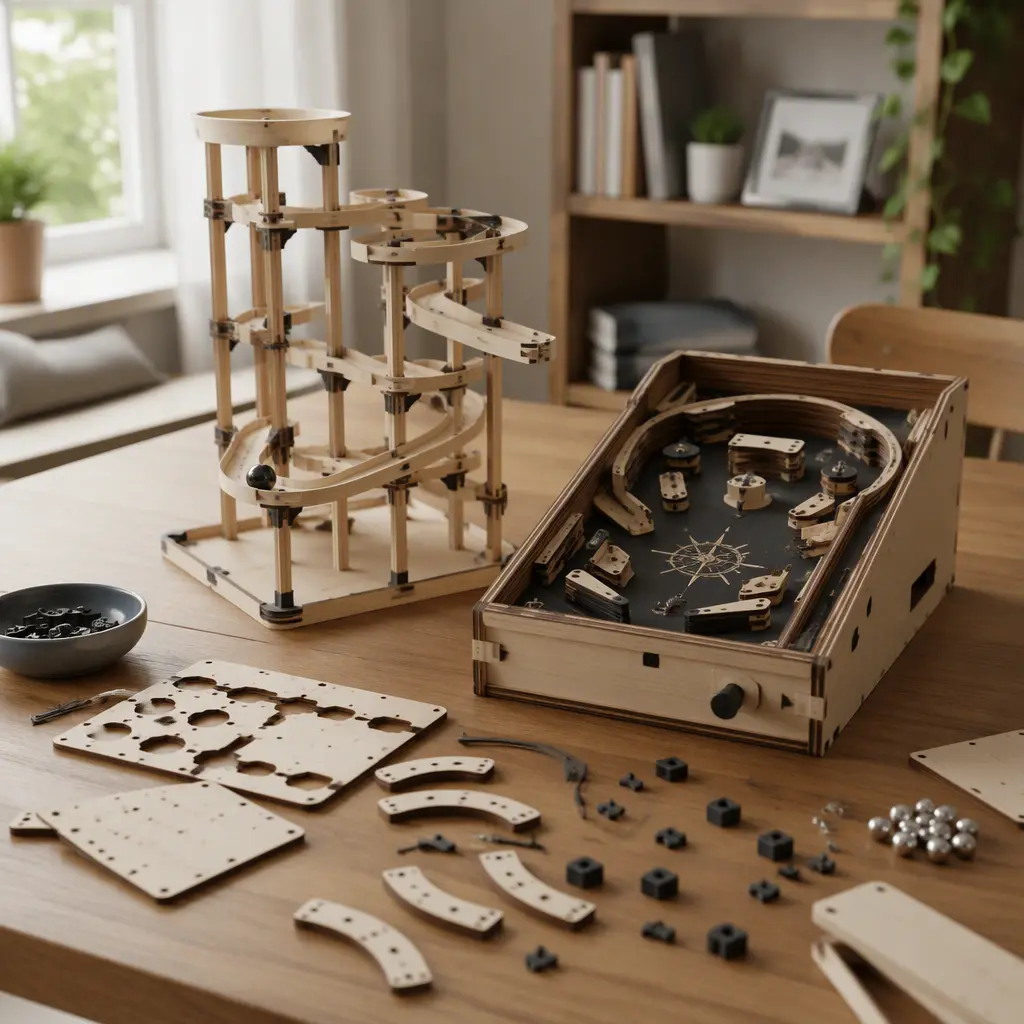
- Pay attention to materials. Wooden components often feel sturdier and quieter, while lightweight plastic pieces are easier to rearrange.
- Choose sets with offline, self-contained play rather than app-dependent features if long-term screen-free use is the goal.
- If siblings will share the toy, simpler connection systems usually reduce frustration and accidental collapses.
Age suitability
The 9–12 age range sits in an interesting middle ground where many kids are ready for more advanced engineering toys but still vary widely in attention span and frustration tolerance. Desktop pinball kits generally suit tweens who enjoy careful assembly, repeated testing and mechanical problem-solving. They can work especially well for children who like puzzles, model kits or logic-based STEM activities. Marble runs often fit a broader range of personalities because they support both structured builds and freestyle experimentation. A tween who enjoys redesigning layouts, racing marbles or creating chain reactions may return to a marble run more often over months or years. However, younger tweens may still need help with stability issues or complicated support structures in larger builds.
Options compared
Desktop pinball kits usually win on compactness and display value. Once assembled, many stay intact and can sit on a desk or shelf without taking over a room. That makes them appealing for apartments, shared bedrooms or families who prefer toys with contained footprints. They also tend to reward precision. Tweens can adjust ramps, launch strength or scoring paths and immediately see how mechanical changes affect gameplay. The trade-off is replay style. After the build is complete and the mechanics are understood, some children move on quickly unless they enjoy refining designs or competing for high scores.
Marble runs often provide stronger long-term rebuilding potential because the structure can change every session. Kids can experiment with speed, gravity, loops, split tracks and height differences in ways that encourage open-ended engineering thinking. Larger sets can become collaborative family projects as well. The downside is storage and maintenance. Tracks may collapse if bumped, loose marbles travel easily under furniture, and sprawling builds can dominate floor space. Noise can also become an issue in homes with hard surfaces because repeated marble impacts echo more than many parents expect.
- Choose a desktop pinball kit for tweens who enjoy careful assembly, compact projects, mechanical tinkering and repeatable solo play.
- Choose a marble run for tweens who prefer creative redesigns, experimentation and larger collaborative builds.
- Avoid very large marble run sets if storage space is limited or younger siblings regularly access the play area.
- Avoid highly intricate pinball kits for children who dislike long instruction sequences or become frustrated by alignment issues.
- Wood-based systems often feel more durable and quieter, while plastic systems are usually lighter and easier to rebuild frequently.
- Families looking for a long-lasting screen-free activity often get more evolving play patterns from expandable marble run systems.
Frequently asked questions
Which option usually lasts longer?
Long-term value depends on how the child likes to engage with toys. Marble runs often support longer replay because layouts can be rebuilt endlessly. Desktop pinball kits may last longer for tweens who enjoy refining mechanics, accuracy and score-based challenges.
Are marble runs educational enough for older kids?
Yes, especially when the set allows experimentation rather than only following fixed instructions. Tweens can explore gravity, momentum, structural stability and problem-solving while testing different layouts and speeds.
Which toy is easier to tidy away?
Desktop pinball kits are usually easier to manage once built because they stay contained in one piece. Marble runs often require sorting tracks, connectors and marbles into bins after use unless the family has a dedicated play area.
Do these toys require adult help?
Many tweens can handle standard builds independently, but complex kits may still benefit from occasional adult support during tricky assembly stages. Younger children in the age band may need help stabilizing larger marble structures.
Which option works better for quieter households?
Desktop pinball kits are typically quieter overall, especially wooden versions with softer mechanisms. Marble runs can create repeated rattling and rolling sounds that travel through hard floors and tabletops.
For most families, the choice comes down to whether the child prefers refining a finished mechanical game or continually reinventing a larger engineering project. Desktop pinball kits suit tweens who enjoy focused builds and compact play, while marble runs tend to reward creativity, experimentation and repeated redesign. Both can provide strong screen-free STEM play when matched carefully to available space, patience level and play style.