Offline Tech Toys for Kids (6–8) That Teach Real Skills
A parent-friendly guide to modern tech toys that work fully offline. Learn what features matter, which categories suit ages 6–8, and how these screen-free gadgets build real STEM skills.
Compare prices and availability
Check current prices and availability for this guide on eBay.
As an eBay Partner, we may be compensated if you make a purchase.
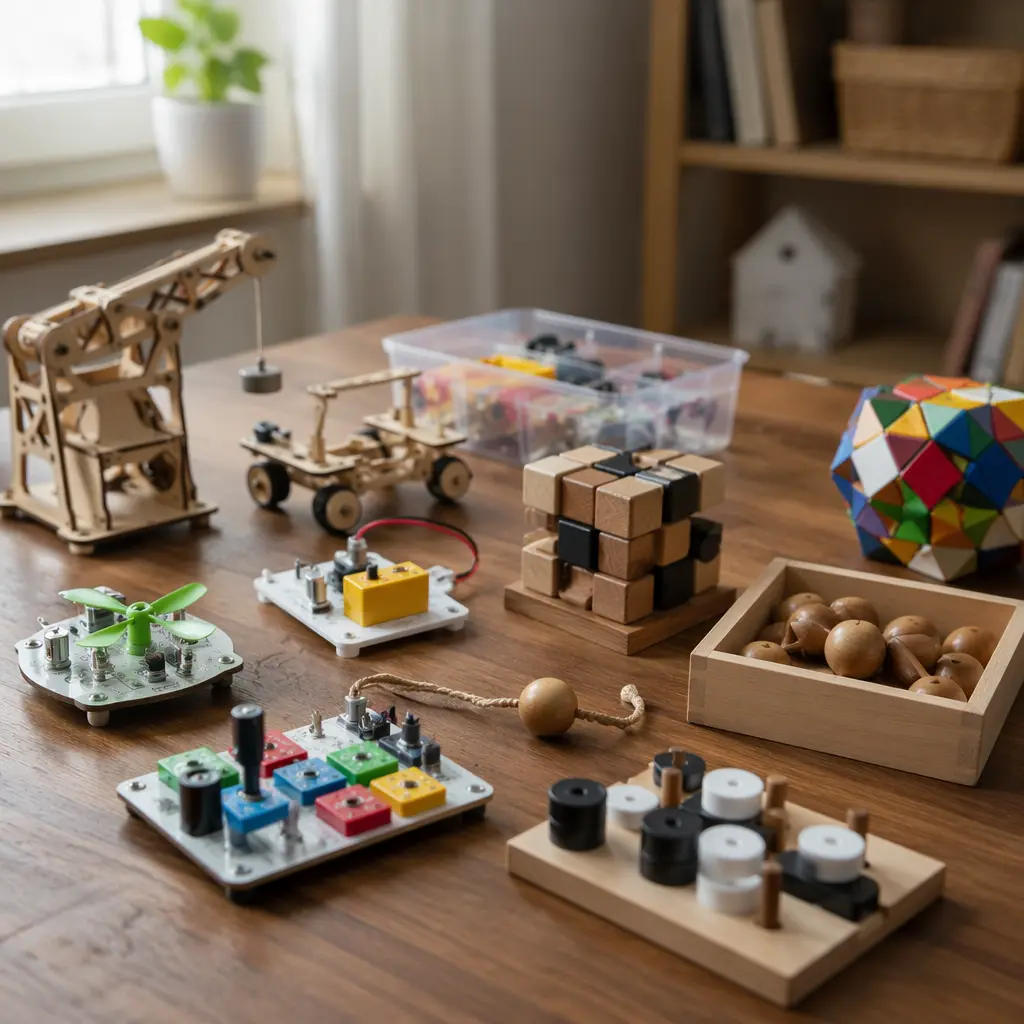
Not all tech toys need screens, apps, or Wi‑Fi to be educational. For kids ages 6–8, fully offline tech toys can teach problem‑solving, logic, and early engineering skills without adding more digital time. These toys focus on hands‑on learning, physical feedback, and curiosity-driven play—often using switches, gears, magnets, or simple electronics instead of tablets.
What to look for
Offline tech toys still count as "tech" because they model how real systems work. When shopping for this age group, focus on toys that balance challenge with independence. Kids should be able to experiment, make mistakes, and see cause-and-effect without needing constant adult setup.
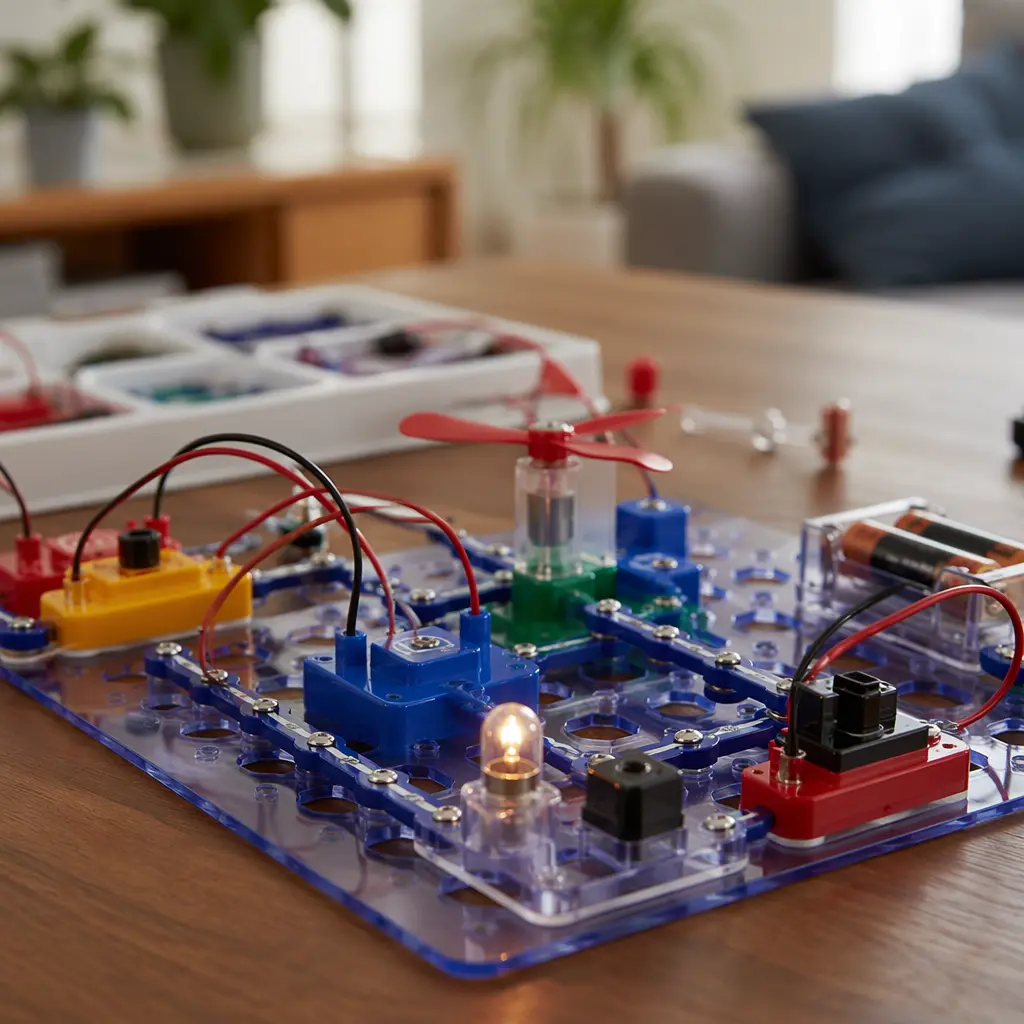
- Clear physical feedback, such as lights, motion, sound, or mechanical movement
- Open-ended play that allows multiple solutions or builds
- Durable materials that can handle repeated use and reassembly
- Instructions that rely on diagrams more than text
- No required apps, accounts, or software updates
Age suitability
Between ages 6 and 8, kids are ready to follow multi-step directions, test ideas, and understand basic systems. Offline tech toys for this range often introduce early coding concepts (like sequencing), mechanical engineering, or electricity in a simplified, tangible way. Look for toys that grow with the child—starting simple, then adding complexity as confidence builds. If a toy feels too "preset" or works only one way, it may lose interest quickly at this age.
Standout categories or types
Offline tech toys come in several categories, each emphasizing a different real-world skill. Choosing the right type depends on your child’s interests and learning style rather than raw difficulty.
- Circuit and electricity kits: Teach how power flows using snap-together or wired components, helping kids understand switches, connections, and basic troubleshooting.
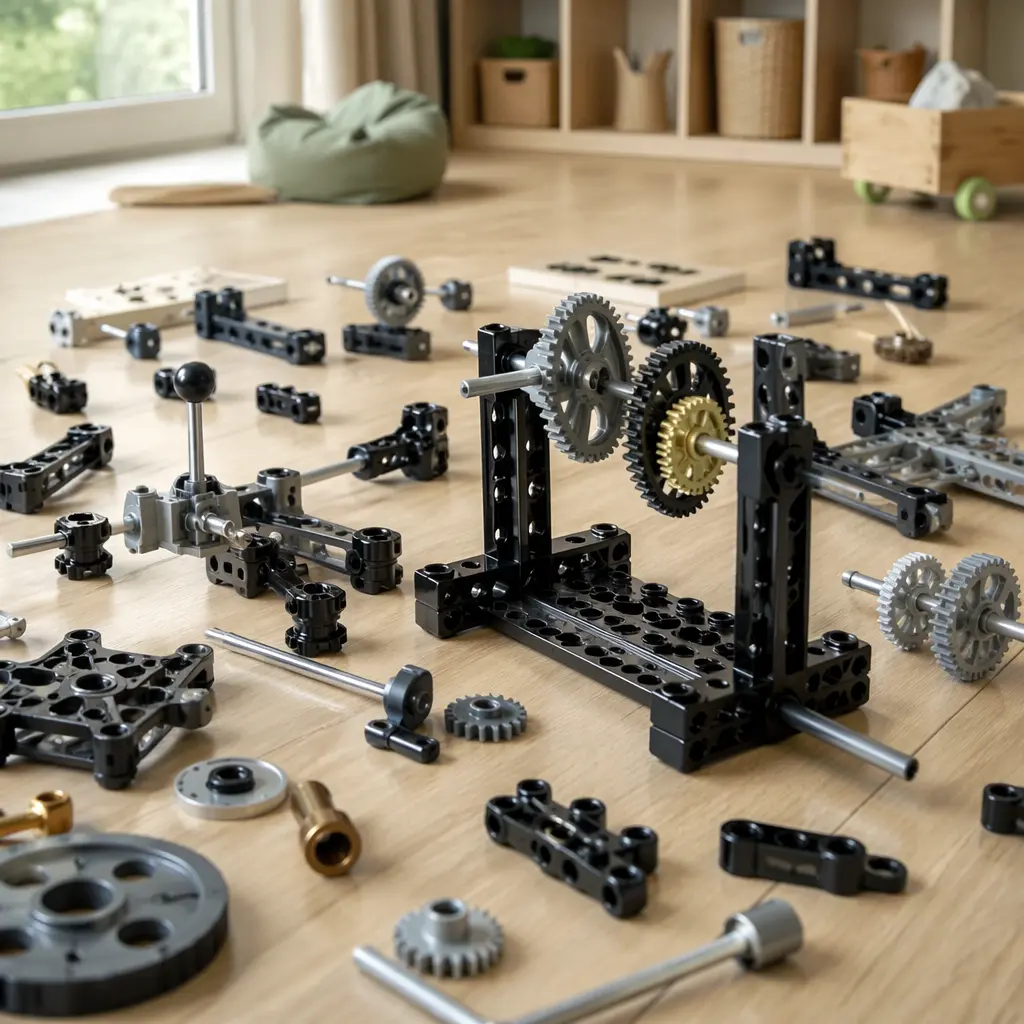
- Mechanical engineering sets: Focus on gears, pulleys, and levers, showing how movement and force work together in machines.
- Logic and sequencing toys: Use physical pieces to represent steps or commands, building early computational thinking without screens.
- Measurement and experimentation tools: Introduce concepts like balance, magnetism, or motion through repeatable experiments.
- Build-and-test challenges: Encourage kids to design, adjust, and improve structures or systems based on results.
Frequently asked questions
Are offline tech toys still considered STEM toys?
Yes. STEM learning is about skills and thinking, not screens. Offline tech toys can teach science, engineering, and math concepts in a more concrete way, which often works better for younger kids.
Will my child get bored without a screen?
Many kids stay engaged longer with hands-on toys because they can physically manipulate parts and try new ideas. Toys that allow rebuilding or experimentation tend to hold attention better than one-time activities.
Do these toys require adult help?
Most are designed for independent play after an initial introduction. Younger kids may need help reading instructions, but the goal is for them to explore and problem-solve on their own.
How do offline tech toys compare to coding apps?
Offline toys often teach the same foundational ideas—like sequencing or debugging—but in a physical format. This can make abstract concepts easier to understand before moving on to digital tools later.
Fully offline tech toys offer a practical middle ground between traditional toys and digital learning. For kids ages 6–8, they build confidence with real-world systems, encourage curiosity, and support skill development without relying on screens. Choosing toys that emphasize exploration and adaptability can keep learning active, balanced, and fun.