Toy Microscopes vs Binoculars for Curious Kids
A parent-focused guide to choosing between toy microscopes and binoculars for children aged 6–8, including setup, supervision, storage, durability and long-term replay value.
Compare prices and availability
Check current prices and availability for this guide on eBay.
As an eBay Partner, we may be compensated if you make a purchase.
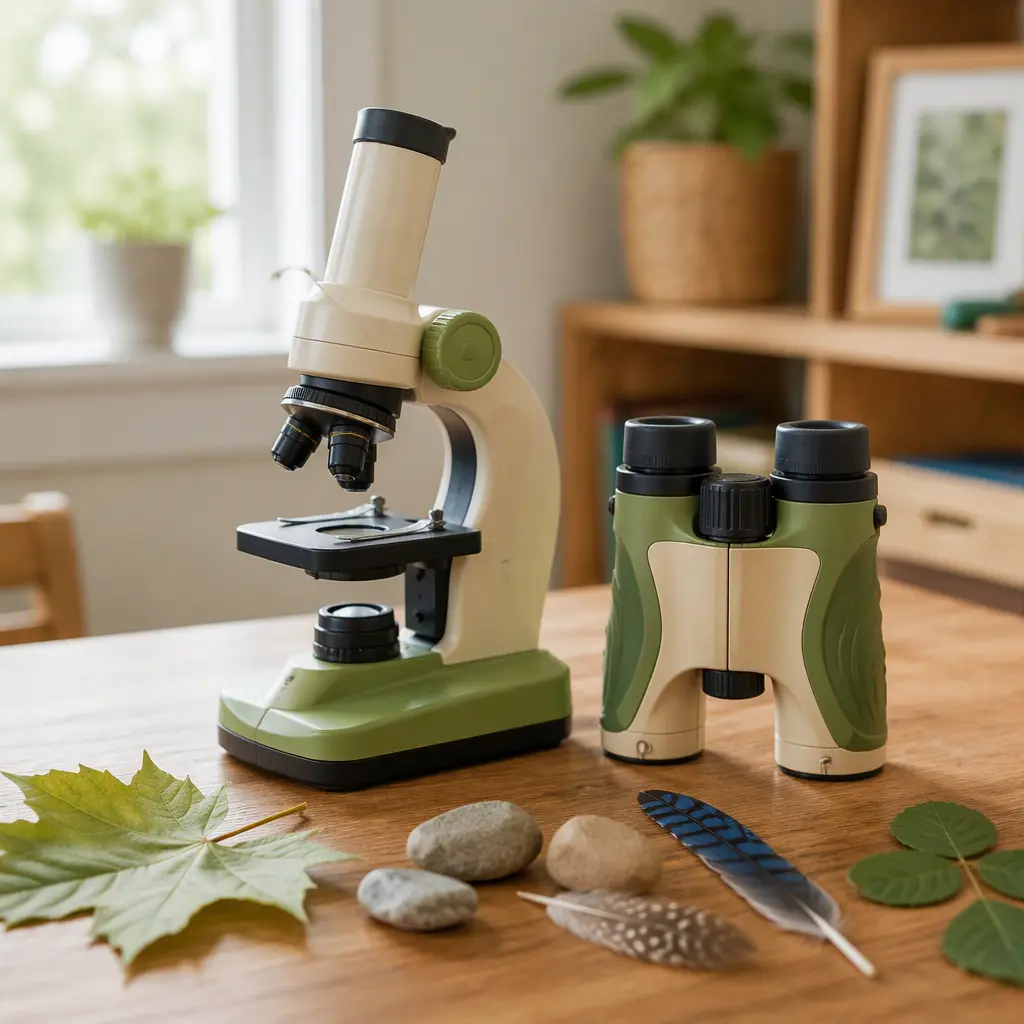
For children who enjoy collecting leaves, spotting birds or asking constant questions about how things work, both toy microscopes and binoculars can encourage screen-free curiosity. The better choice often depends less on academic value and more on how your child prefers to explore. Some children enjoy sitting still and examining tiny details, while others want to move around outdoors and observe from a distance. Parents also tend to notice practical differences quickly: microscopes need more setup and careful handling, while binoculars are usually easier to grab and use on short walks or in the garden. Understanding those trade-offs can make it easier to choose a toy that actually gets repeated use instead of staying on a shelf after the first weekend.

What to look for
Children aged 6–8 usually benefit most from simple, durable tools that work without complicated adjustments. At this age, frustration matters. If focusing a microscope takes too many steps or binoculars feel too heavy, many children lose interest quickly. Parents should also think about where the toy will mostly be used. Outdoor-focused families may prefer something portable and rugged, while children who already enjoy crafts, collecting bugs or drawing observations may engage longer with a microscope setup.
- Choose lightweight binoculars with a comfortable neck strap and large focus wheel that small hands can adjust.
- Look for toy microscopes with straightforward focusing and prepared slides included for easier first use.
- Consider storage space: microscopes often need a dedicated shelf or box, while binoculars fit easily in a backpack.
- Check how much adult setup is required. Many younger children still need help preparing microscope samples.
- Think about noise and mess. Binoculars are nearly mess-free, while microscopes may involve water drops, plant samples or cleanup.
- Durability matters for outdoor play. Rubberized binoculars generally tolerate drops better than plastic microscope accessories.
- Children who dislike sitting still may get more replay value from binoculars because they support active movement and exploration.
Age suitability
For most children aged 6–8, binoculars are usually easier to use independently. They offer fast rewards because children can immediately spot birds, squirrels, airplanes or distant landmarks without much preparation. This can build confidence for children who become discouraged by fiddly equipment. Toy microscopes often work best when a child already enjoys patient activities such as drawing, sorting collections or observing insects closely. Some children at this age are fascinated by magnification but still need regular adult assistance to prepare slides, adjust focus or understand what they are seeing. A microscope can still be a strong choice for children who enjoy science-themed activities indoors, especially during bad weather or quieter afternoons.
Options compared
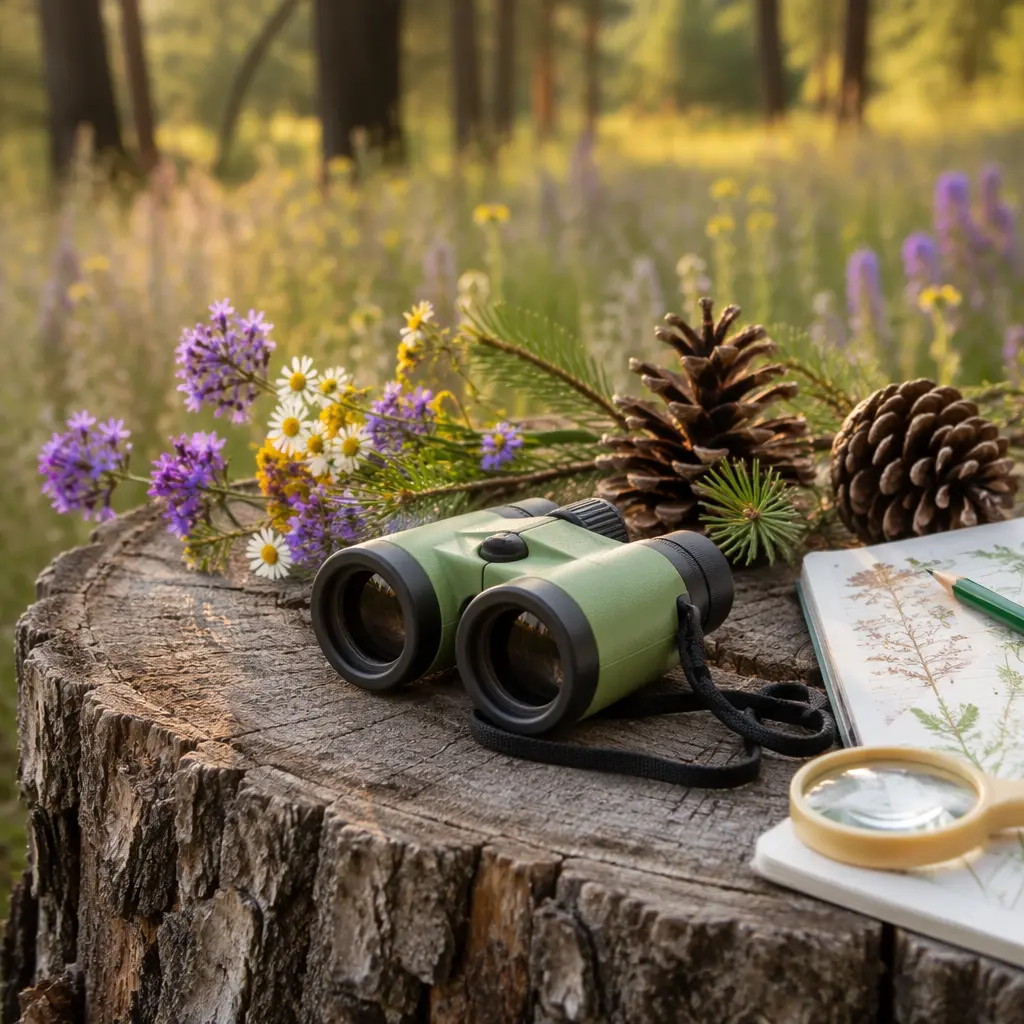
Binoculars generally offer the quickest path to independent play. They suit children who enjoy movement, walks, camping trips or backyard exploration. They also work well for families with limited indoor storage because they are compact and portable. Another advantage is low setup time. A child can pick them up for ten minutes before dinner or bring them on a car trip without creating extra cleanup. The trade-off is that binocular play can become repetitive if a child loses interest in observation games or lacks regular access to outdoor spaces.
Toy microscopes usually create a more structured science activity. They encourage slower observation and can connect well with collecting leaves, examining fabric textures or studying pond water and insects. For some children, this deeper focus leads to longer-term interest in biology or science projects. However, replay value depends heavily on patience and parental involvement. Younger children often need help finding interesting samples and understanding what appears under magnification. Microscopes also tend to include more pieces to organize and keep track of. Families who prefer low-mess toys or fast cleanup may find binoculars easier to live with day to day.
- Choose binoculars for active children, frequent outdoor time, travel-friendly play and lower setup demands.
- Choose a toy microscope for children who enjoy detailed observation, collecting objects or quieter tabletop activities.
- Avoid fragile microscope sets if younger siblings may access small parts unsupervised.
- Avoid oversized binoculars designed for adults because they are often too heavy and difficult for younger children to focus.
- For shared sibling play, binoculars are usually easier because children can take turns quickly during walks or outings.
- Microscopes can support rainy-day STEM activities when outdoor play is limited.
Frequently asked questions
Do toy microscopes actually work for young children?
Many entry-level toy microscopes provide enough magnification for children to see basic textures, plant material and prepared slides. The experience is usually more about encouraging observation skills than achieving laboratory-quality detail. Simpler models are often easier for this age group than highly technical sets.
Are binoculars better for screen-free play?
Binoculars often encourage more spontaneous offline play because children can immediately use them outdoors without preparation. They pair naturally with walks, parks, camping trips and backyard exploration. The active element can also hold attention longer for children who resist seated activities.
Which option needs more parental involvement?
Microscopes usually require more support at ages 6–8. Adults may need to help prepare slides, position samples and explain what the child is seeing. Binoculars are generally easier for children to use independently after a short demonstration.
What if a child loses interest quickly?
Children who move rapidly between hobbies often do better with binoculars because they are simple to store, quick to use and useful in many settings. A microscope may provide deeper engagement for highly focused children but can feel disappointing if setup becomes frustrating.
Can these toys support school learning?
Both can complement early science learning in different ways. Binoculars encourage observation and awareness of nature, while microscopes introduce magnification and close study of materials. The educational value usually depends more on repeated use and curiosity than on advanced features.
For many families with children aged 6–8, binoculars are the easier everyday choice because they support quick, active exploration with minimal setup. Toy microscopes can offer deeper science-focused play for children who enjoy careful observation and quieter activities. The most successful option is usually the one that matches your child’s natural play style, your available space and the amount of supervision you realistically want to provide.