Two-Player Strategy Board Games for Ages 9–12
A practical guide to two-player strategy board games for ages 9–12, covering quick setup, replay value, learning curve, noise, storage and which game styles suit siblings or parent-child play.
Compare prices and availability
Check current prices and availability for this guide on eBay.
As an eBay Partner, we may be compensated if you make a purchase.
Two-player strategy board games can work especially well for ages 9–12 because they reward planning, problem-solving and conversation without requiring a large group or a full evening commitment. For siblings, they can provide structured competition with clear rules and manageable play times. For parent-child play, they offer a screen-free activity that still feels mentally engaging for older children who may have outgrown simpler family games. The biggest challenge is finding games that stay interesting after repeated plays while still being quick enough to set up on a school night.
What to look for
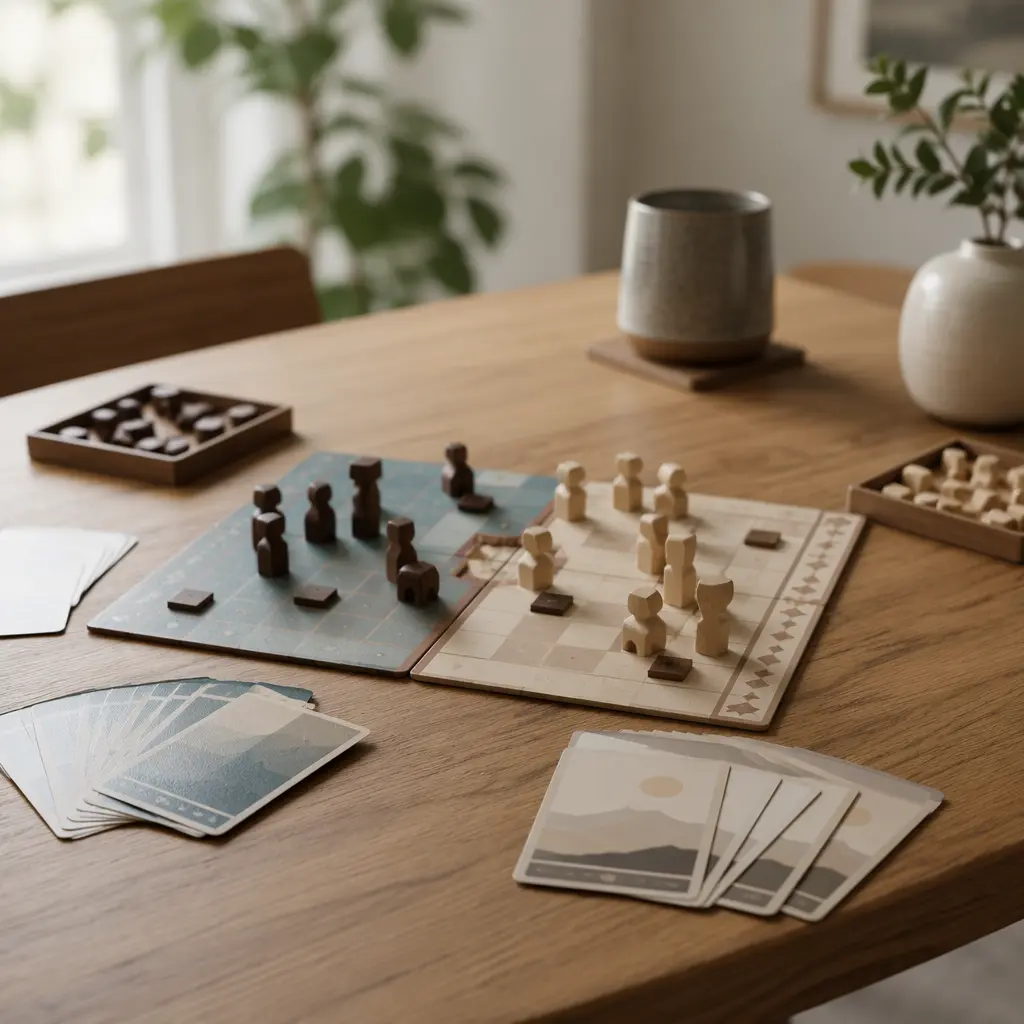
For this age group, the best two-player strategy games balance meaningful choices with rules that can be learned in one sitting. Games that take longer to explain than to play often lose momentum with children who want to get started quickly. Replay value matters too. A game with changing setups, multiple paths to victory or varied card combinations tends to hold attention longer than one with a fixed solution. Parents may also want to think about practical issues such as noise level, table space and whether pieces can be packed away easily between rounds.
- Look for setup times under 10 minutes if the game will be used on school nights.
- Choose durable components if younger siblings may handle the pieces.
- Consider whether direct competition causes frustration between siblings.
- Games with short rounds often work better for mixed attention spans.
- Compact box sizes are easier to store and travel with.
- Quiet games with cards or tiles are usually better for shared living spaces than fast-action dexterity games.
Age suitability
Ages 9–12 is a wide range, and strategy games vary significantly in complexity. Younger players in this group often do best with straightforward turn structures and visible goals, such as area control, tile placement or pattern building. Older children may enjoy deeper strategy systems involving resource management, long-term planning or bluffing. Reading demands are worth checking carefully. Some card-driven games rely heavily on text, while abstract strategy games use symbols or colors instead. If a child is new to hobby-style board games, simpler tactical games are often a better starting point than dense rule-heavy titles aimed at adults.
Options compared
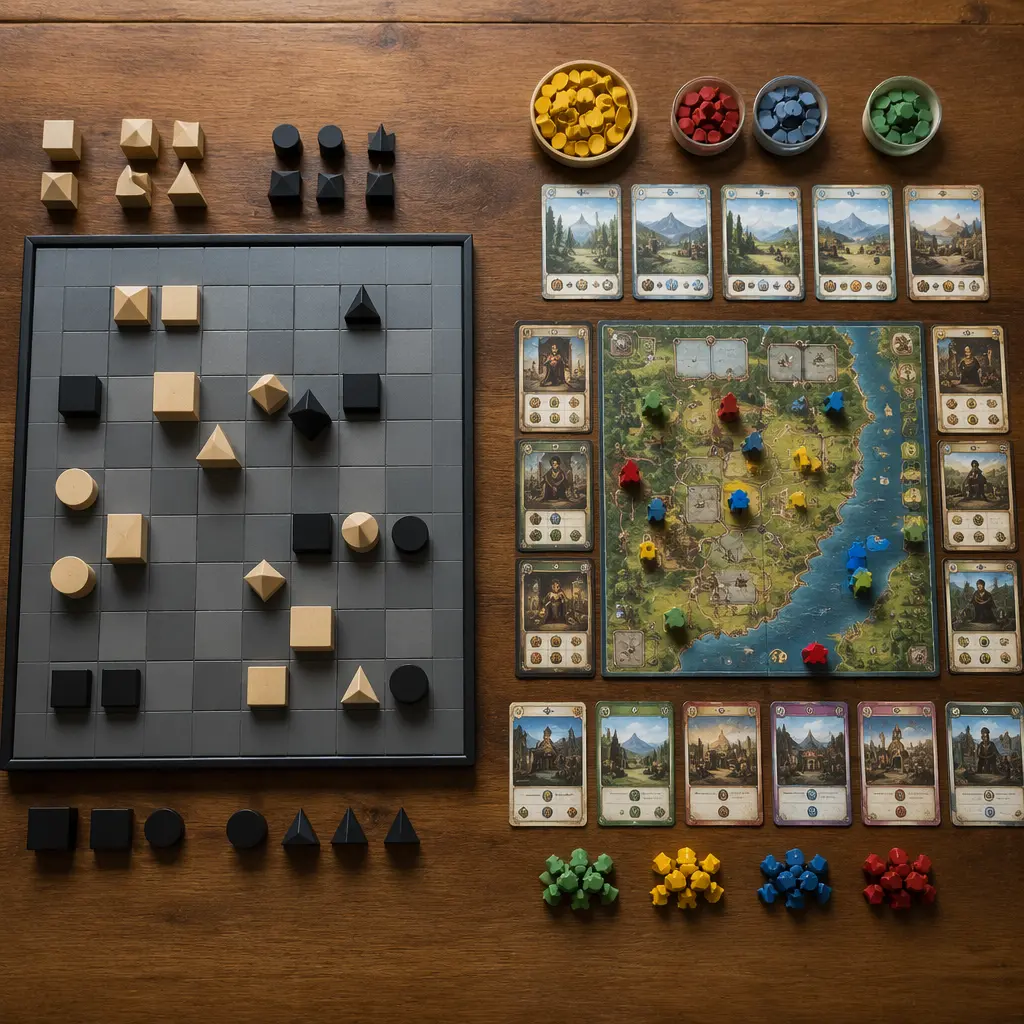
Abstract strategy games are often the easiest category to recommend for two players. These games focus on positioning, movement and pattern recognition rather than luck. They are usually quiet, compact and quick to set up, making them practical for regular use. Chess-style games, connection games and tile-laying puzzles can all suit children who enjoy thinking several turns ahead. The trade-off is that some abstract games feel repetitive to children who prefer themes, stories or surprises.
Card-driven strategy games tend to add more variety and replay value. Players may build combinations, manage resources or adapt to changing card draws. These games can feel more exciting for children who lose interest in purely logical puzzles, but they usually involve more rules and slightly longer setup times. Tactical skirmish games with miniatures or maps can also appeal strongly to this age group, especially for siblings who enjoy direct competition. However, they often require more table space, careful storage and greater patience during setup. Cooperative two-player strategy games are another option for children who become discouraged by repeated losses. Instead of competing, players solve challenges together, which can reduce conflict during family play.
- Abstract strategy games: low setup, quiet, durable, best for logical thinkers.
- Card-based strategy games: high replay value, moderate rules complexity, good for varied play.
- Tile-placement games: easy to learn, visually satisfying, often shorter sessions.
- Tactical battle games: immersive and competitive, but require more storage and setup.
- Cooperative strategy games: useful for children who prefer teamwork over direct rivalry.
Frequently asked questions
Are two-player games better than larger family games for this age?
Not necessarily, but two-player games are often easier to fit into daily routines. They usually start faster, finish faster and avoid the waiting time that can frustrate children during larger group games. They also work well when only one parent or one sibling is available to play.
What if one player is much stronger than the other?
Games with variable strategies, shorter rounds or cooperative modes can help reduce frustration. Some families also rotate handicaps, time limits or beginner-friendly rule adjustments so younger players stay engaged while they learn.
Do strategy games always take a long time to play?
No. Many modern two-player games are designed for sessions of around 15 to 40 minutes. Shorter games are often more practical for weekday evenings and encourage repeat matches without feeling like a major commitment.
Are travel-sized games worth considering?
Compact games can be very useful for holidays, restaurants or waiting rooms, especially if they use magnetic pieces, small boards or card-only formats. The trade-off is that tiny components may be easier to lose, and some portable editions simplify the gameplay.
What makes a game replayable for older children?
Replay value usually comes from meaningful choices rather than random outcomes alone. Games that allow multiple strategies, changing setups or evolving tactics tend to stay interesting longer than games where the same moves work every time.
The right two-player strategy game depends less on complexity and more on play style. Some children enjoy quiet, thoughtful puzzles while others want faster competition or thematic storytelling. For most families, games with quick setup, moderate rules and strong replay value are the safest choice because they are more likely to return to the table regularly instead of sitting unused on a shelf.