Best No-Battery Building Toys for Creative Kids
A parent-focused guide to classic, no-battery building toys for ages 6–8. Learn what to look for, age fit, safety tips, and creative categories that spark imagination without screens or instructions.
Compare prices and availability
Check current prices and availability for this guide on eBay.
As an eBay Partner, we may be compensated if you make a purchase.
No-battery building toys have been a staple of childhood for generations. For kids ages 6–8, these classic sets offer open-ended play that encourages imagination, problem-solving, and patience—without screens, sound effects, or step-by-step instructions. Instead of telling kids what to build, these toys invite them to decide, redesign, and try again. This guide explains what to look for, how to match sets to your child’s age, and which types tend to deliver the most creative value.
What to look for
At this age, kids are ready for more complex builds but still benefit from materials that feel intuitive. The best no-battery building toys balance freedom with just enough structure to keep frustration low. Durability matters too, since pieces will be assembled, knocked down, and rebuilt many times.
- Open-ended pieces: Sets without fixed outcomes let kids invent their own designs.
- Scalable complexity: Pieces that work for simple builds now and bigger ideas later extend play value.
- Sturdy materials: Solid wood, thick plastic, or well-made cardboard hold up to repeated use.
- Good friction or connection: Parts should stay together during play but separate without force.
- Clear storage options: A box or bag helps kids manage pieces independently.
Age suitability
For ages 6–8, building toys should support planning and experimentation. Kids in this range often enjoy creating recognizable structures—houses, vehicles, towers—then modifying them. Sets with very tiny parts or advanced engineering concepts may be better for older kids, while overly simple blocks can feel limiting. Look for sets labeled for early elementary ages and check piece counts to be sure there’s enough variety to support longer play sessions.
Standout categories or types
No-battery building toys come in several broad styles, each encouraging creativity in a slightly different way. Choosing a mix—or expanding over time—can keep kids engaged as their interests grow.
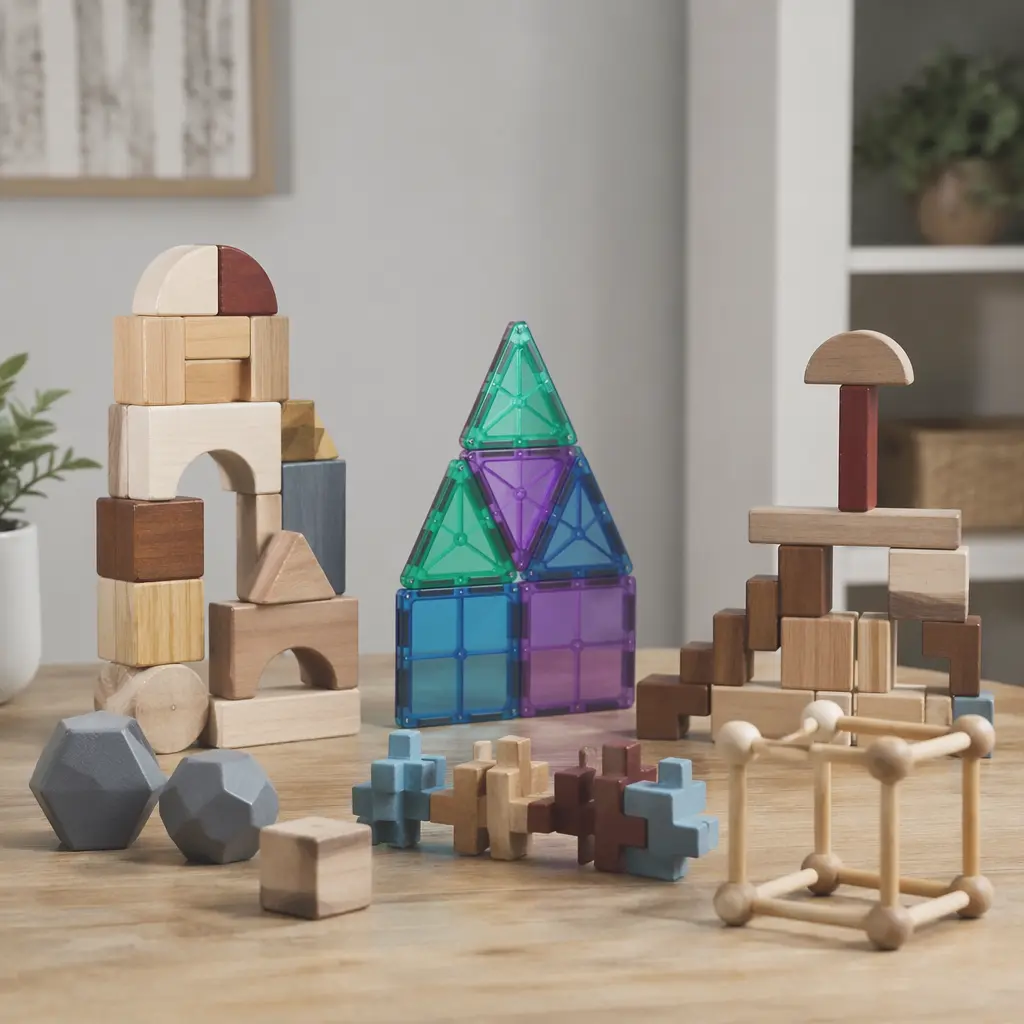
- Classic wooden blocks: Simple shapes that support freeform building and early design thinking.
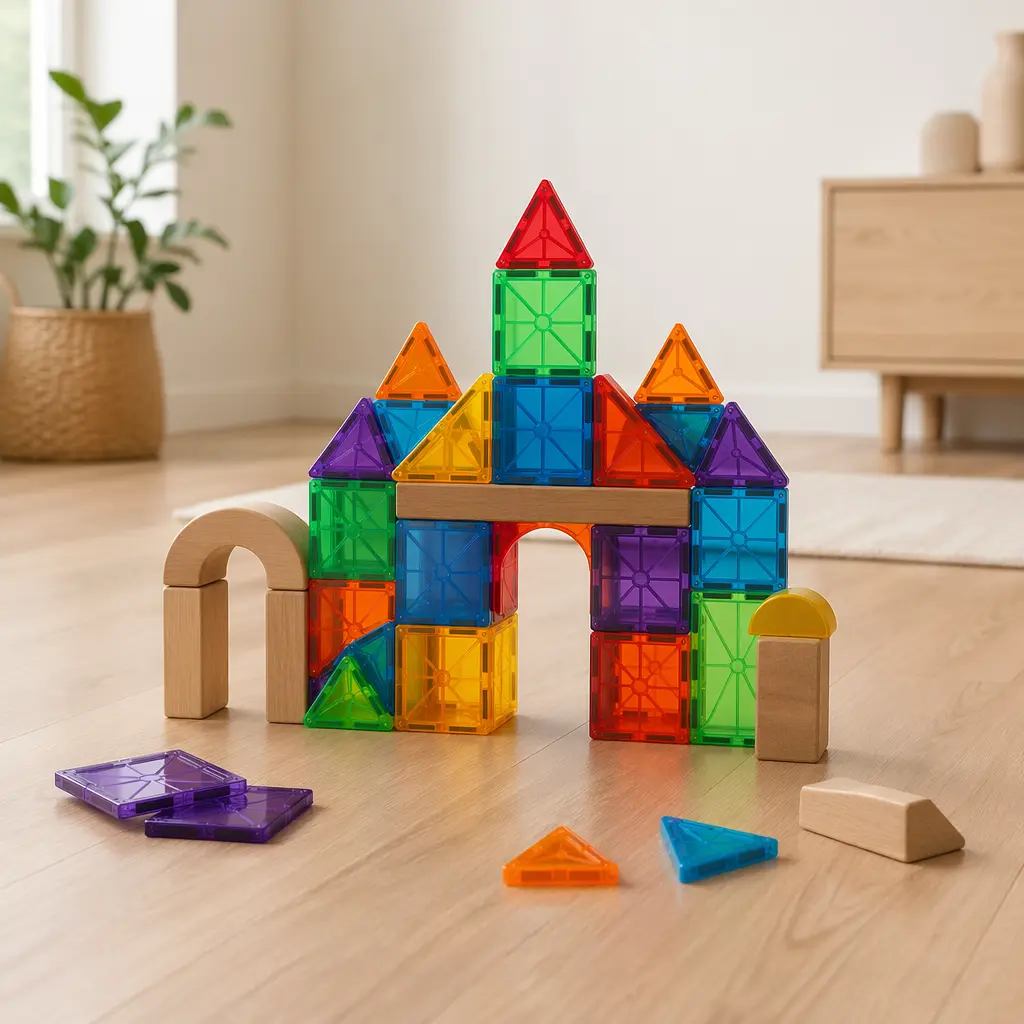
- Magnetic-style construction pieces: Easy connections make it faster to test ideas and rebuild.
- Interlocking systems: Repeating shapes teach patterns, symmetry, and structural balance.
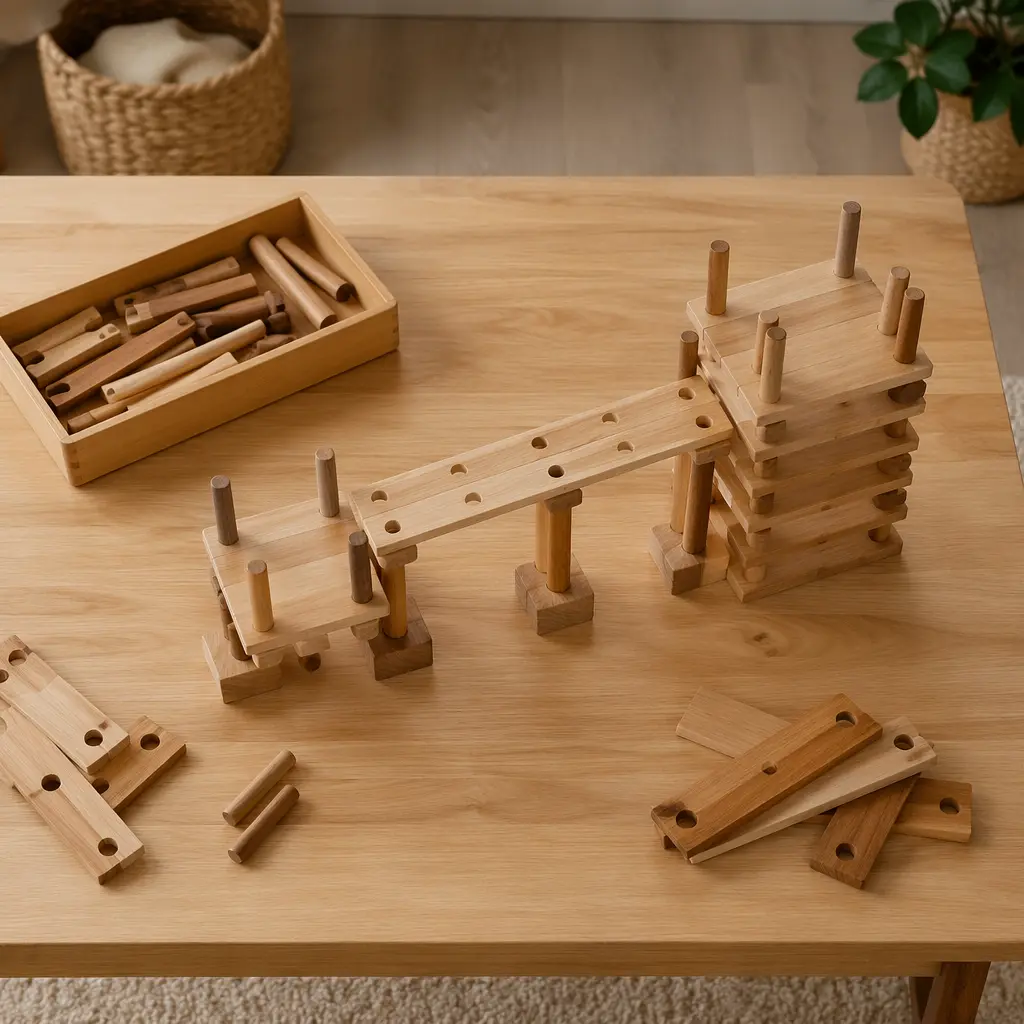
- Plank-and-connector sets: Longer pieces encourage bridges, ramps, and more complex structures.
- Cardboard building kits: Lightweight and recyclable options that are great for large-scale creations.
Frequently asked questions
Do no-battery building toys get boring without instructions?
For many kids, the lack of instructions is the point. Open-ended sets allow children to follow their own ideas, which often leads to longer and more creative play. Parents can support this by asking open questions like “What are you building?” rather than suggesting specific outcomes.
How many pieces are enough for this age?
A mid-sized set usually works well for ages 6–8. Enough pieces to build multiple structures at once helps prevent frustration, especially during collaborative play. If space allows, larger sets tend to offer better long-term value.
Are these toys educational or just for fun?
They can be both. Building toys naturally support skills like spatial reasoning, fine motor control, and early engineering concepts. Because learning happens through play, kids often stay engaged longer than with more structured educational tools.
Can multiple kids play together?
Yes. Many no-battery building sets work well for cooperative play, encouraging communication and shared problem-solving. Sets with uniform pieces are especially good for groups because everyone can contribute equally.
When chosen thoughtfully, no-battery building toys can become long-term favorites that grow with your child. By focusing on open-ended design, age-appropriate complexity, and durable materials, parents can support creative play that doesn’t rely on screens or instructions—and leaves plenty of room for imagination.