Foam Blocks vs Cardboard Bricks for Indoor Builds
Choosing between foam blocks and cardboard bricks for preschoolers? Compare durability, storage, noise, cleanup and crash safety for energetic indoor building play.
Compare prices and availability
Check current prices and availability for this guide on eBay.
As an eBay Partner, we may be compensated if you make a purchase.
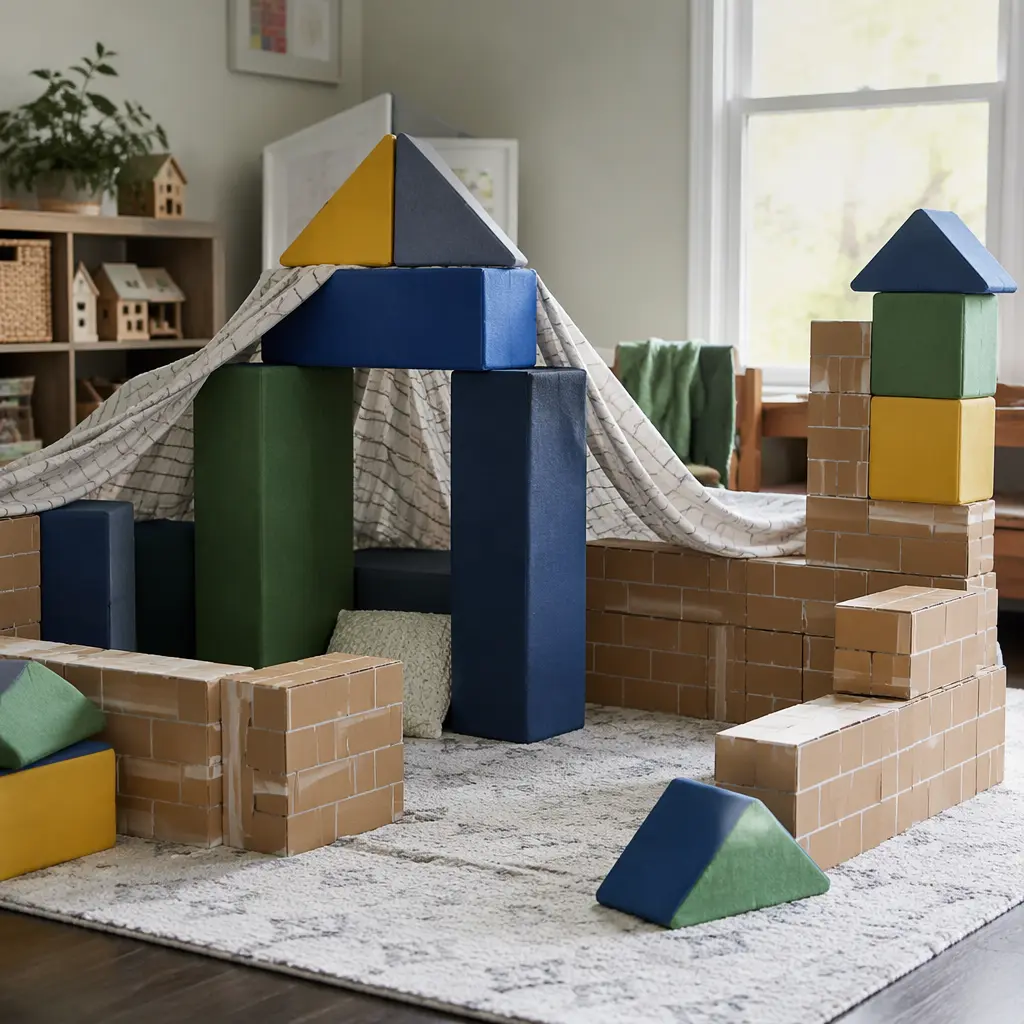
Large indoor building toys can keep preschoolers active without relying on screens, but foam blocks and cardboard bricks suit different homes and play styles. Both encourage open-ended construction, gross motor movement and cooperative play, yet the practical differences matter for parents. Noise levels, storage space, cleanup, durability and how safely children can tumble into their creations all affect which option works better day to day. For energetic children aged 3 to 5, the right choice often comes down to whether the priority is soft crash-friendly play, realistic stacking challenges or compact storage.
What to look for
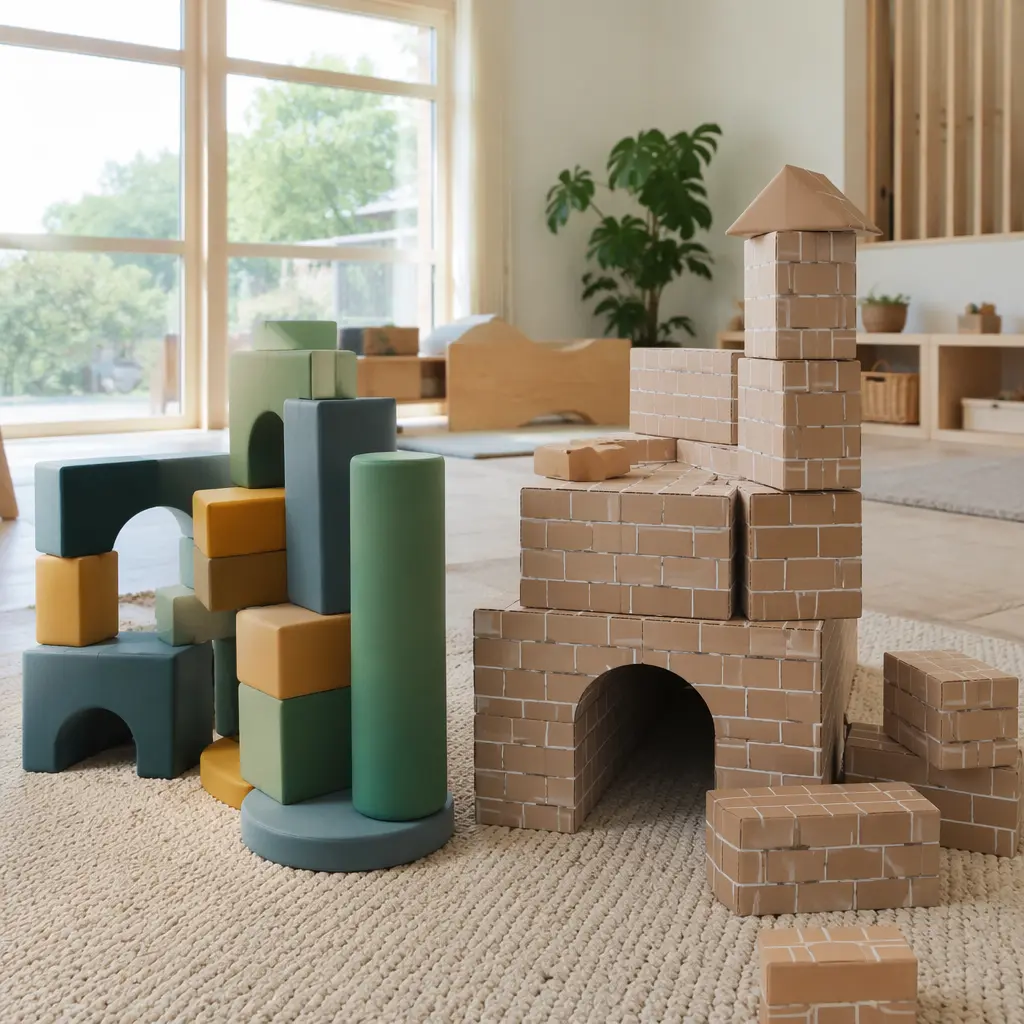
The biggest difference between these toy types is how they behave during active play. Foam blocks are usually softer, quieter and more forgiving when children fall or throw pieces. Cardboard bricks tend to feel more structured and realistic for building large walls, forts and pretend houses, but they can dent, collapse differently and create more noise during energetic sessions. Before choosing, think about where the toys will be used, how often they need to be packed away and whether the child prefers physical movement or careful construction.
- Check the amount of floor space needed for full builds as oversized sets can spread across entire rooms.
- Look for lightweight pieces that preschoolers can carry independently without frustration.
- Consider cleanup and storage shape. Flat-packed cardboard bricks often store smaller than bulky foam blocks.
- Think about noise if the toys will be used in apartments or shared living spaces.
- Choose surfaces that wipe clean easily, especially for younger preschoolers prone to spills or mouthing toys.
- Consider durability if siblings of different ages will use the set heavily every day.
- Look for stable stacking designs that do not collapse too easily during simple builds.
Age suitability
For ages 3 to 5, both foam blocks and cardboard bricks can support imaginative and physical play, but developmental differences matter. Younger preschoolers often enjoy foam blocks because the pieces are easier to grip, lighter to stack and safer during rough movement. Children closer to age 5 may appreciate cardboard bricks if they want to build taller structures, role-play homes or create more organized designs. Some children lose interest quickly if cardboard constructions collapse under climbing or rough handling, while others enjoy the challenge of rebuilding. Families with mixed-age siblings may find foam blocks more adaptable because toddlers can usually interact more safely under supervision. Cardboard bricks can work well for calmer children who enjoy planning and pretend construction games rather than crashing through towers repeatedly.
Options compared
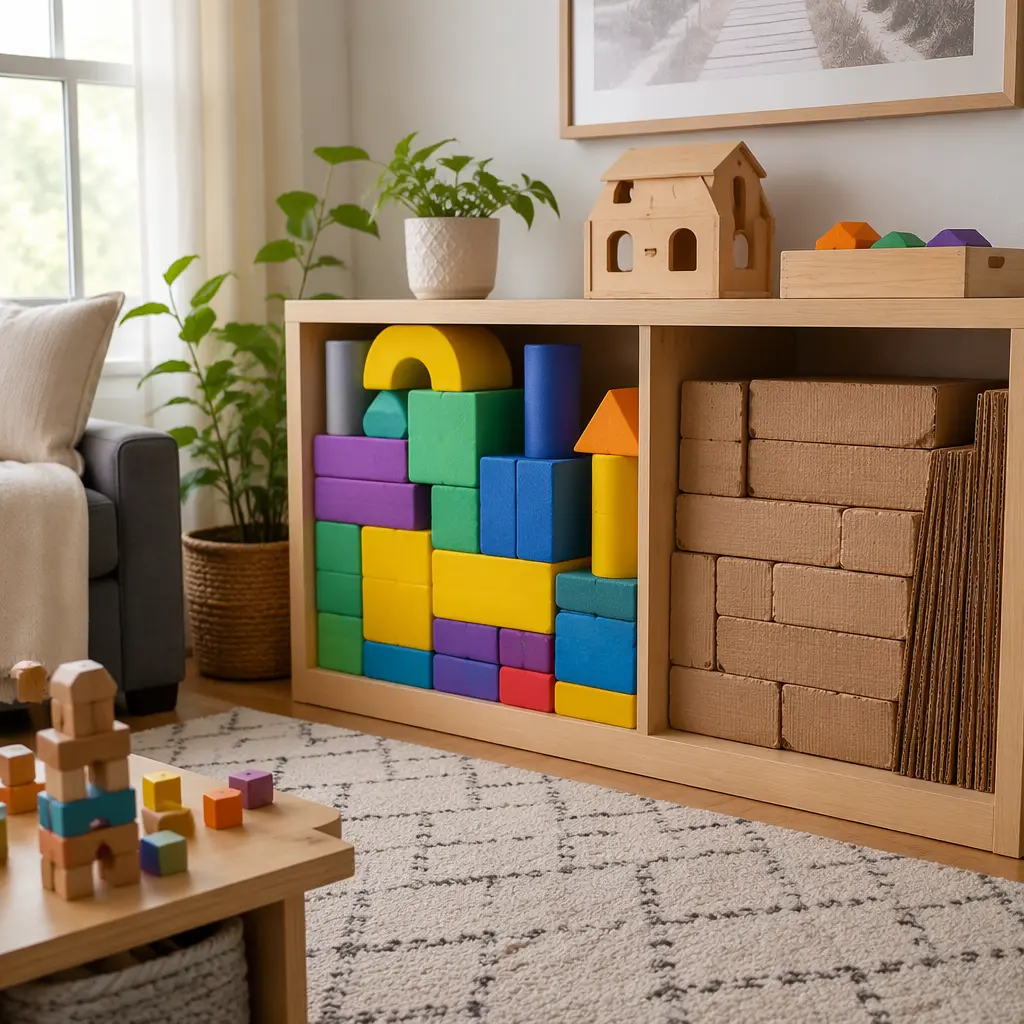
Foam blocks are usually the better fit for highly active indoor play. They tend to reduce noise, lower the chance of bumps during tumbles and hold up reasonably well to frequent crashing and rebuilding. They also work well in apartments or upstairs rooms where loud impacts can become tiring. The trade-off is storage. Large foam pieces can quickly take over closets, playrooms or living areas unless the set size stays modest. Some foam materials can also show wear over time if constantly compressed or chewed.
Cardboard bricks often appeal to families who want oversized building play without permanently dedicating large storage space. Many styles flatten or nest more efficiently than foam sets. They can encourage more deliberate construction because children need to think about balance and support. However, repeated rough play may crease or dent the pieces, especially in humid environments or homes where toys are stored carelessly. Cardboard also creates sharper corners than soft foam, even when designed for children. For energetic preschoolers who enjoy diving into forts or knocking down towers, foam is generally the more forgiving option. For children who enjoy pretend cities, shops or role-play houses and can handle toys more gently, cardboard bricks can feel more immersive and realistic.
- Foam blocks suit active climbers, crash-and-build play and noise-sensitive homes.
- Cardboard bricks suit imaginative fort building, role-play and homes with limited storage.
- Foam blocks are usually easier for younger preschoolers to manipulate safely.
- Cardboard bricks may feel more satisfying for taller walls and structured creations.
- Foam sets often require more dedicated storage baskets or floor space.
- Cardboard sets may wear faster if exposed to moisture or rough handling.
Frequently asked questions
Are foam blocks messy to maintain?
Most foam block sets are relatively simple to maintain with occasional surface wiping, but textured covers or stitched seams can trap dust over time. Large pieces also tend to spread around the house unless storage routines are consistent.
Do cardboard bricks last long enough for daily play?
That depends heavily on how children use them. Gentle builders may use cardboard bricks for years, while highly energetic preschoolers can crease corners and weaken connections much faster through climbing and jumping.
Which option is quieter in apartments?
Foam blocks are generally quieter because they absorb impact and create less clattering during building and cleanup. Cardboard bricks can still be quieter than hard plastic blocks, but tower collapses are usually more noticeable.
Can these toys replace smaller construction sets?
Large-format building toys support different skills than smaller bricks or magnetic tiles. They encourage whole-body movement, spatial awareness and cooperative fort building rather than fine motor precision.
How much space should parents expect to need?
Even medium-sized sets can dominate a small room during active play. Foam blocks require more permanent storage volume, while cardboard bricks are often easier to flatten or stack when not in use.
For energetic preschool play indoors, foam blocks are often the safer and quieter choice, especially in homes where children enjoy physical movement and frequent rebuilding. Cardboard bricks can still be an excellent option for imaginative builders who want larger structures without giving up as much storage space. The better pick depends less on appearance and more on how the child actually plays, how much room the household can spare and how much wear the toys are likely to face each week.