Marble Runs vs Magnetic Tiles for Daily Kid Builders
Choosing between marble runs and magnetic tiles for ages 6–8? Compare cleanup, frustration level, noise, expansion costs, storage and play styles to find the better fit for daily building play.
Compare prices and availability
Check current prices and availability for this guide on eBay.
As an eBay Partner, we may be compensated if you make a purchase.
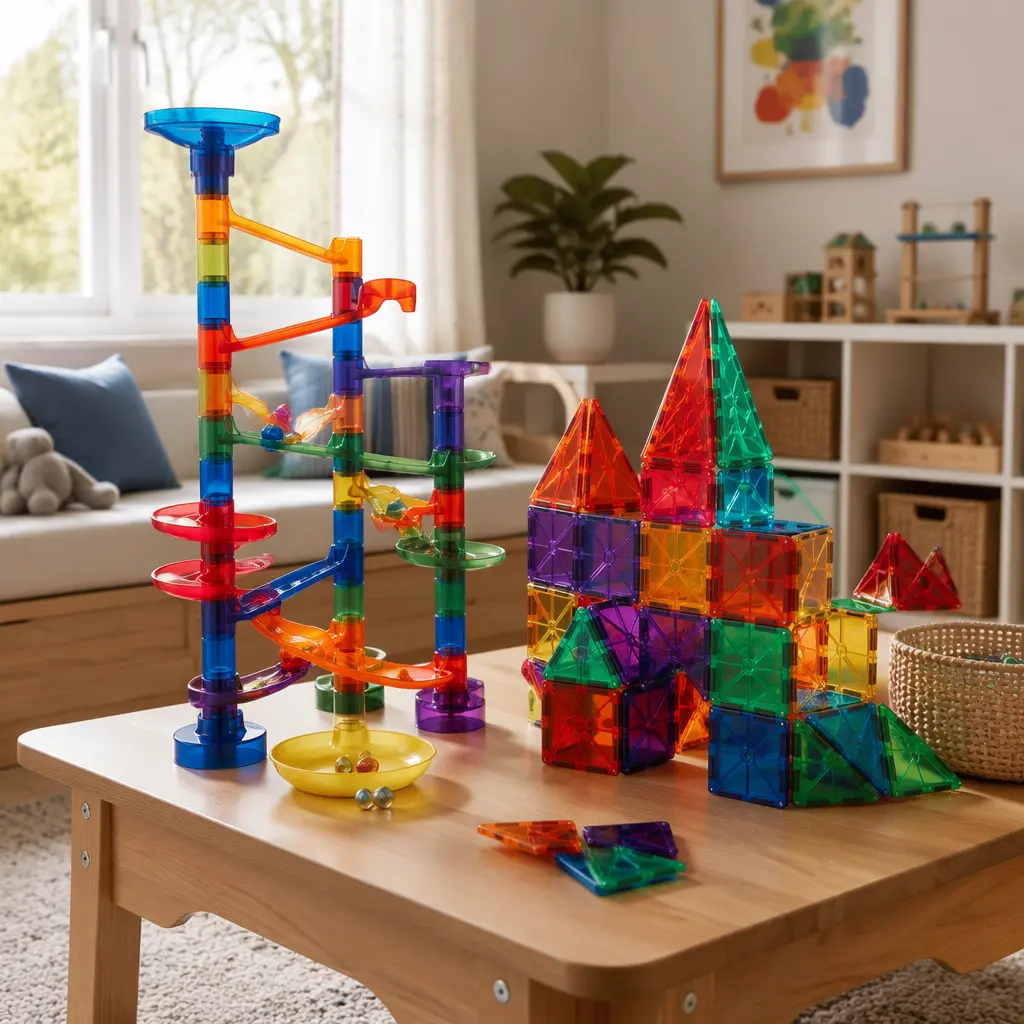
For children who build almost every day, both marble runs and magnetic tiles can support long stretches of screen-free play. They encourage problem-solving, experimentation and creative thinking, but they do it in different ways. Marble runs focus on sequences, gravity and precision. Magnetic tiles are usually more open-ended, allowing children to build houses, ramps, animals and abstract structures with fewer rules. For parents, the choice often comes down to practical concerns just as much as play value: how much noise the toy makes, how easy it is to clean up, whether builds collapse easily, and how expensive it becomes to expand a collection over time.
What to look for
For children aged 6–8, the most useful building toys balance creativity with enough challenge to stay interesting over time. Some children enjoy careful trial and error, while others become frustrated if structures fall apart too often. Think about where the toy will be used, how much adult help may be needed, and whether siblings will play together. Expansion costs also matter because many construction toys become more enjoyable with larger sets.
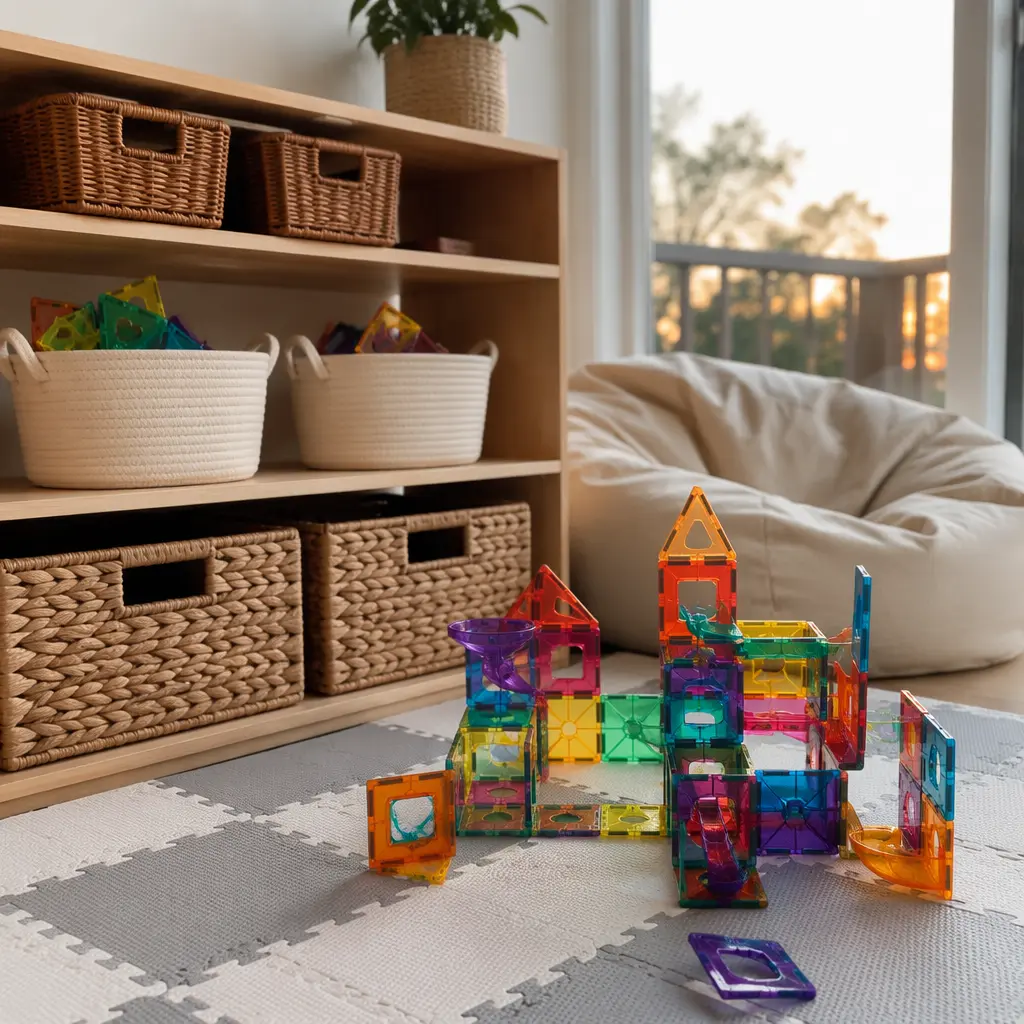
- Cleanup and storage: Magnetic tiles usually stack flat into bins or shelves, while marble run pieces can scatter easily and take longer to sort.
- Frustration level: Marble runs often involve rebuilding after failed runs or unstable sections. Magnetic tiles are generally quicker to rebuild and easier for independent play.
- Noise: Marble runs can become surprisingly loud on hard floors or in apartments because of rolling marbles and plastic impacts. Magnetic tiles are quieter overall.
- Expansion costs: Both systems often encourage adding more pieces over time. Large magnetic tile collections can become expensive, but marble runs may require expansion packs to create more complex tracks.
- Durability: Thick magnetic tiles tend to handle repeated use well. Marble run durability depends heavily on connector strength and piece quality.
- Shared play: Magnetic tiles are often easier for siblings or mixed ages to use together because multiple children can build separate structures at the same time.
- Floor space: Marble runs can spread outward and upward quickly. Magnetic tiles store compactly but large builds also need open floor or table space.
Age suitability
Children aged 6–8 usually have the patience and coordination needed for both toy types, but personality matters more than age alone. Marble runs suit children who enjoy experimenting, solving mechanical problems and repeating adjustments until a design works. They can be especially appealing to children interested in physics, cause-and-effect play or racing elements. Magnetic tiles tend to work better for children who prefer flexible creative play without strict rules. They are also often more approachable for children who dislike frequent collapses or become discouraged by trial-and-error construction. Families with younger siblings may also find magnetic tiles easier to supervise because loose marbles can create hazards for very young children.
Options compared
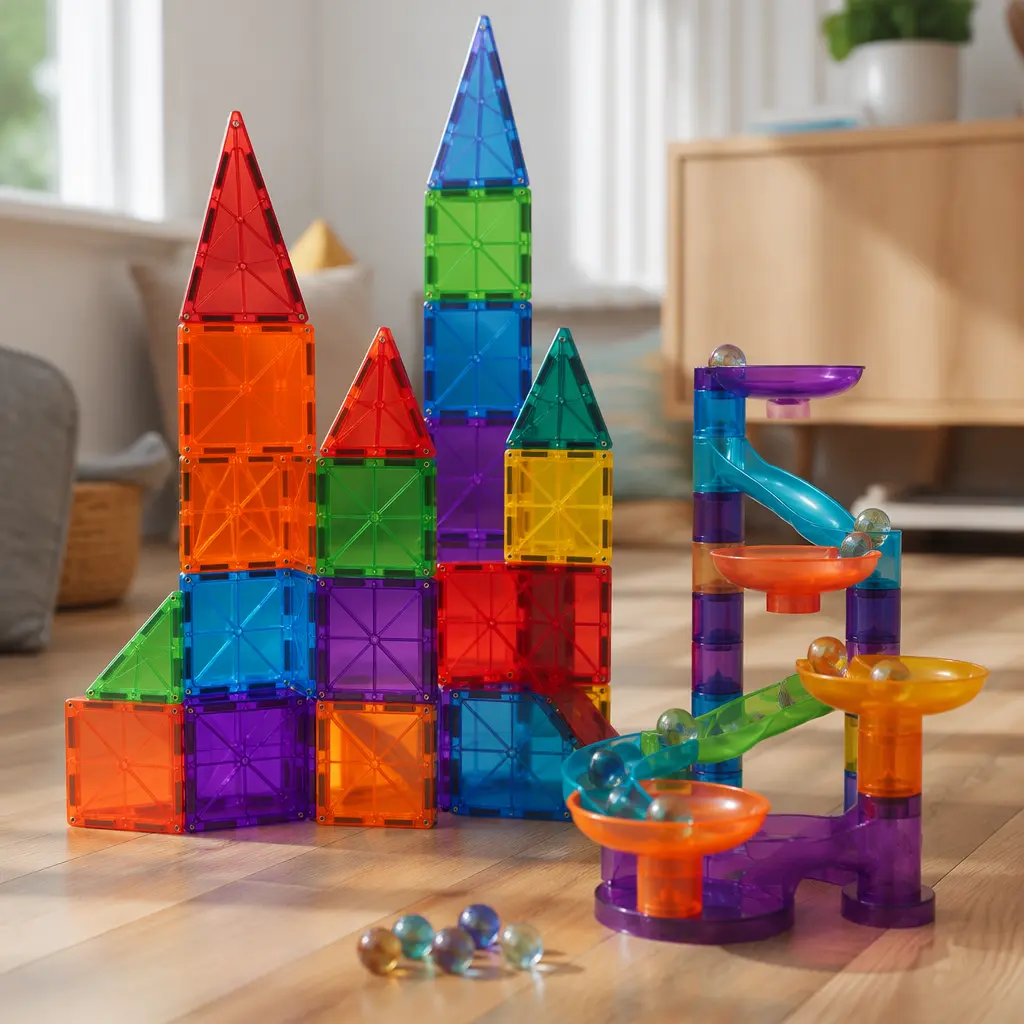
Magnetic tiles are usually the lower-frustration option for daily use. Children can build quickly, change ideas easily and recover from collapses without much effort. This makes them especially useful for independent play sessions before school, after dinner or during quiet indoor time. They also tend to transition well across ages because younger children may start with simple towers while older children create larger geometric designs, ball ramps or pretend-play structures. The downside is that some children eventually want larger collections to build ambitious projects, and expansion packs can add up over time.
Marble runs often create deeper engineering-style challenges. Children may spend long periods adjusting angles, testing speed or redesigning sections after a failed run. For highly persistent builders, that process can be the main attraction. However, children who want quick success may find repeated rebuilding frustrating. Noise is another major difference. Plastic marble runs on hardwood floors can become loud during active play. Cleanup can also take longer because small connectors and marbles spread easily under furniture. On the other hand, marble runs often hold attention for longer single sessions once children become confident builders.
- Choose magnetic tiles if your child prefers creative freedom, quieter play, faster setup and easier cleanup.
- Choose marble runs if your child enjoys experimentation, engineering challenges and repeated problem-solving.
- Magnetic tiles often suit shared sibling play better because multiple builders can work at once.
- Marble runs may fit children who enjoy focused solo projects with clear mechanical goals.
- Families in smaller apartments may appreciate the quieter and more compact storage of magnetic tiles.
- Children who become discouraged by collapses may find marble runs less enjoyable without occasional adult support.
Frequently asked questions
Which toy keeps children busy longer?
It depends on the child’s play style. Marble runs can support long, focused building sessions because children continually test and improve designs. Magnetic tiles often encourage shorter but more frequent creative sessions throughout the day.
Are magnetic tiles too easy for ages 6–8?
Not necessarily. While younger children can use them, older children often create increasingly complex structures, ramps and imaginative builds. Larger collections generally provide more challenge and flexibility for this age group.
Which option is easier to clean up?
Magnetic tiles are usually simpler to tidy because they stack neatly and contain fewer tiny parts. Marble runs often involve many connectors and loose marbles that can roll under furniture or mix with other toys.
Do marble runs require adult help?
Some children can build independently at this age, but frustration levels vary. Complex marble runs may need occasional adult help with stability or troubleshooting, especially early on. Magnetic tiles are generally easier for independent use.
Which toy grows better with a child over time?
Both can last for years if children stay interested in building. Magnetic tiles often expand into pretend play and larger architectural designs, while marble runs can become more technical and engineering-focused as children develop patience and planning skills.
For most families, the decision comes down to whether a child prefers open-ended creativity or structured experimentation. Magnetic tiles usually fit homes looking for quieter, lower-maintenance building play with easier cleanup. Marble runs can be rewarding for children who enjoy persistence, testing ideas and solving mechanical problems. Either option can support strong screen-free play habits when matched carefully to a child’s temperament, available space and family routine.