Foldable Soccer Goals vs Pop-Up Nets for Small Yards
Compare foldable soccer goals and pop-up nets for kids aged 6–8. Learn which option fits small yards based on setup time, storage, durability, supervision and everyday play.
Compare prices and availability
Check current prices and availability for this guide on eBay.
As an eBay Partner, we may be compensated if you make a purchase.
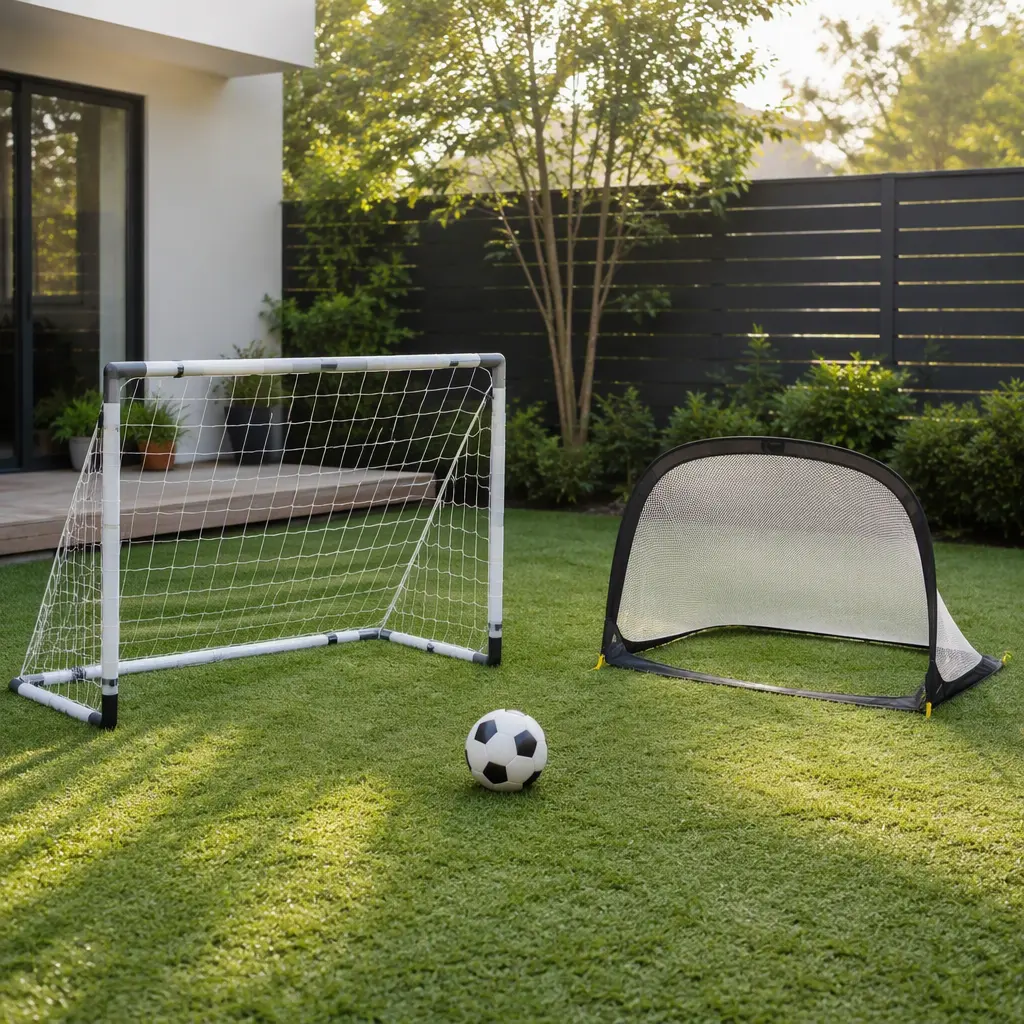
For families with limited outdoor space, choosing between foldable soccer goals and pop-up nets usually comes down to three practical questions: how fast they set up, how well they survive regular use, and where they will live when not in use. Both options can work well for children aged 6 to 8, especially for casual kicking practice, sibling games and screen-free outdoor play. The right choice depends less on soccer skill level and more on the realities of your yard, storage space and how often the equipment will be moved.
What to look for
Small-yard soccer equipment benefits from simple design more than professional features. Parents often find that lightweight goals are easier to use regularly, but sturdier frames tend to last longer if children play aggressively or leave equipment outdoors. Before choosing, consider how much setup adults are willing to handle and whether the goals need to be packed away after every session.
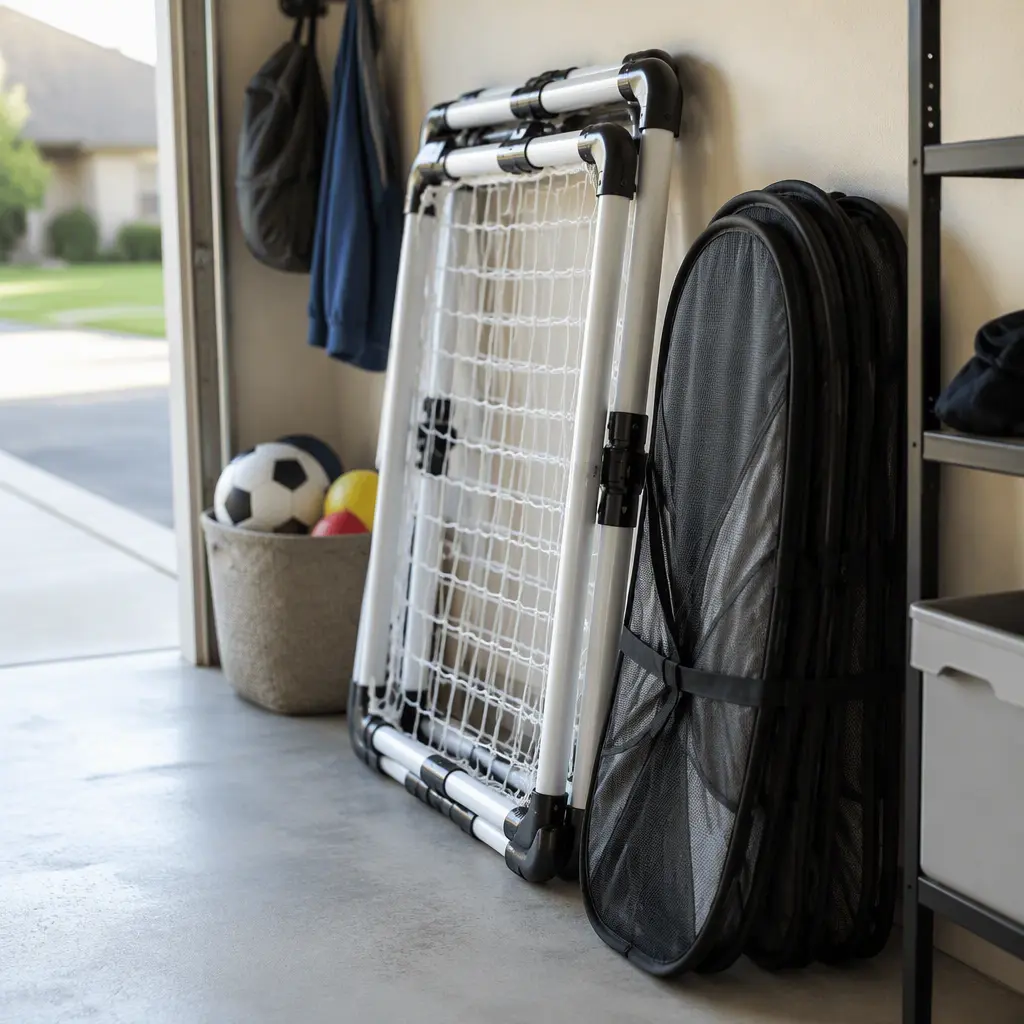
- Storage footprint matters in small homes or shared garages. Pop-up nets usually collapse flatter, while foldable frame goals can take up more floor space.
- Setup time affects how often children actually use the goals. Pop-up styles are typically faster to deploy, while frame goals may require locking poles or clips into place.
- Durability varies widely. Flexible pop-up nets handle light play well but may wear faster if children climb, hang or kick hard shots repeatedly.
- Weight can be a trade-off. Lightweight goals are easy to carry but may slide or tip in windy conditions without anchors.
- Yard surface matters. Soft grass works with most stake systems, while hard ground or patios may limit stability options.
- Noise can become an issue in tight neighborhoods. Metal frame goals can create louder impacts than softer pop-up styles.
- Consider weather exposure. Equipment left outside year-round may fade, rust or weaken depending on frame and net materials.
- Storage bags and removable parts are useful for families who transport goals to parks or grandparents’ homes.
Age suitability
Children aged 6 to 8 are often active enough to use either style successfully, but their play habits can influence which type works best. Pop-up nets suit younger or more casual players who mainly want quick games and target practice without adult help. Their lighter structure also feels less intimidating in compact spaces. Foldable frame goals usually suit children who play more frequently, practice stronger shots or want a goal that feels closer to a real soccer setup. At this age, many children still forget to carry equipment carefully or avoid rough handling, so durability and ease of resetting tipped goals are worth considering.
Options compared
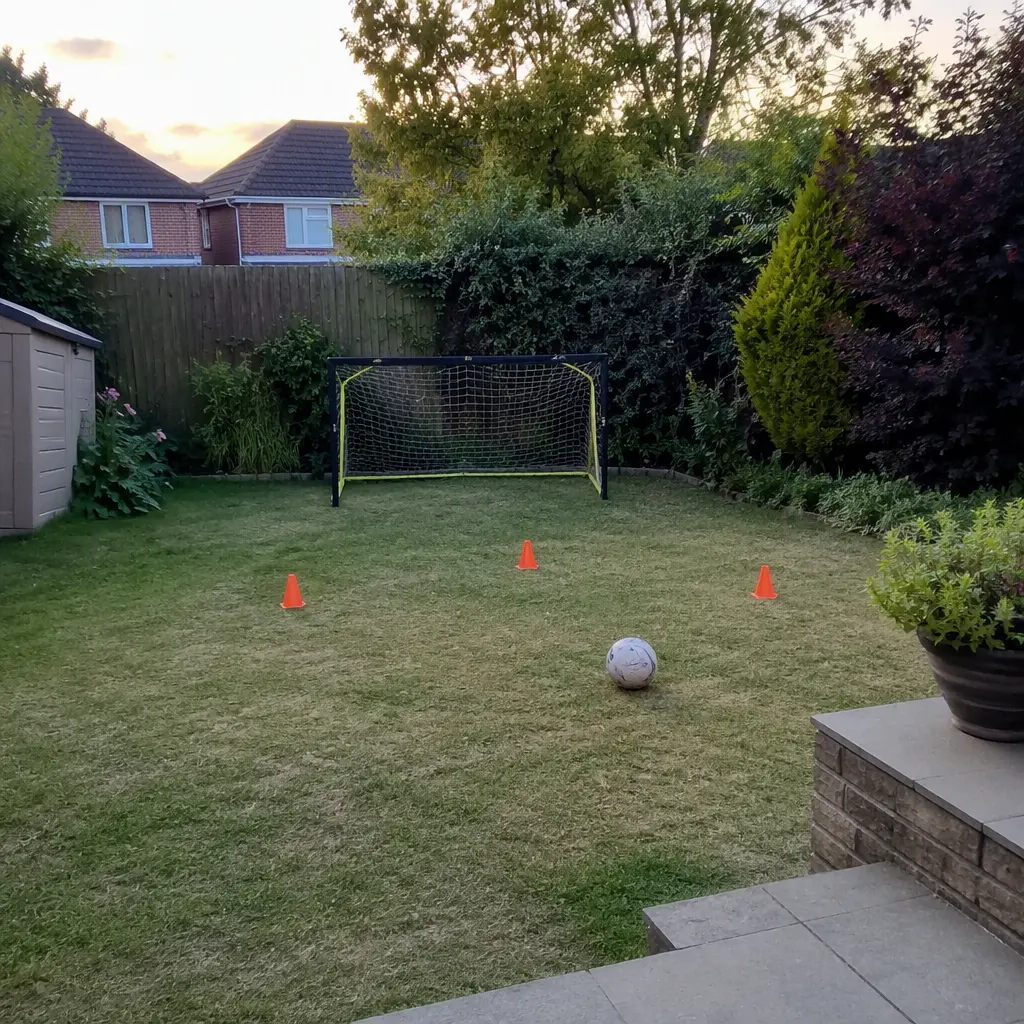
Pop-up nets are usually the easiest option for busy families. They open quickly, store compactly and work well for spontaneous outdoor play sessions. Many children can carry and position them independently, which encourages more frequent use. They also tend to fit comfortably in narrow side yards or shared outdoor areas where permanent equipment would feel intrusive. The trade-off is durability. Repeated hard shots, roughhousing or exposure to weather can strain flexible frames and net seams over time. Some children also find lightweight nets less satisfying because the ball impact feels softer and the goals may shift during play.
Foldable soccer goals generally provide more stability and a more realistic practice experience. They often stay upright better during stronger shots and can handle more energetic games between siblings or friends. Families with children who regularly attend soccer practice may prefer the sturdier feel. However, these goals can require more storage space and slightly longer setup. Some frame-based designs also involve more parts, which increases the chance of missing connectors or bent poles after repeated folding and transport.
- Choose pop-up nets if fast setup, compact storage and portability matter most.
- Choose foldable frame goals if durability and stability are higher priorities.
- For very small yards, lower-profile pop-up styles may feel less visually crowded.
- For frequent weekend practice, sturdier foldable goals usually tolerate repeated use better.
- Families who pack equipment away after every use often prefer lightweight options.
- Children who play mostly solo may not need the extra structure of larger framed goals.
Frequently asked questions
Are pop-up soccer nets durable enough for everyday use?
They can be suitable for regular casual play, especially if stored indoors between sessions. Their lifespan often depends on how aggressively children use them and whether they are left outdoors in sun or rain. For light practice and occasional games, many families find them practical and convenient.
Do foldable goals take much longer to set up?
Some do, particularly models with multiple frame sections or locking pieces. Others are designed for fairly quick assembly. In general, pop-up nets are faster, but foldable goals often reward the extra setup time with better stability during play.
Which option is safer for small yards?
Safety depends more on proper setup and supervision than on the goal style itself. Lightweight goals reduce some tipping risks but may slide unexpectedly. Heavier frame goals should always be anchored properly and positioned away from hard surfaces, windows and walkways.
Can these goals stay outside permanently?
Occasional outdoor storage is common, but long-term exposure to weather can shorten the life of nets, connectors and frames. Families with limited storage may want rust-resistant materials and quick-fold designs that are easy to move indoors when not in use.
What size works best for children aged 6 to 8?
In small yards, compact child-sized goals are usually easier to manage than oversized training goals. Smaller setups encourage more accurate shooting and leave safer running space around the play area. The ideal size depends on available yard width and how many children typically play together.
For most small-yard families, the decision comes down to convenience versus sturdiness. Pop-up nets fit households that value quick outdoor play and compact storage, while foldable frame goals better suit children who practice often or play more energetically. Measuring your storage space first and thinking realistically about how often the goals will be packed away can make the choice much easier.