Battery-Free Music Toys Parents Can Live With
A parent-focused guide to quieter battery-free music toys for ages 1–2, covering volume, durability, storage, supervision and which toy styles work best in noise-sensitive homes.
Compare prices and availability
Check current prices and availability for this guide on eBay.
As an eBay Partner, we may be compensated if you make a purchase.
Battery-free music toys can give toddlers a satisfying way to explore sound without adding another flashing, repetitive electronic toy to the living room. For homes that are sensitive to noise, though, the challenge is finding instruments and rhythm toys that stay engaging without becoming overwhelming after a few minutes. For children aged 1–2, the best options usually focus on gentle sound, simple cause and effect, and open-ended play rather than loud performance features. Materials, room acoustics, and toy design all make a noticeable difference to how tolerable a music toy feels during everyday use.
What to look for
For toddlers, quieter music toys tend to work better when they encourage experimentation instead of constant high-volume banging. Softer materials and smaller sound chambers often create gentler noise levels than hard plastic toys. It also helps to think about where the toy will be used. A drum on hardwood floors sounds much louder than the same drum on a carpeted play mat. Storage matters too, since loose rhythm instruments can quickly spread across a room.
- Look for wood, fabric, silicone or padded surfaces that soften sharp sounds.
- Choose smaller sets instead of large multi-instrument collections if storage space is limited.
- Simple instruments such as egg shakers, scarves with bells, or soft drums often age better than novelty sound makers.
- Avoid toys with thin metal parts that create piercing or echoing noise indoors.
- Check that pieces are large enough for toddlers and do not include detachable small components.
- Consider whether the toy supports independent play or works best with adult participation.
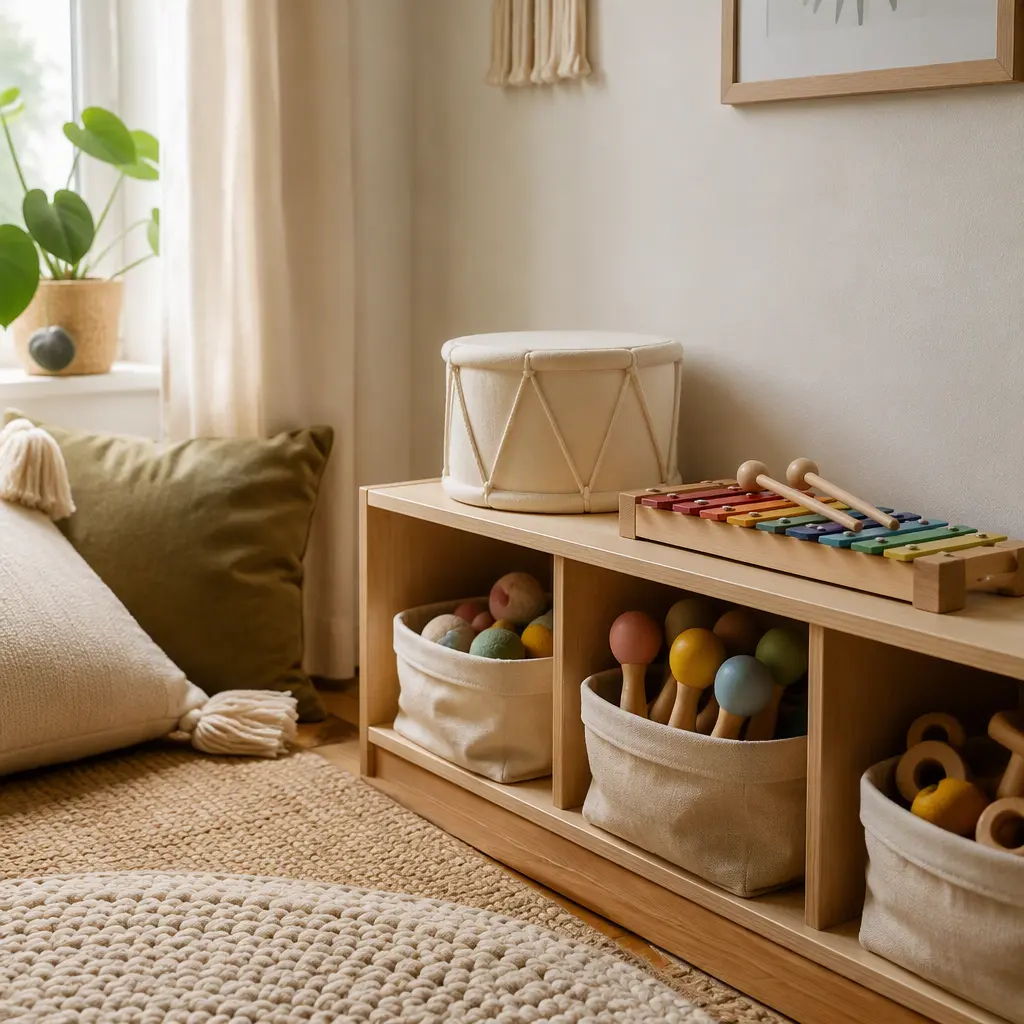
- Foldable mats, stackable drums and basket-friendly instruments are easier to keep organized in shared spaces.
Age suitability
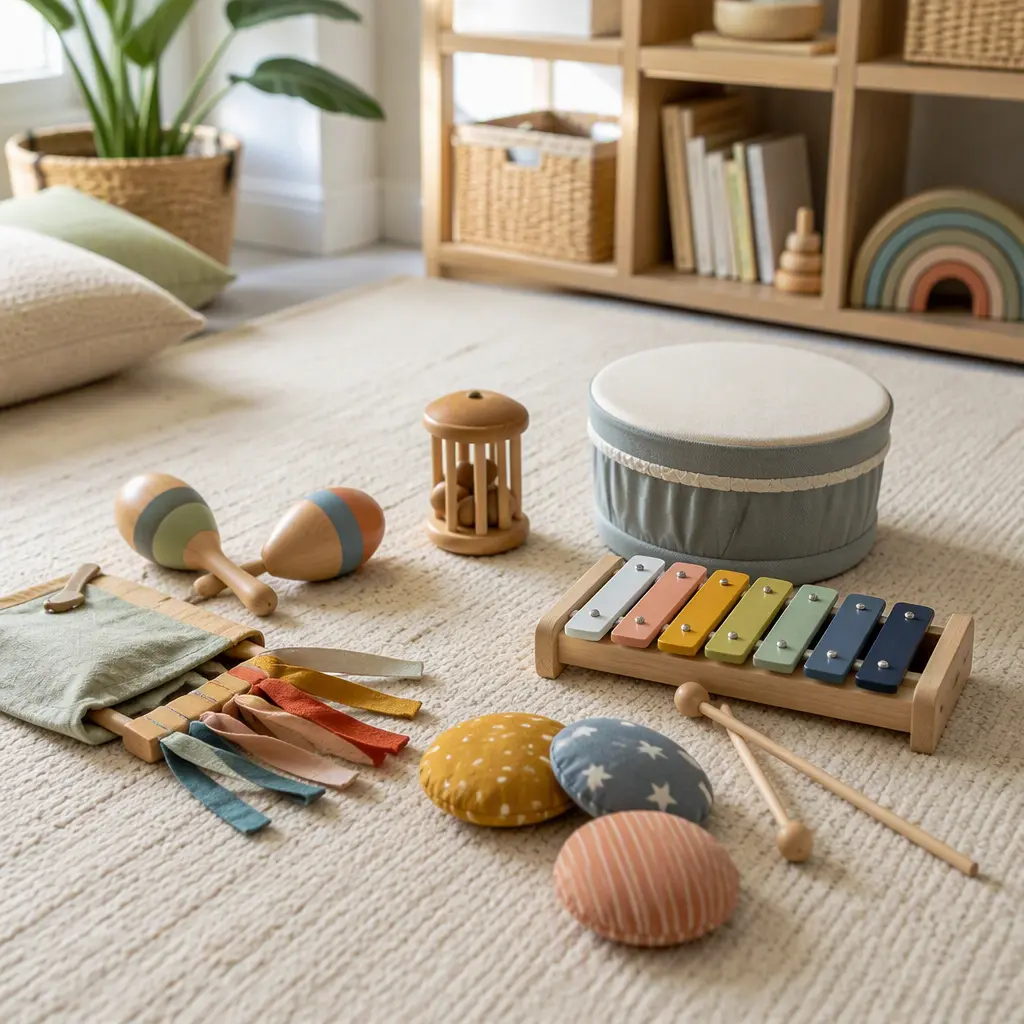
Between 1 and 2 years old, toddlers are usually more interested in cause and effect than rhythm accuracy. They enjoy shaking, tapping, dropping and repeating sounds. At this age, lightweight instruments that respond easily to movement are often the most successful. Soft maracas, toddler-safe xylophones with large bars, fabric bells and hand drums designed for early years play tend to match developing coordination skills. Toys intended for older children may have smaller parts, louder metal components or more complex play patterns that frustrate younger toddlers. It is also common for children in this age group to switch quickly between activities, so shorter, open-ended play sessions often work better than toys designed around structured songs or lessons.
Options compared
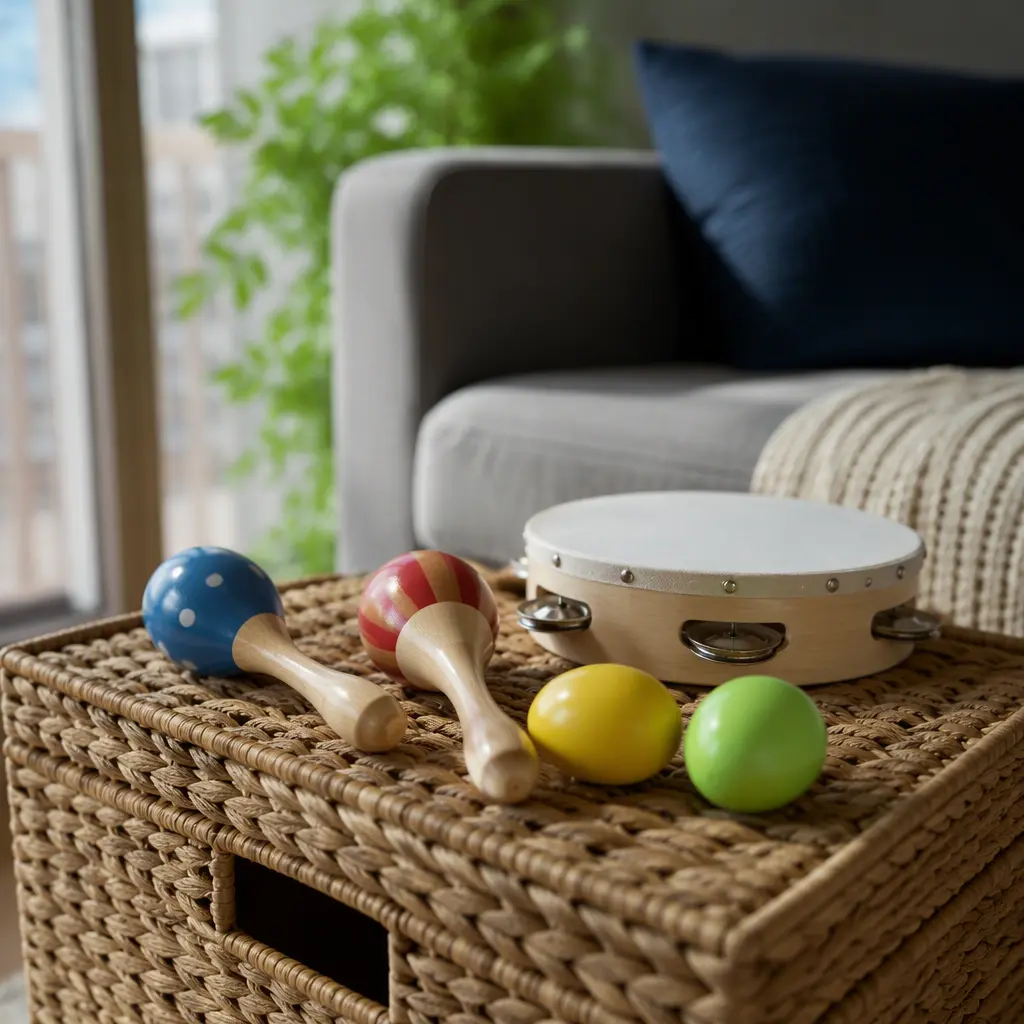
Shakers and rattles are usually the easiest starting point for noise-sensitive homes. Fabric-covered shakers and plastic egg shakers create softer sounds than traditional hard maracas, while still giving toddlers immediate feedback. They are lightweight, portable and inexpensive, but some children lose interest once the novelty of shaking wears off. These work best for short bursts of movement play and music time with caregivers.
Toddler drums vary widely in volume. Padded or fabric-sided drums generally produce a deeper, less sharp sound than hard plastic versions. They encourage gross motor movement and tend to hold attention longer because toddlers can experiment with different tapping styles. The trade-off is that drums take up more floor space and can become repetitive in apartments or shared living areas. Xylophones and glockenspiel-style toys offer more variety in tone, but metal bars are often noticeably louder than wooden ones. Wooden tone bars usually sound warmer and less piercing indoors, though they may not produce accurate musical notes. For many families, that is a worthwhile compromise during the toddler stage.
- Soft fabric instruments: quietest option, easy storage, good for very young toddlers, but less durable if chewed or heavily washed.
- Wooden percussion toys: durable and screen-free with natural sound quality, though some can still be loud on hard surfaces.
- Toddler xylophones: longer-term play value and variety of sound, but volume depends heavily on materials.
- Bell instruments: engaging and portable, though constant jingling may become tiring in small homes.
- Multi-piece music sets: useful for sibling play or group activities, but harder to store and easier to scatter around the house.
Frequently asked questions
Are wooden music toys quieter than plastic ones?
Often, yes. Wooden instruments typically produce a warmer and less harsh sound than lightweight plastic toys, especially in small indoor rooms. However, hardwood instruments can still become loud if toddlers bang them against floors or furniture. Softer finishes and padded beaters help reduce sharp noise.
Which music toys usually keep toddlers interested the longest?
Open-ended instruments with several ways to play tend to last longer. Drums, xylophones and mixed rhythm baskets usually offer more replay value than single-function novelty toys. Toys that can be combined with singing, dancing or pretend play also tend to stay useful beyond the first few months.
Do toddlers need realistic musical instruments?
Not necessarily. At ages 1–2, safe exploration matters more than musical accuracy. Oversized keys, simplified shapes and softer materials are often more practical for early play. Realistic instruments may become more useful later when coordination and attention span improve.
How can parents make music play less noisy?
Soft furnishings make a noticeable difference. Rugs, play mats, curtains and cushions absorb sound better than tile or hardwood floors. Limiting music toys to certain rooms or times of day can also help. Some families rotate instruments so only one or two are available at a time instead of leaving a full basket out all day.
Are battery-free music toys better for independent play?
They can be, especially for toddlers who become overstimulated by flashing lights and constant prerecorded sounds. Simple rhythm toys encourage experimentation and movement at the child's own pace. That said, many 1–2 year olds still enjoy music toys most when an adult joins in with songs, clapping or imitation games.
For noise-sensitive homes, the most practical battery-free music toys are usually the simplest ones. A small collection of softer percussion instruments often creates less stress than a large musical play set with many competing sounds. Choosing toys that match both a toddler’s developmental stage and the household environment can make music play feel more manageable, while still giving young children a fun, screen-free way to explore rhythm and sound.