Durable Play Food Sets for Rough Toddler Pretend Play
A parent-focused guide to play food sets for toddlers aged 1–2 years, covering durable materials, safe sizing, storage options, cleanup, and which styles suit everyday rough play.
Compare prices and availability
Check current prices and availability for this guide on eBay.
As an eBay Partner, we may be compensated if you make a purchase.
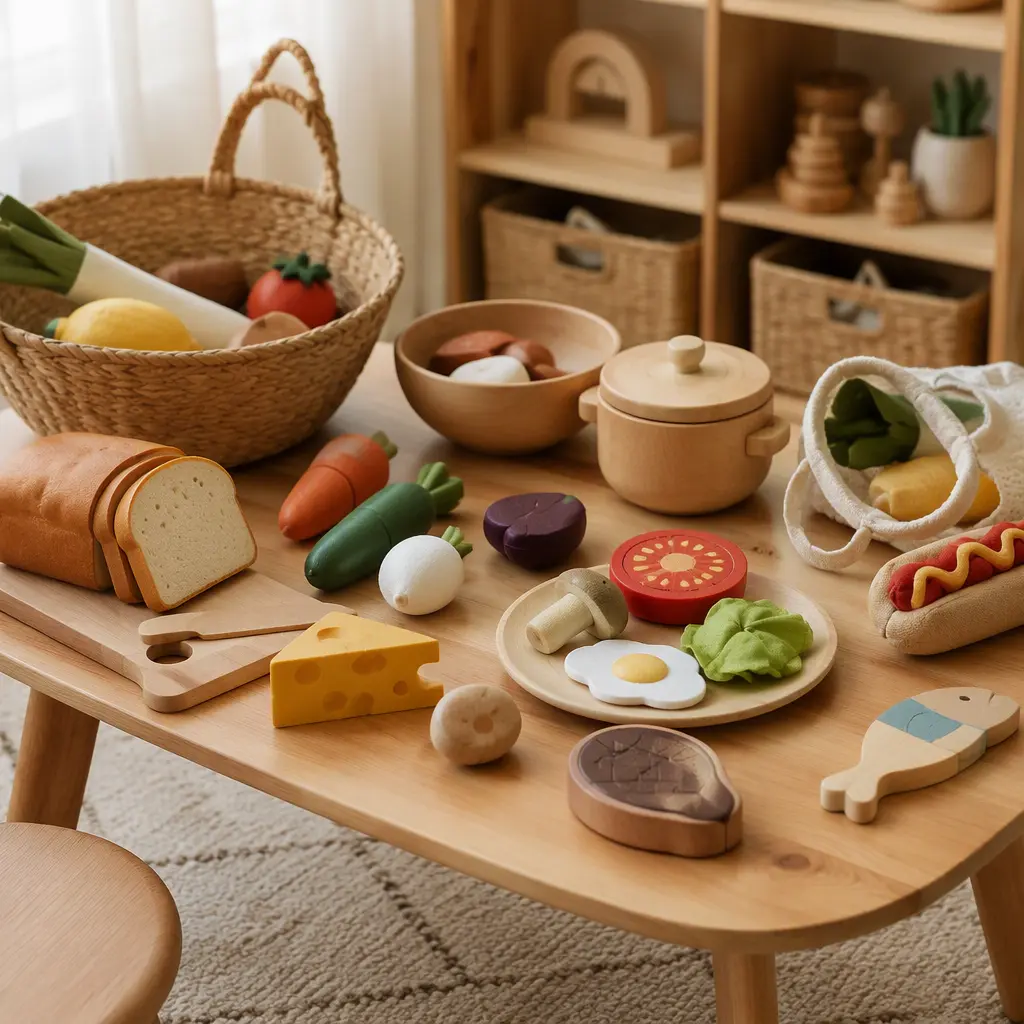
Play food sets can become everyday toys for toddlers between 1 and 2 years old. They are handled roughly, stepped on, thrown into toy bins, carried around the house and sometimes chewed during play. A set that works well for this age group usually focuses less on realistic details and more on durability, safe sizing and simple cleanup. Parents often end up choosing between wooden food pieces, soft fabric items, chunky plastic sets or mixed-material collections. Each type has strengths and trade-offs depending on storage space, noise tolerance and how independently a toddler plays.
What to look for
For rough toddler play, the most useful play food sets are usually simple, sturdy and easy to clean. At this age, children are still learning how to handle toys carefully, so lightweight pieces with smooth edges tend to last longer and create fewer frustrations. Storage matters too. Large sets can quickly spread across the floor, while tiny accessories often disappear under furniture or create cleanup stress.
- Choose chunky pieces that are too large to fit fully into a toddler’s mouth.
- Rounded edges and smooth finishes are easier on floors, furniture and small hands.
- Wooden food pieces are durable but can be noisy when dropped on hard floors.
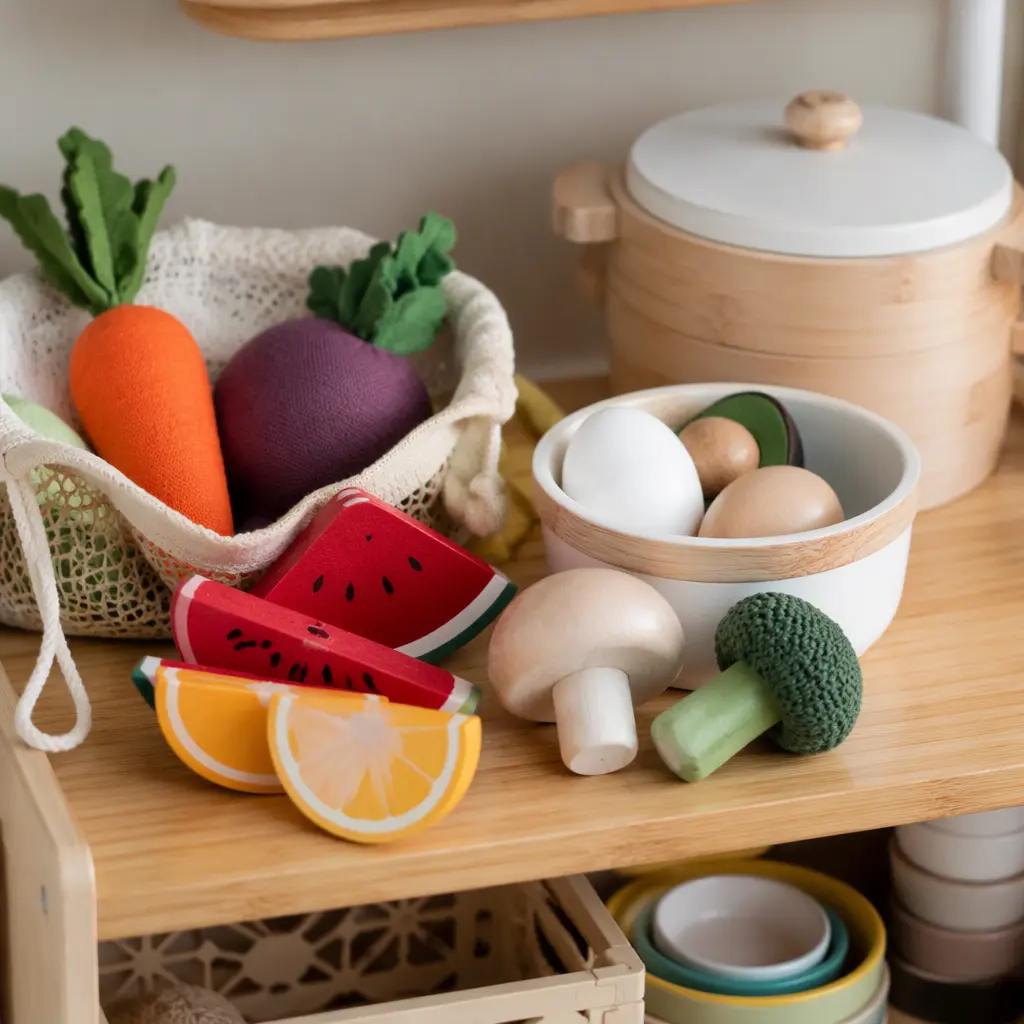
- Soft fabric or plush food is quieter and safer for throwing indoors but may need occasional washing.
- Thick plastic pieces are lightweight and often easier to wipe clean after messy play.
- Avoid sets with many tiny accessories, detachable magnets or delicate fasteners for this age group.
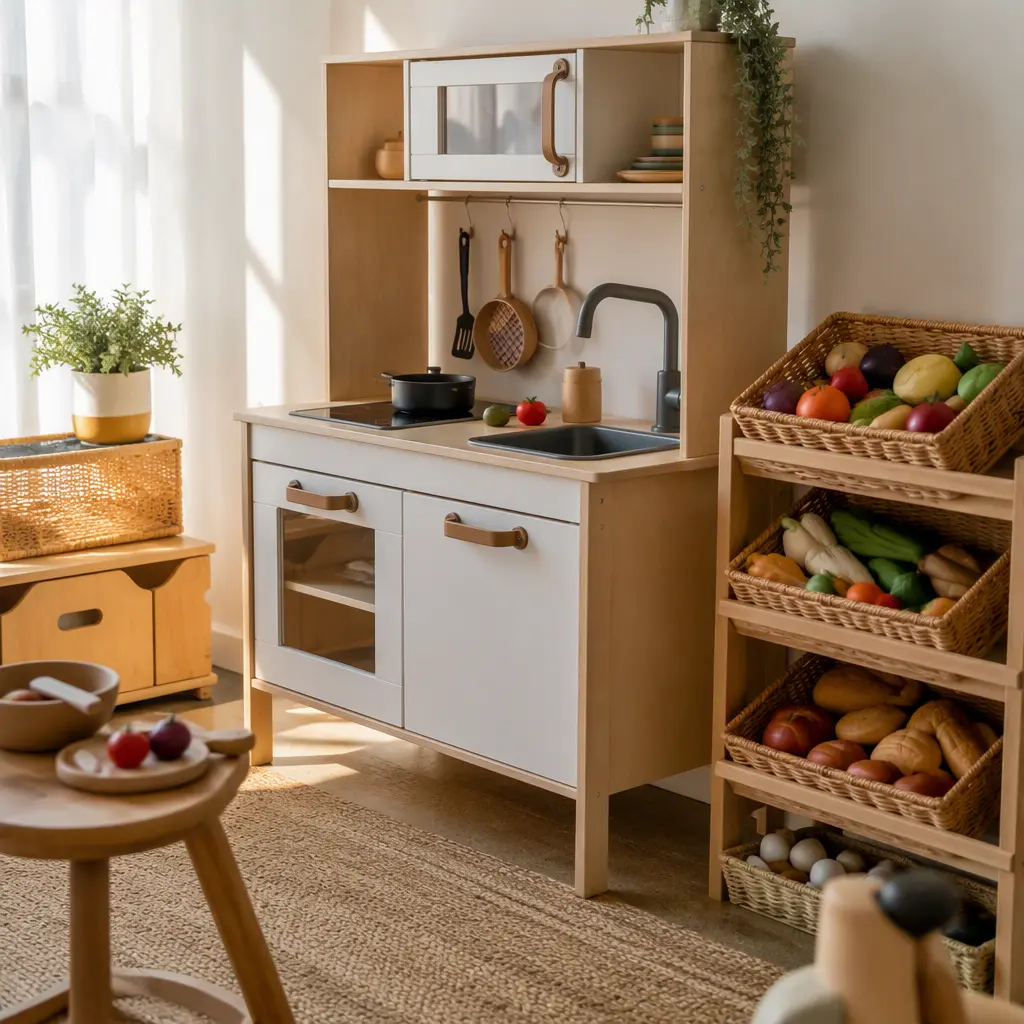
- Simple baskets, crates or fabric bins help toddlers participate in cleanup routines.
- A smaller high-quality set is often more usable than a very large collection with fragile pieces.
Age suitability
Children between 12 and 24 months usually enjoy pretend play through imitation rather than detailed role-play. They may stir toy soup, offer pretend snacks or place food in containers repeatedly. Sets designed for older preschoolers can include small parts, complex cutting features or realistic accessories that are frustrating or unsafe for younger toddlers. For 1–2 year olds, larger food items with clear shapes and bright color contrasts are easier to recognize and handle. Soft-sided shopping baskets, simple cups and oversized utensils often work better than miniature cookware or detailed play kitchens. Parents should also consider developmental pace. Some toddlers still mouth toys frequently at 18 months, while others are already experimenting with more imaginative pretend routines.
Options compared
Wooden play food is often the longest-lasting option for families expecting years of daily use. Thick wooden pieces can survive falls, rough handling and repeated cleanup without losing shape. They also tend to look less cluttered in shared living spaces. The trade-off is weight and noise. Wooden toys dropped onto tile or hardwood floors can be loud, and very hard pieces may dent furniture or damage delicate surfaces over time. Some toddlers also become frustrated by heavy pieces that do not fit easily into smaller containers or toy cookware.
Soft fabric or plush play food suits homes where quieter play matters. These sets are lightweight, easy for younger toddlers to carry and safer for energetic throwing. They also pack down neatly into baskets or travel bags. However, fabric pieces may flatten with heavy use and can collect dust or food crumbs more easily than wipe-clean materials. Plastic play food often sits in the middle. It is usually lighter than wood, easier to clean than fabric and widely available in large mixed sets. The downside is durability variation. Thin plastic can crack under rough use, and oversized collections sometimes include many pieces toddlers ignore.
- Wooden sets: best for long-term durability, minimalist storage and toddlers who enjoy repetitive sorting or stacking.
- Soft fabric sets: best for quieter homes, travel play and toddlers who throw toys frequently.
- Plastic sets: best for easy wipe-clean maintenance and larger pretend grocery or kitchen collections.
- Mixed-material sets: useful for sensory variety but can be harder to organize and clean consistently.
- Cutting-food sets with hook-and-loop fasteners are usually better for older toddlers closer to age 3 because small detachable pieces can create supervision concerns.
Frequently asked questions
How many pieces does a toddler really need?
For children aged 1–2 years, a smaller set is often easier to manage and more engaging. Around 10 to 20 chunky pieces can support plenty of pretend play without overwhelming storage areas or creating constant cleanup. Toddlers usually repeat simple actions rather than build detailed pretend scenes.
Are wooden play food sets safer than plastic ones?
Material alone does not determine safety. The important factors are size, construction quality, smooth finishes and age suitability. Well-made wooden and plastic sets can both work well for toddlers. Parents should regularly check for cracks, chipped surfaces and loose parts regardless of material.
What storage style works best for daily use?
Open baskets or low fabric bins tend to work best for this age group because toddlers can access and put away toys independently. Complicated storage trays with precise slots are harder for young children to maintain and may discourage cleanup routines.
Do toddlers need a full play kitchen with play food?
Not necessarily. Many toddlers enjoy pretend food with simple household-safe items such as bowls, wooden spoons or empty containers used under supervision. A small food set can support pretend play even without a large kitchen setup, which may help families with limited space.
Which material is easiest to keep clean?
Wipe-clean plastic is usually the quickest option for everyday cleaning, especially after snacks or outdoor play. Sealed wooden pieces can also clean easily if wiped promptly. Fabric food may require occasional machine washing or spot cleaning depending on the material.
The best play food set for rough toddler play is usually the one that fits daily family life rather than the largest or most detailed option. Durable materials, simple storage and age-appropriate sizing matter more than having dozens of accessories. For toddlers between 1 and 2 years old, sturdy chunky pieces that encourage independent pretend play and easy cleanup are often the most practical long-term choice.