Foam vs Wooden Swords for Pretend Play Safety
Compare foam and wooden toy swords for children aged 6–8, including durability, indoor use, supervision needs, storage and injury risk so parents can choose safer pretend-play gear.
Compare prices and availability
Check current prices and availability for this guide on eBay.
As an eBay Partner, we may be compensated if you make a purchase.
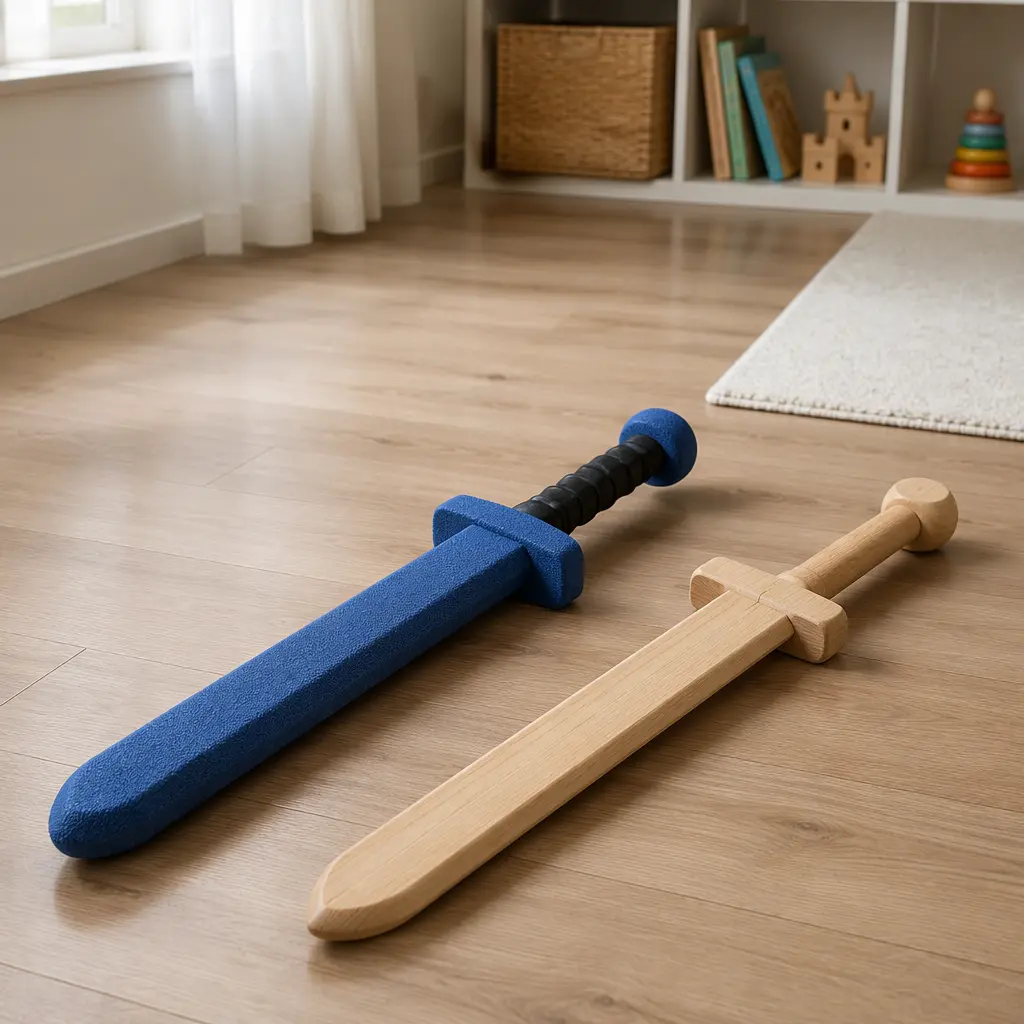
Foam and wooden toy swords support active pretend play, imaginative storytelling and cooperative games, but they suit different households and play styles. For children aged 6–8, the main differences are not just appearance. Parents often weigh indoor practicality, accidental bumps, durability, noise and how much supervision a toy requires. Foam swords are usually chosen for energetic movement and lower-impact play, while wooden swords appeal to families looking for sturdy, long-lasting pretend-play accessories with a more traditional feel. The safer and more practical option depends on where children play, how rough the games become and whether younger siblings or fragile furniture are nearby.
What to look for
The best choice for most families comes down to impact softness, construction quality and where the toys will actually be used. Children in the 6–8 age range often play more physically than younger children, so materials matter. A toy that works well outdoors with supervision may become frustrating or risky in small indoor spaces. Parents should also consider how easily a toy can be stored, cleaned and shared with siblings.
- Foam swords are usually lighter and softer, making accidental hits less painful during active play.
- Wooden swords tend to feel sturdier and can last longer if stored carefully and not exposed to moisture.
- Indoor play often favors foam because it is less likely to damage furniture, lamps or walls.
- Wooden swords create more noise during pretend battles and may not suit apartments or shared living spaces.
- Some foam toys bend or tear over time, especially with frequent rough play.
- Look for smooth wooden finishes without splinters, cracks or rough edges.
- Children who play in groups may need clearer rules and closer supervision with harder toy materials.
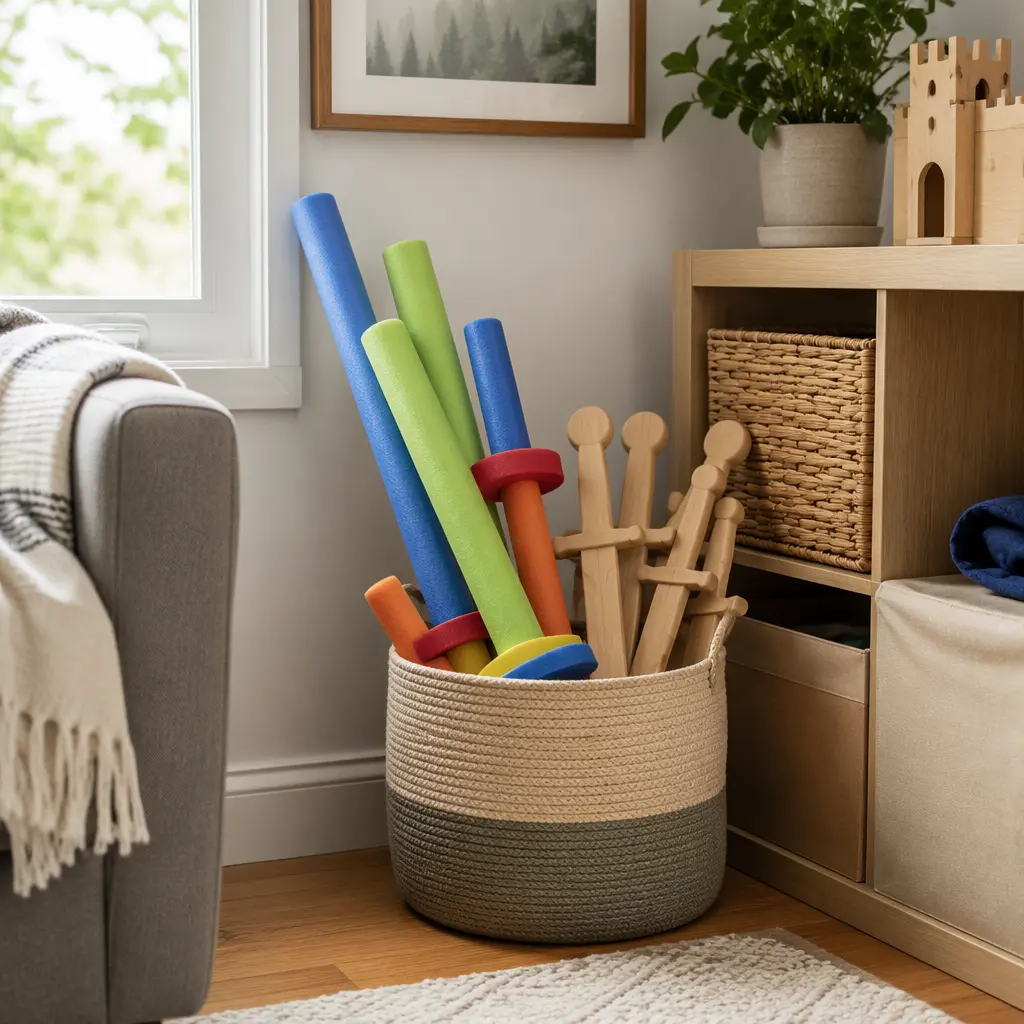
- Storage matters: longer wooden swords can be awkward in smaller homes or bedrooms.
- Outdoor play gives children more room to move safely, especially when multiple kids are involved.
- Simple designs without electronics help keep play screen-free and encourage open-ended imagination.
Age suitability
For ages 6–8, both foam and wooden swords can be appropriate when matched to a child’s maturity level and play environment. Foam swords are often easier for energetic children who enjoy running games, fantasy adventures or large group play because the softer material reduces the force of accidental contact. Wooden swords may suit calmer role-play, costume activities or children who enjoy collecting traditional-looking pretend-play accessories. Families with younger siblings nearby may prefer foam because children in this age group do not always maintain distance awareness during fast-paced games. Wooden swords generally require more consistent reminders about personal space, aiming below the shoulders and avoiding rough swinging indoors.
Options compared
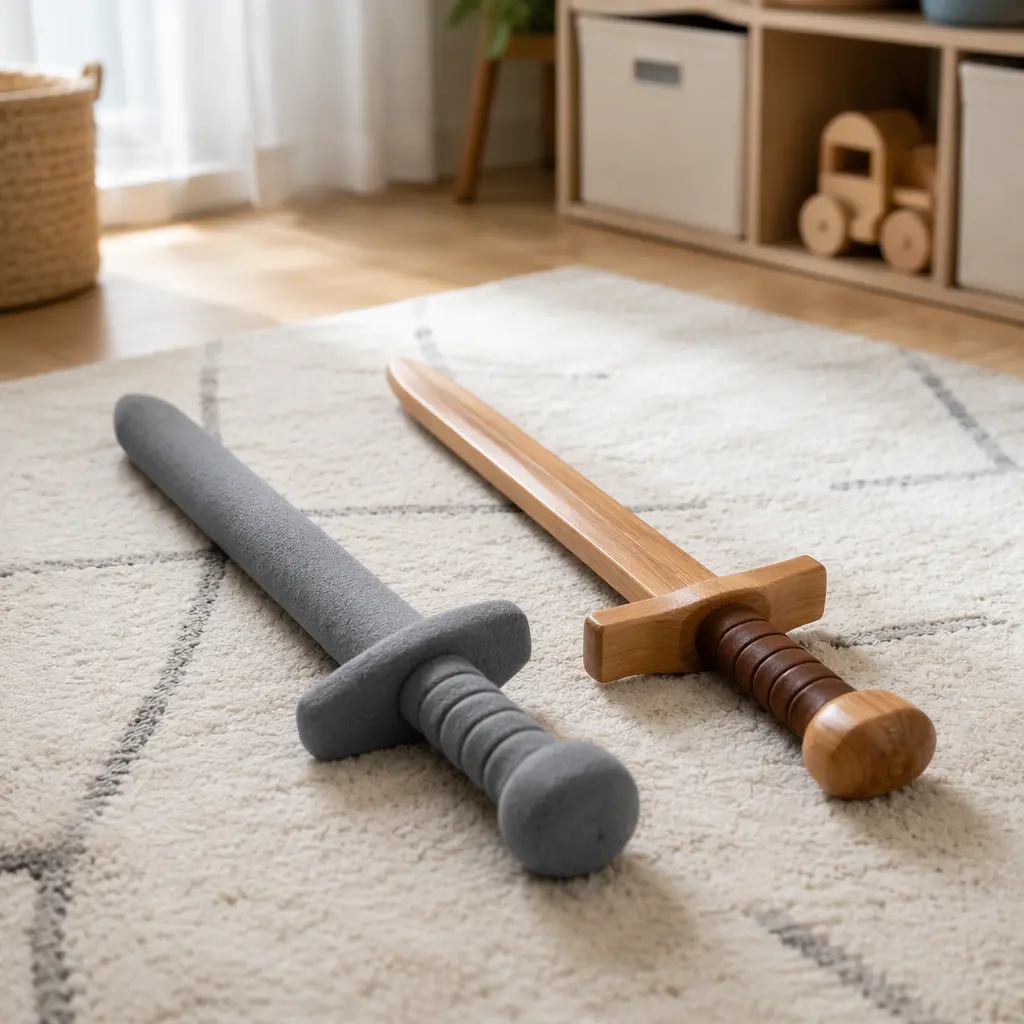
Foam swords are usually the more practical choice for energetic indoor pretend play. Their lighter weight and softer construction reduce the chance of bruises, damaged furniture or loud impact sounds. They also tend to work well for siblings and playdates because children can move freely without every accidental hit becoming painful. For homes with limited space, apartments or younger children nearby, foam often creates fewer problems overall. The trade-off is durability. Frequent bending, stepping or rough outdoor use can shorten the lifespan of some foam toys, particularly lower-density designs.
Wooden swords offer a very different experience. Many parents choose them because they feel solid, simple and less disposable than lightweight foam toys. They can fit well with costume trunks, medieval play themes or Waldorf-inspired toy collections. However, the harder material increases the risk of injury during active swinging games. Wooden swords also require more care around household items and usually work best in larger spaces or calmer pretend scenarios. They may suit children who enjoy role-play dialogue, historical themes or structured games more than high-energy mock battles.
- Choose foam swords for active indoor play, group games, apartments and children who move constantly during pretend play.
- Choose wooden swords for calmer role-play, costume accessories and families prioritizing durability and traditional materials.
- Avoid wooden swords in crowded indoor spaces with fragile furniture or younger siblings nearby.
- Avoid very thin or poorly finished wooden toys that could crack or splinter with heavy use.
- Foam may need replacing sooner, especially after outdoor exposure or repeated rough bending.
- Children who struggle with impulse control generally benefit from softer pretend-play equipment.
Frequently asked questions
Are foam swords completely safe?
No toy sword is completely risk-free. Foam reduces impact force, but children can still poke, trip or swing too close to others. Supervision and clear play rules remain important, especially during group games.
Do wooden swords help imaginative play more than foam ones?
Both materials support imaginative play equally well. The difference is usually in play style rather than creativity. Foam often encourages fast movement and action games, while wooden toys may encourage slower role-play and costume storytelling.
Which option is quieter indoors?
Foam swords are generally quieter because they create softer impacts against floors, furniture and other toys. Wooden swords can produce loud knocking sounds that may become tiring in smaller homes or shared walls environments.
Are wooden swords better for outdoor play?
Wooden swords can handle outdoor surfaces better than many foam designs, but they also become harder and less forgiving during energetic play. Larger outdoor spaces reduce accidental collisions, though supervision is still important.
What size toy sword works best for ages 6–8?
Medium-length toy swords are usually easier for this age group to control than oversized versions. Extremely long toys can increase accidental bumps indoors and may be harder to store safely between play sessions.
For most families with energetic children aged 6–8, foam swords are the easier choice for safer indoor pretend play and shared spaces. Wooden swords can still work well when children are calmer, supervision is consistent and there is enough room for thoughtful role-play. The best fit depends less on appearance and more on how children actually play day to day, how much indoor space is available and how comfortable parents are with active mock combat toys in the home.