Play Silks vs Costumes for Pretend Play at Home
Comparing play silks and dress-up costumes for ages 3–5, with practical advice on storage, durability, cleanup and open-ended pretend play for families short on space.
Compare prices and availability
Check current prices and availability for this guide on eBay.
As an eBay Partner, we may be compensated if you make a purchase.
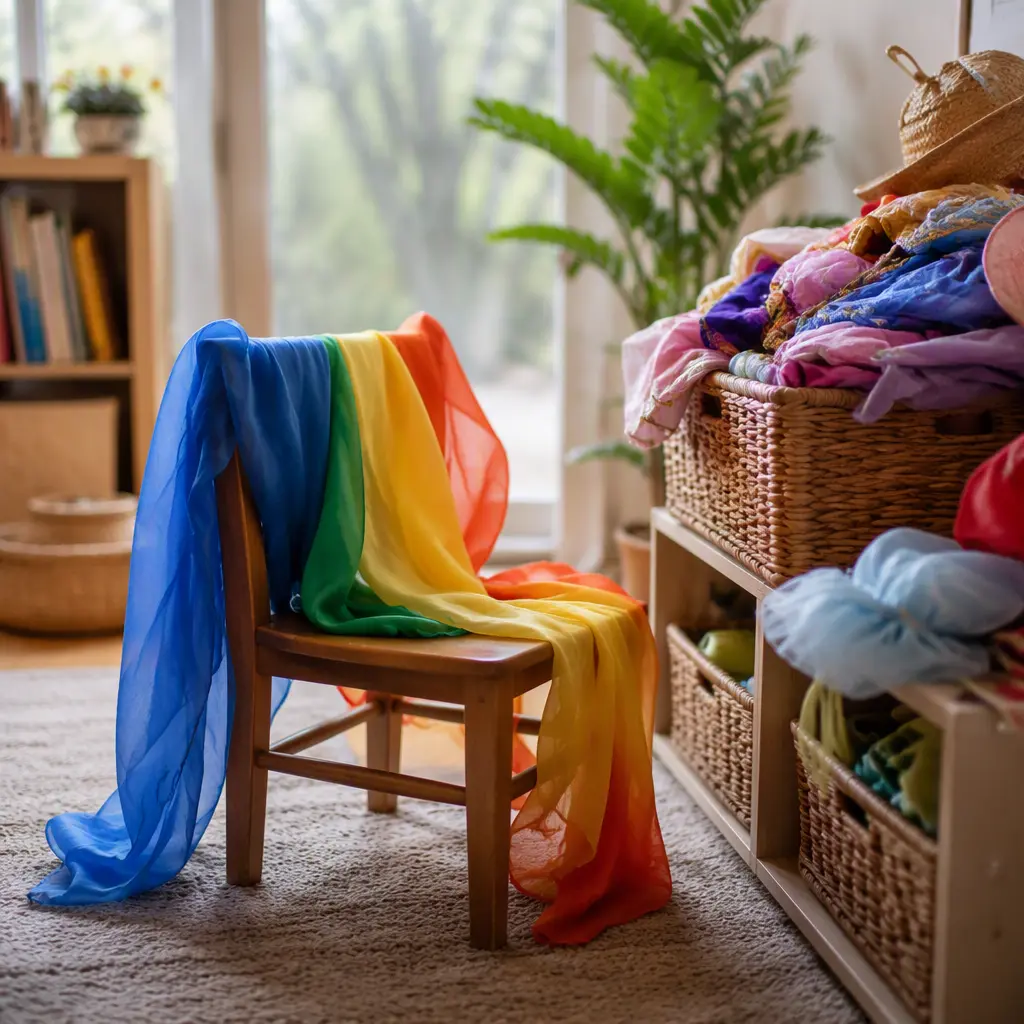
For families trying to encourage imaginative play without filling every corner of the home, play silks and dress-up costumes solve similar problems in very different ways. Both support pretend play for children ages 3 to 5, but they differ in storage needs, durability, cleanup and how much direction they give the child during play. Costumes can make it easy for children to jump straight into a role, while play silks tend to encourage more open-ended storytelling because they can become capes, picnic blankets, rivers, forts or puppet stages. Choosing between them often comes down to how much space you have, how independently your child plays and whether you prefer structured or flexible toys.
What to look for
The best choice for your home depends less on trends and more on how your child actually plays day to day. Some children love stepping into a clear character role like firefighter, veterinarian or fairy. Others prefer inventing their own worlds from loose materials. Space, laundry needs and supervision also matter more than many parents expect.
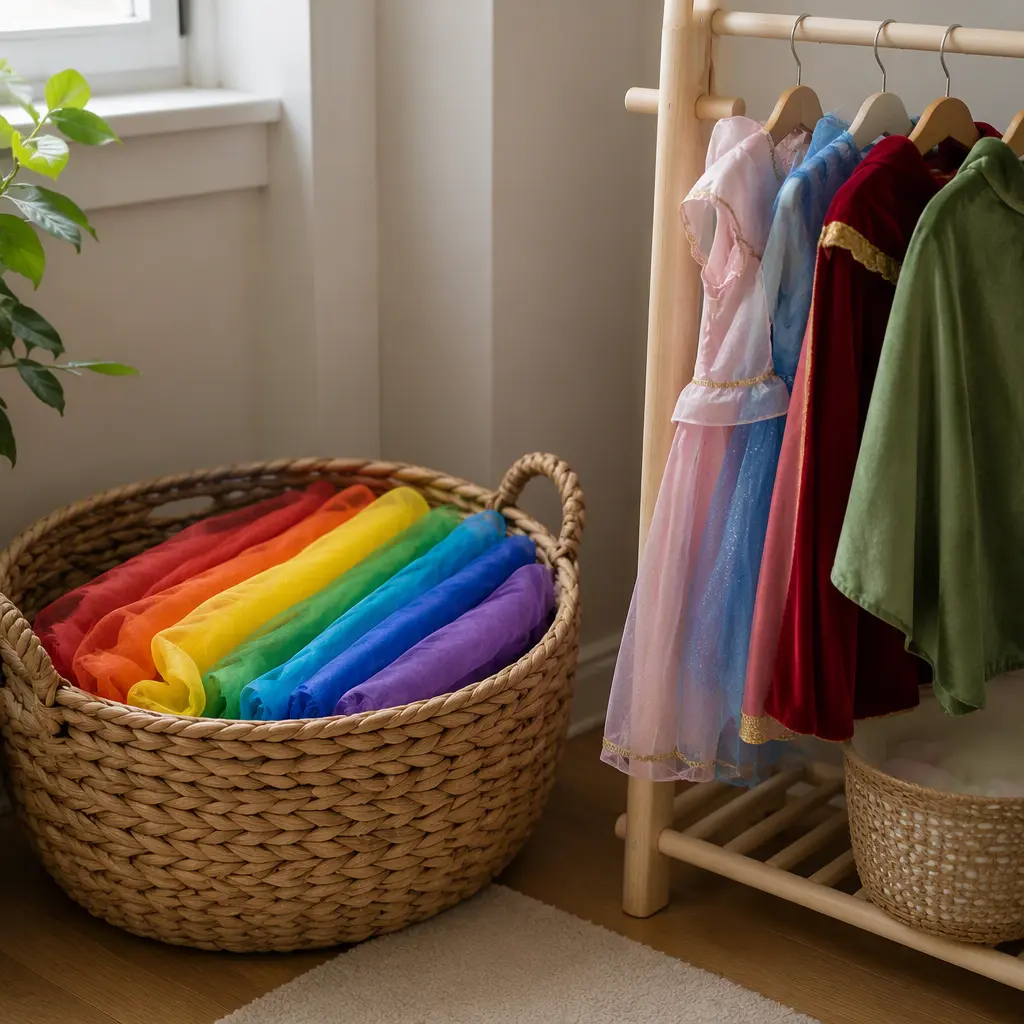
- Storage footprint: Play silks fold into a small basket or drawer, while costumes often need hanging space or larger bins to avoid wrinkles and tangles.
- Open-ended use: Silks can shift between many pretend scenarios, while costumes usually guide children toward one type of character or storyline.
- Durability: Simple fabric silks generally tolerate frequent folding and rough play well. Costumes with fasteners, glitter, plastic accessories or stiff fabrics may wear out faster.
- Laundry and cleanup: Costumes sometimes require gentler washing because of decorative materials. Most plain fabric play silks are easier to wash and dry quickly.
- Independent play value: Some children immediately understand costumes and role-play with little prompting. Play silks may appeal more to children who enjoy building, arranging or inventing games.
- Noise and clutter: Neither option is especially noisy, but costume accessories such as plastic tools, jewelry or shoes can create extra clutter in shared living spaces.
- Sibling sharing: Play silks are often easier for mixed-age cooperative play because they do not assign fixed roles as clearly as costumes do.
- Sensory comfort: Children sensitive to scratchy fabrics, masks or tight dress-up clothing may prefer soft lightweight silks.
Age suitability
For ages 3 to 5, both toy types can work well when matched to developmental stage and temperament. Younger preschoolers often enjoy simple costumes with easy fasteners and familiar themes from everyday life, such as kitchen play, animal role-play or community helpers. Complex outfits with many pieces can become frustrating. Play silks are usually easiest for children closer to age 4 or 5 who can think symbolically and turn one object into many pretend items. That said, younger children may still enjoy using silks for dancing, peekaboo games or blanket forts with adult support. Families with a wide age range often find play silks easier to reuse over time because the same set can evolve with the child's imagination.
Options compared
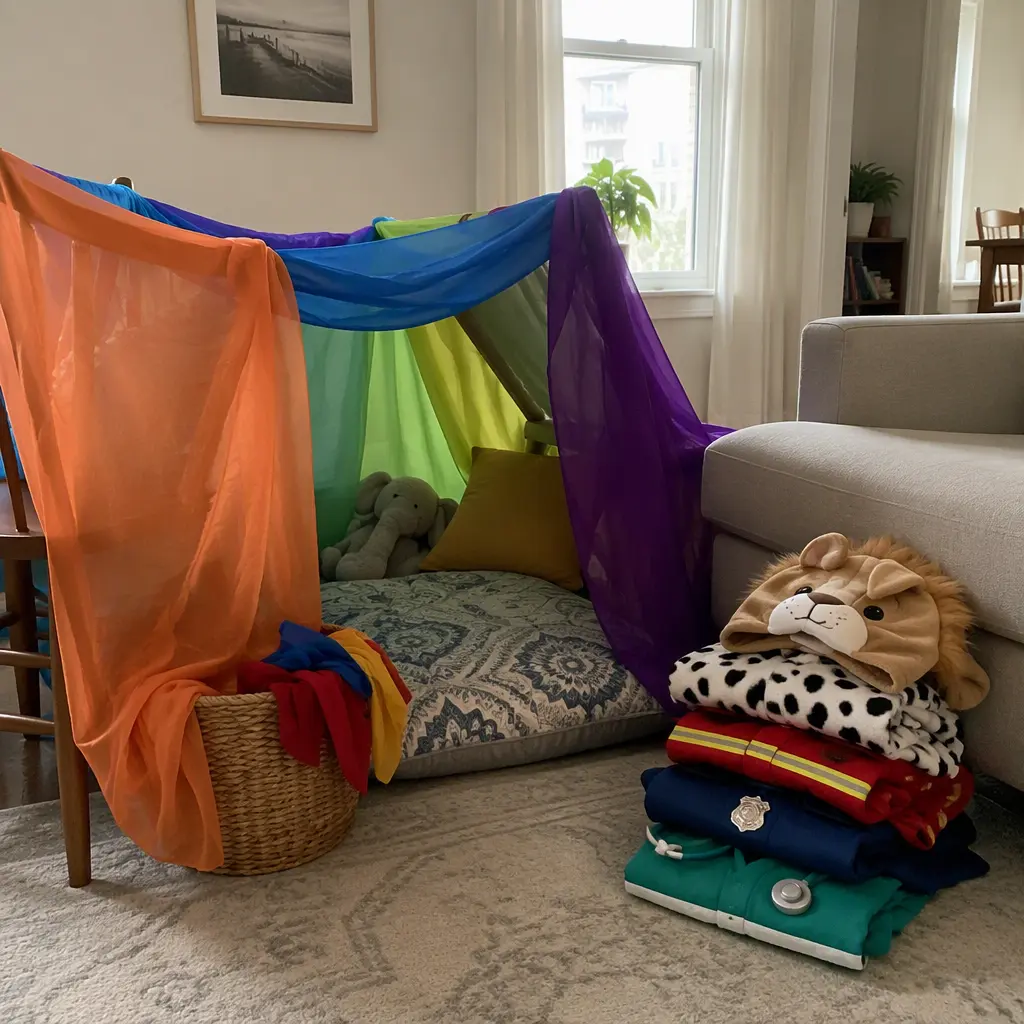
Play silks are often the stronger choice for families short on storage space. A small stack can support years of imaginative use without taking over a closet. They also transition easily between play types, supporting movement games, storytelling, sensory play and simple room building. Children who like creating their own rules and worlds may return to them repeatedly because the toy does not dictate a specific character or outcome. The trade-off is that some children need more ideas or adult modeling before they fully engage with open-ended materials.
Costumes usually create faster pretend-play engagement. A child can put on a doctor coat or animal outfit and immediately understand the game. This can be especially useful for children who enjoy role imitation, social storytelling or reenacting familiar routines. Costumes can also help shy children enter group play because the role is more clearly defined. The downside for small homes is that full costume collections become bulky quickly, especially when accessories accumulate. Some children also lose interest once the novelty of a specific character fades.
- Choose play silks if you want compact storage, flexible use across ages and fewer toy pieces to manage.
- Choose costumes if your child prefers clear character play and enjoys dressing up independently.
- A mixed approach can work well in small homes: a few versatile costumes paired with several play silks often creates more variety without a large storage system.
- Avoid oversized costume collections if closet space is already limited or cleanup is a daily struggle.
- If durability matters most, look for simple fabrics and fewer plastic accessories regardless of toy type.
- For quieter shared living spaces, soft fabric-based pretend play is usually easier than electronic role-play toys with sounds and lights.
Frequently asked questions
Are play silks too abstract for preschoolers?
Not necessarily. Some preschoolers immediately use them creatively, while others benefit from examples such as turning a silk into a cape, river or picnic blanket. Children who already enjoy building forts or imaginative storytelling often adapt to them quickly.
Do costumes encourage less creativity?
Costumes still support imaginative play, especially social role-play and storytelling. They simply provide more structure from the start. Many children use costumes creatively by combining roles or inventing their own characters.
Which option is easier to keep tidy in a small apartment?
Play silks are generally easier to store because they fold compactly into one basket or drawer. Costumes often require more sorting, hanging space or larger bins, especially if they include accessories.
What fabrics work best for everyday pretend play?
Lightweight washable fabrics tend to be the most practical for frequent use. Soft materials are often more comfortable for longer play sessions and easier for young children to manage independently.
Is it worth having both?
For many families, a small combination works well. A few durable costumes can provide quick role-play inspiration, while play silks add flexibility for fort building, movement play and open-ended storytelling without needing much storage space.
When storage space is limited, the decision often comes down to whether your child prefers structured role-play or flexible imaginative materials. Play silks usually offer the greatest long-term versatility in the smallest footprint, while costumes can provide immediate engagement and social pretend-play opportunities. Neither option is automatically better for every child, but focusing on how your child naturally plays can help you choose toys that stay in regular use rather than becoming clutter.