Toy Doctor Kits vs Tool Sets for Cooperative Play
Compare toy doctor kits and tool sets for children aged 6–8, with a focus on teamwork, turn-taking, shared play length, noise, storage, and supervision needs.
Compare prices and availability
Check current prices and availability for this guide on eBay.
As an eBay Partner, we may be compensated if you make a purchase.
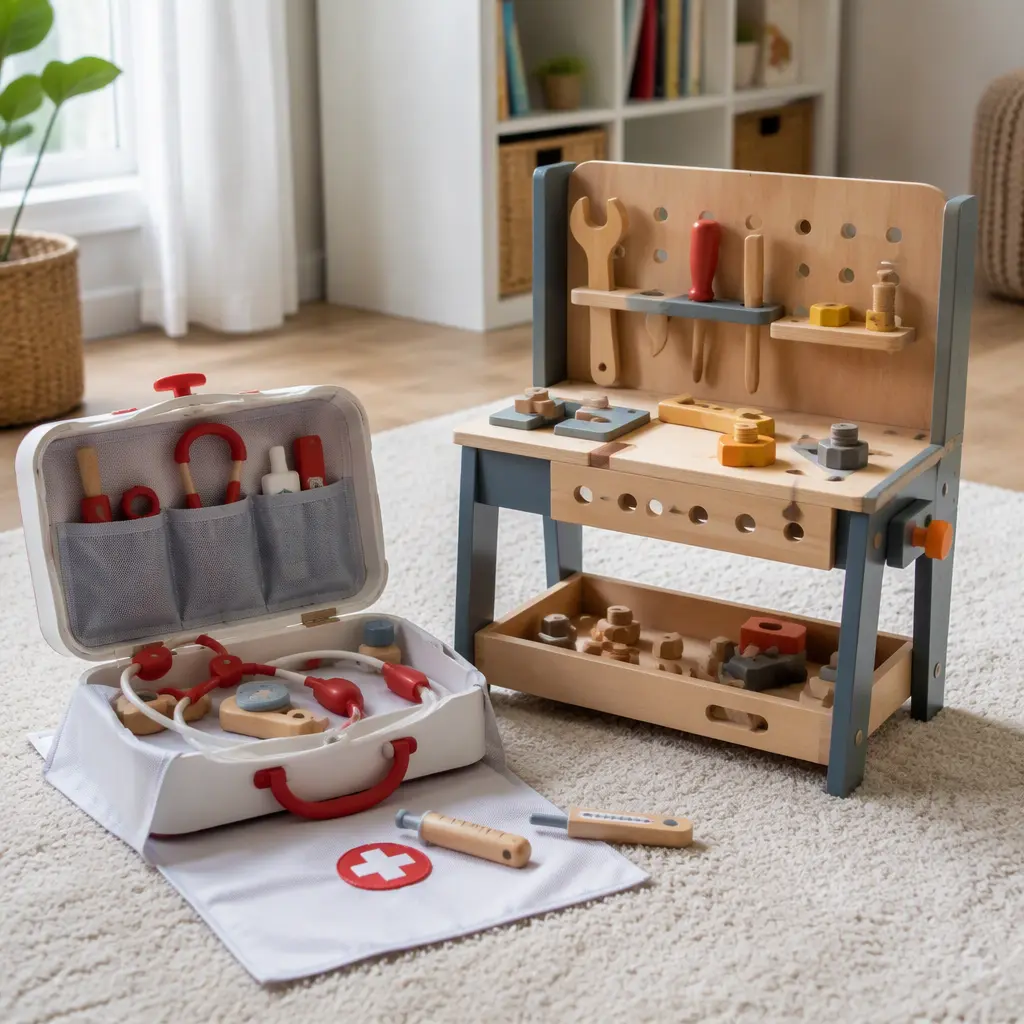
Toy doctor kits and toy tool sets both support imaginative play, but they encourage cooperation in slightly different ways. For children aged 6–8, the best choice often depends on how they like to interact with siblings or friends. Doctor kits usually centre on conversation, role-switching and caring scenarios, while tool sets often create goal-focused teamwork around building, fixing or problem-solving. Both can support longer shared play sessions when the toy setup matches the child’s interests, available space and tolerance for noise or mess at home.
What to look for
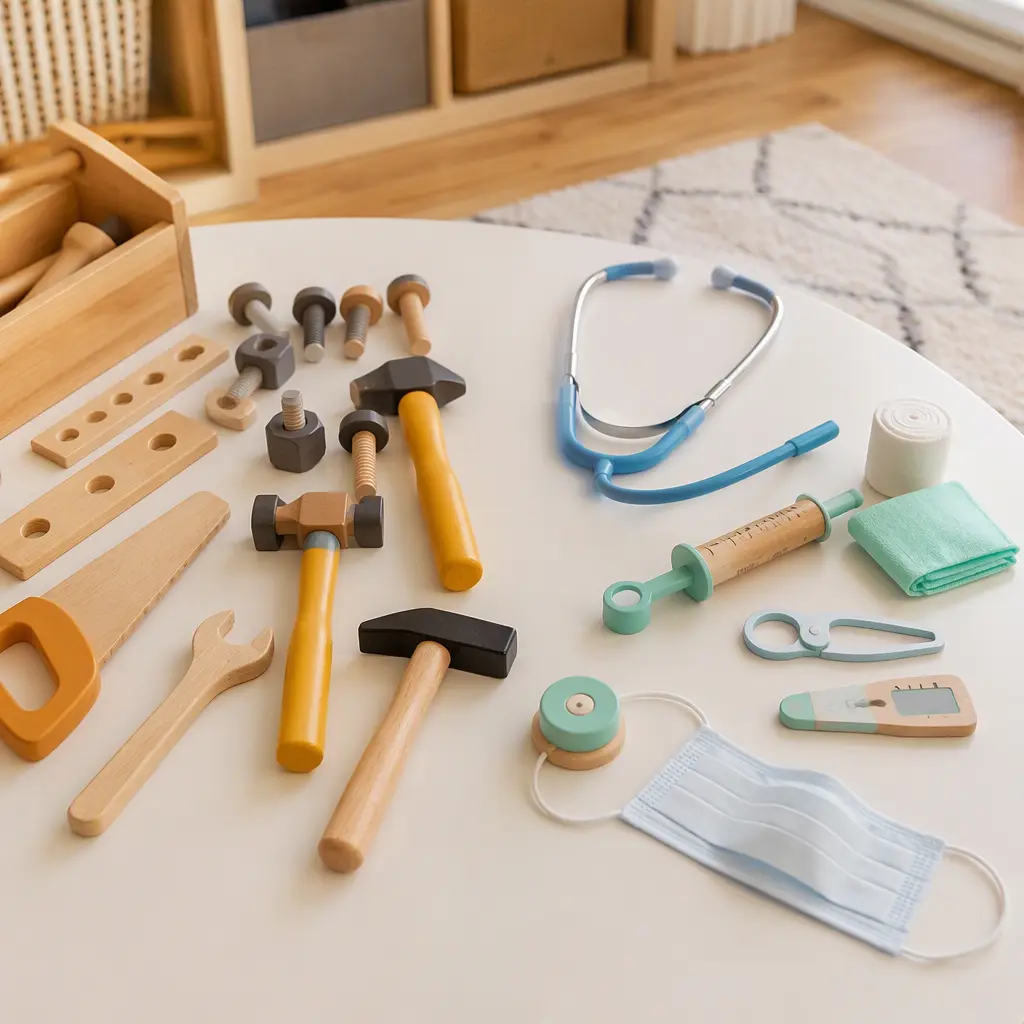
For cooperative play, the most useful sets are the ones that naturally give children different jobs to do. A toy that only lets one child lead the action can quickly cause frustration, especially in the 6–8 age range when fairness and turn-taking become more important. Look for open-ended sets with multiple accessories, simple storage and durable pieces that can handle repeated use. Children in this age group also tend to extend play for longer when the toy connects to familiar real-world routines such as visiting a doctor, repairing furniture or building something together.
- Choose sets with enough pieces for at least two children to participate at once.
- Look for accessories that encourage role-switching, such as patient charts, pretend bandages, toy measuring tools or construction parts.
- Check storage needs carefully. Tool benches and large workstations take more floor space than compact doctor bags.
- Consider noise levels. Plastic toy drills, hammering benches and electronic sounds can become loud during group play.
- Favour durable materials and rounded edges, especially for toys shared between siblings.
- Simple, screen-free play patterns usually hold attention longer than heavily electronic features.
Age suitability
Children aged 6–8 often move beyond basic pretend play into more structured storytelling and cooperative problem-solving. Doctor kits suit children who enjoy conversation-heavy games, caring roles and acting out social situations. These sets can work especially well for quieter children or mixed-age groups because younger siblings can easily join as patients. Tool sets tend to appeal to children who prefer active tasks, visible goals and hands-on building. Many children in this age band also enjoy combining tool play with blocks, cardboard or construction toys to create longer projects. Some children will strongly prefer one style over the other, while others enjoy switching between nurturing play and building play depending on mood or playmates.
Options compared
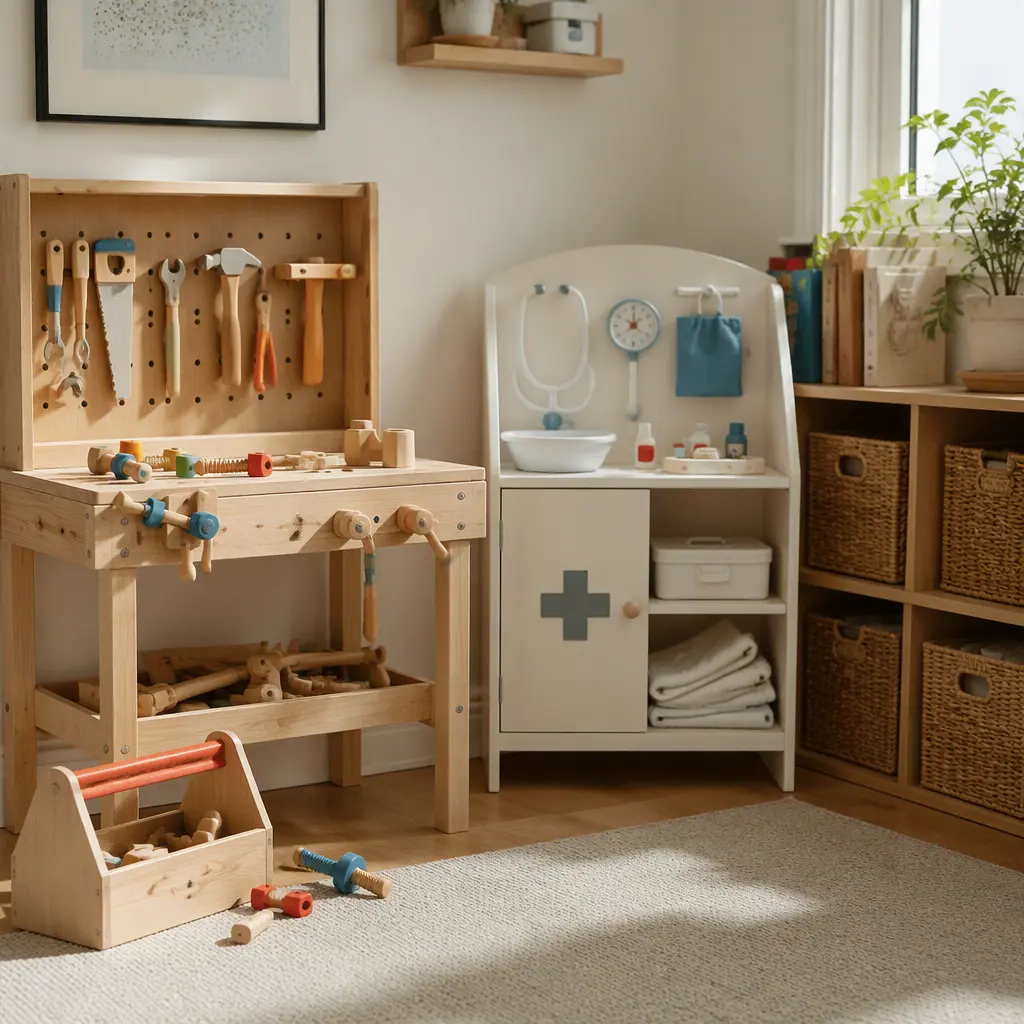
Toy doctor kits often create more balanced back-and-forth interaction because the roles naturally rotate. One child becomes the doctor, another the patient, and another might act as a receptionist, nurse or pet owner. This style of play encourages listening, asking questions and collaborative storytelling. It can also run for surprisingly long sessions because the scenarios keep changing. For homes where calmer indoor play matters, doctor kits are usually quieter and easier to pack away than larger tool benches.
Tool sets usually create stronger teamwork around a shared objective. Children may work together to repair a pretend vehicle, build a structure or complete an imagined job site. This can be especially engaging for energetic children who enjoy movement and physical interaction with objects. Larger tool benches can support several children at once, but they also need more space and often create more noise from hammering or electronic parts. Some children become frustrated if there are not enough duplicate tools to share, so larger accessory counts can matter more here than with doctor kits.
- Doctor kits: better for conversational play, empathy, role rotation and quieter indoor use.
- Tool sets: better for active collaboration, building-focused goals and physical hands-on play.
- Compact doctor bags suit smaller homes or quick cleanup routines.
- Large workbenches suit dedicated play areas but may be harder to store.
- Children who enjoy storytelling often stay engaged longer with medical role-play.
- Children who like constructing and fixing objects may prefer tool-themed cooperative tasks.
Frequently asked questions
Which toy type usually leads to longer shared play sessions?
That depends on the child’s interests, but doctor kits often sustain longer imaginative conversations, while tool sets tend to create shorter bursts of highly active teamwork. Children who already enjoy storytelling may extend doctor play for longer periods.
Are electronic features helpful for cooperative play?
Simple sound effects can add excitement, but heavily electronic toys sometimes limit creativity because children focus on buttons instead of interaction. Open-ended accessories without many programmed features often encourage better cooperation and role-sharing.
What works better for siblings of different ages?
Doctor kits are often easier for mixed-age play because younger children can participate as patients or helpers without needing complex building skills. Tool sets can also work well if there are enough large, easy-to-handle pieces and clearly shared tasks.
Do larger sets automatically improve teamwork?
Not always. Very large sets can become cluttered or harder to organise. A medium-sized set with clear roles, enough duplicate tools and sturdy accessories often supports smoother cooperative play than oversized sets with many novelty pieces.
Which option is easier to store?
Doctor kits are usually easier to store because many come in carry cases or compact bags. Tool benches and construction-style sets often require more shelf or floor space, especially if they include large assembly pieces.
For cooperative play in the 6–8 age range, the stronger choice usually comes down to play style rather than popularity. Doctor kits tend to encourage calmer conversation, empathy and flexible role-play, while tool sets support energetic teamwork and shared building goals. Parents balancing space, noise and cleanup may lean toward compact medical sets, while households with room for active construction play may get more long-term use from tool-focused toys. Either option can support strong social play when children have enough pieces to share and the freedom to invent their own scenarios.