Toy Garages vs Train Tables for Shared Playrooms
Choosing between a toy garage and a train table for a shared playroom? Compare space needs, cleanup, replay value, sibling sharing and age suitability for children aged 3–5.
Compare prices and availability
Check current prices and availability for this guide on eBay.
As an eBay Partner, we may be compensated if you make a purchase.
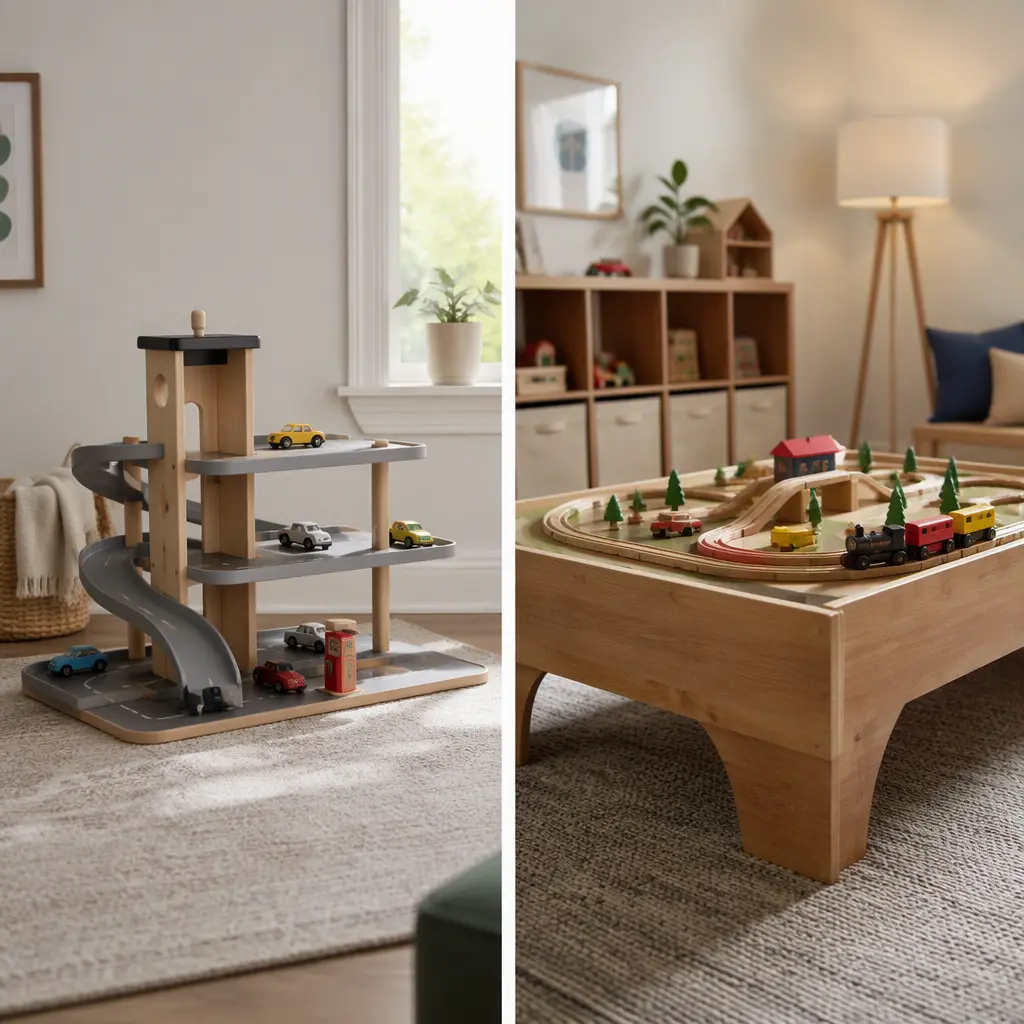
Toy garages and train tables both support imaginative, screen-free play for preschool children, but they fit shared playrooms very differently. A toy garage usually takes up less floor space and is easier to tidy quickly, while a train table can support longer collaborative play sessions with more open-ended building. For families sharing one play area between siblings, the better choice often comes down to storage limits, noise tolerance, and how children typically play together. Children aged 3–5 are also at a stage where independent storytelling, vehicle play and simple cooperative games become more common, so durability and ease of access matter as much as entertainment value.
What to look for
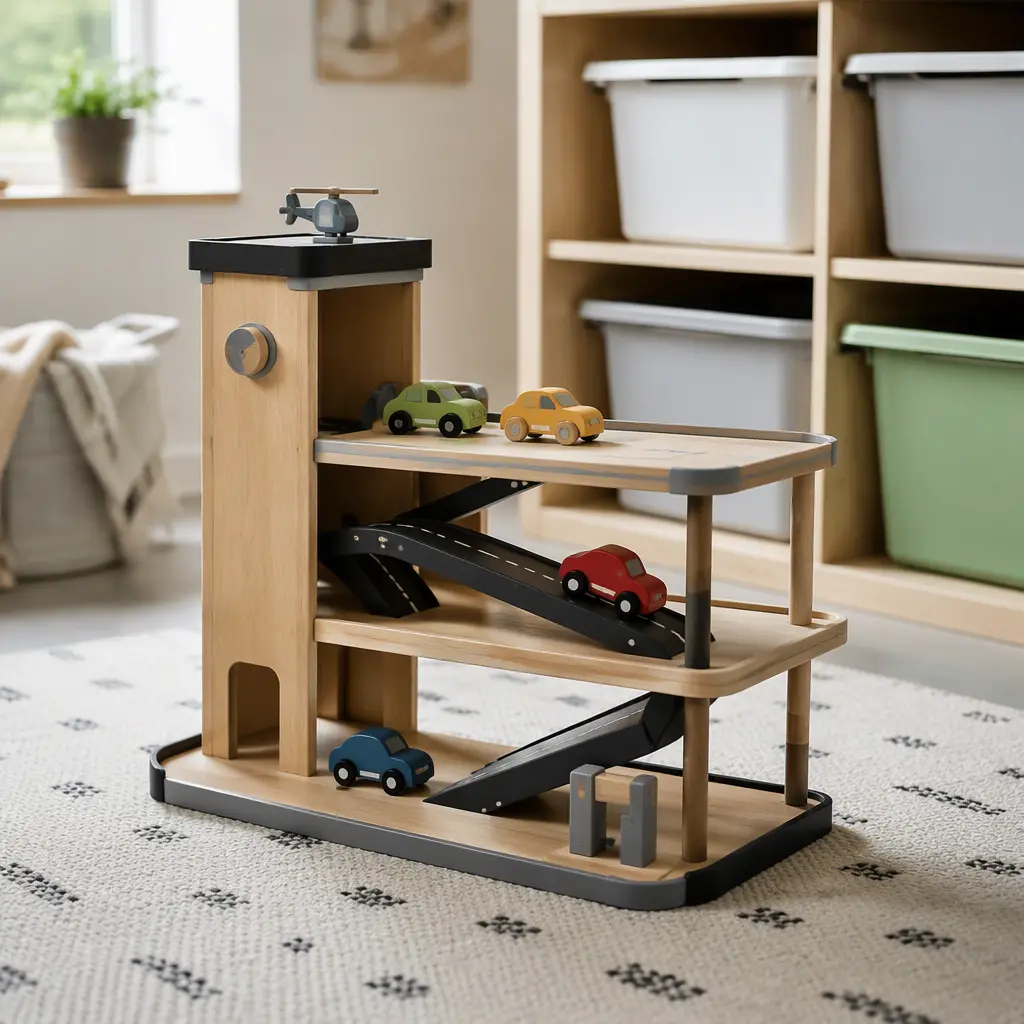
In a shared playroom, the practical details matter more than flashy features. Some toys encourage smooth turn-taking while others create territorial play where one child controls most of the setup. Think about how many children will use the toy at once, how often the play area needs to be cleared for other activities, and whether pieces can realistically stay organized between play sessions.
- Measure the usable floor space before buying, including room to walk around the toy comfortably.
- Check whether the toy can stay assembled or needs regular setup and teardown.
- Look for rounded edges, stable construction and pieces large enough for the intended age group.
- Consider noise levels, especially with plastic ramps, electronic sounds or hard train tracks on wooden floors.
- Think about storage: train sets often include many loose pieces while garages usually have fewer components.
- Choose play patterns that suit siblings. Parallel play can work well with garages, while train tables often encourage cooperative building.
- If the toy will move between rooms, lighter modular sets are usually easier to handle than fixed activity tables.
Age suitability
For ages 3–5, both toy garages and train setups can work well, but they develop different skills and suit different temperaments. Toy garages often appeal to children who enjoy motion, ramps, pretend rescue scenarios and quick action-based play. They can be easier for younger preschoolers to understand immediately because the play pattern is straightforward: drive, park, race and repeat. Train tables usually reward longer attention spans and children who enjoy arranging tracks, building layouts and storytelling over time. A 3-year-old may need help assembling more complicated track systems, while many 5-year-olds enjoy redesigning layouts independently. In mixed-age sibling groups, train tables sometimes hold interest longer because the complexity can grow gradually.
Options compared
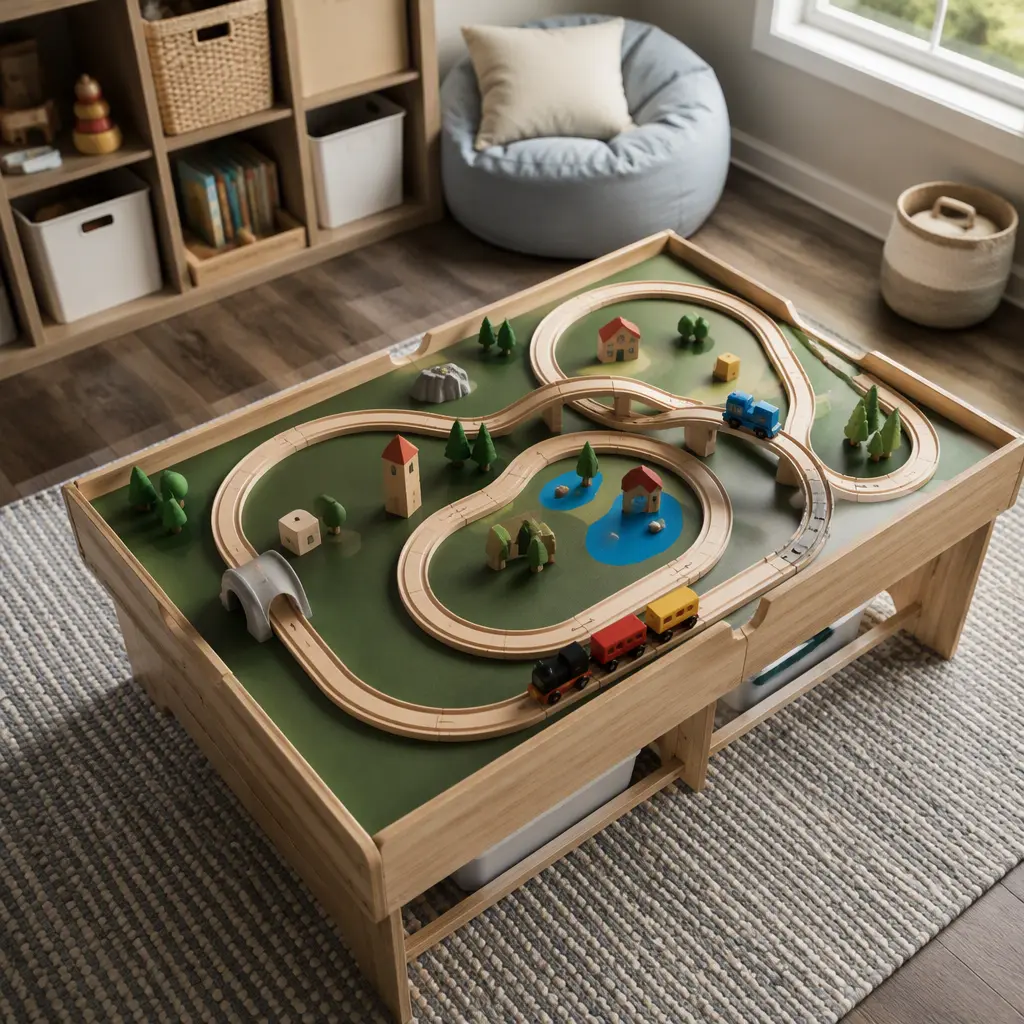
Toy garages are usually the easier fit for smaller homes. Many are vertical rather than wide, which helps preserve open floor space for active play. Cleanup tends to be faster because there are fewer separate parts, and children can often reset the play independently. Garages also work well for short bursts of play before dinner, school or bedtime. For siblings who frequently argue over construction decisions, vehicle play may feel more flexible because each child can control separate cars without changing a shared layout.
Train tables generally take up more permanent space, but they can create a stronger shared activity area when siblings enjoy building together. A table keeps tracks elevated and contained, which may reduce pieces spreading across the room. The downside is that train systems often expand over time with extra tracks, bridges and scenery, increasing storage needs. Children who dislike interruptions may also become frustrated if layouts need to be dismantled daily. For homes where the playroom doubles as a living area or bedroom, that can become a regular source of tension.
- Toy garages suit smaller rooms, faster cleanup routines and children who prefer action-focused pretend play.
- Train tables suit children who enjoy construction, planning and longer imaginative sessions.
- Garages are often easier to store and move, especially foldable or stackable designs.
- Train tables can support multiple children at once but may also create disputes over layout control.
- Plastic garages may be noisier on hard floors, while wooden train systems are often quieter but heavier.
- Open-ended train tracks can hold attention for several years, while some garage toys rely more on themed accessories for variety.
- Families with limited storage may prefer compact garages with built-in parking and accessory bins.
Frequently asked questions
Which option is easier to clean up?
Toy garages are usually simpler to tidy because they have fewer individual pieces. Many allow cars and accessories to stay attached or stored directly inside the structure. Train sets often involve collecting multiple tracks, trains and scenery pieces after each session.
Do train tables reduce mess?
A train table can help contain play to one area, especially compared with tracks spread across the floor. However, the total number of accessories may still create storage challenges. Built-in drawers or nearby bins can make cleanup more manageable.
Which toy causes fewer sibling arguments?
That depends on how children prefer to play. Some siblings cooperate well on shared train layouts, while others argue about track placement or story direction. Toy garages often allow more parallel play, where each child uses separate vehicles without changing the whole setup.
Are wooden or plastic versions better?
Wooden toys are often heavier, quieter and more durable for long-term indoor use. Plastic versions may include moving parts, lights or ramps that some children enjoy, but they can also increase noise levels and visual clutter in smaller spaces.
Can either toy work in a bedroom instead of a dedicated playroom?
Compact toy garages are usually easier to fit into bedrooms because they use vertical space. Train tables work best when there is enough room to leave the setup assembled regularly. In smaller bedrooms, modular floor tracks stored in bins may be more practical than a full table.
For many shared playrooms, the better choice comes down to how permanent the play setup can be. Families needing quick cleanup and flexible floor space may find toy garages easier to live with day to day. Families able to dedicate a stable corner to ongoing imaginative play may get more long-term variety from a train table. Both can support valuable screen-free play for ages 3–5 when matched carefully to the available space, sibling dynamics and household routines.