Toy Projectors vs Flashlights for Bedtime Story Play
Compare toy projectors and kid-friendly flashlights for calm, screen-free bedtime play. Learn which option suits ages 3–5 based on brightness, batteries, independence and cleanup.
Compare prices and availability
Check current prices and availability for this guide on eBay.
As an eBay Partner, we may be compensated if you make a purchase.
Toy projectors and child-friendly flashlights both support quiet, screen-free bedtime play, but they create very different experiences for preschoolers. A toy projector usually spreads light patterns or simple story images across walls and ceilings, encouraging calm observation and imaginative storytelling. Flashlights are more active and hands-on, giving children direct control over where the light goes. For ages 3–5, the better choice often depends on how independently a child can manage buttons and batteries, how sensitive the household is to bright light before sleep, and whether parents want a soothing wind-down activity or a more energetic pretend-play tool.
What to look for
For bedtime use, the main goal is usually calm, manageable play rather than maximum brightness or complex features. Preschoolers benefit from toys that are easy to operate without frustration and durable enough for repeated nightly use. Parents may also want to think about storage space, battery replacement frequency and whether the toy can become overstimulating close to bedtime.
- Choose soft or adjustable light output rather than very bright beams that can disrupt winding down.
- Large buttons and simple controls are easier for ages 3–5 to use independently in dim rooms.
- Rechargeable options reduce ongoing battery costs, but some families prefer replaceable batteries for travel or emergencies.
- Look for lightweight designs with rounded edges that can safely sit beside a bed or reading corner.
- Projectors with removable image discs or changing scenes offer variety but can create extra small pieces to store.
- Flashlights encourage movement and shadow play, while projectors are better suited to staying settled in bed.
- Consider noise levels. Some projectors include music or motorized movement that may either soothe or distract depending on the child.
- Think about cleanup and storage. A single flashlight stores easily, while projector sets can include discs, caps or stands that need organizing.
Age suitability
Most toy projectors and chunky preschool flashlights work best from around age 3, when children can follow basic safety instructions and press simple controls independently. Younger preschoolers often enjoy projectors because they create visual effects without requiring much coordination. Children closer to age 5 may prefer flashlights for active storytelling, blanket forts and shadow games. Some highly detailed projectors with tiny image discs or battery compartments are better suited to older children who can handle small accessories responsibly. For children who become overstimulated before sleep, a projector with soft static images is usually calmer than a flashlight that encourages running around dark rooms.
Options compared
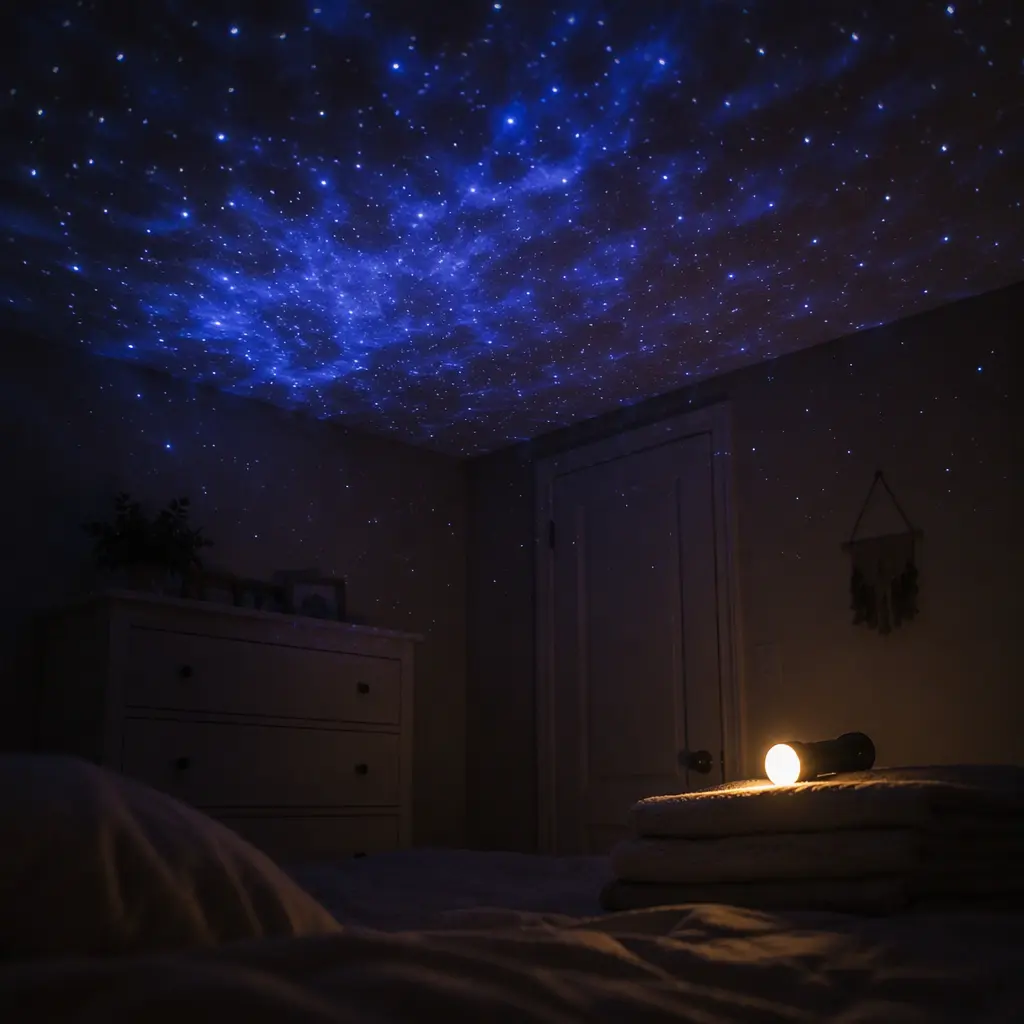
Toy projectors are usually the stronger choice for families looking for a predictable bedtime routine. They encourage children to stay in one place and focus on slow-moving or stationary images. Some projectors display stars, animals or simple story scenes that work well during bedtime reading. They also tend to produce softer ambient light than many flashlights. The trade-off is that projectors can be less flexible for imaginative play during the daytime, and some models rely heavily on batteries if used every night.
Flashlights support more open-ended pretend play. Preschoolers often use them for shadow puppets, treasure hunts, camping games and reading under blankets. They are easier to pack for travel and generally simpler to store than projector sets. However, very bright flashlights can become stimulating before bed, and children sometimes treat them more like active toys than calming sleep-time tools. Families in shared spaces may also find flashlight play leads to more movement and noise at bedtime.
- Choose a toy projector if the goal is calm visual storytelling, quiet winding down or shared bedtime routines.
- Choose a flashlight if the child enjoys active pretend play, shadow games or independent exploration.
- A projector may suit children who are nervous in dark rooms because it softly lights larger spaces.
- A flashlight may suit families needing a compact toy for travel, sleepovers or camping.
- Projectors usually require more shelf or bedside space than a single flashlight.
- Flashlights are often easier for preschoolers to understand immediately, while some projectors need setup help from adults.
Frequently asked questions
Are toy projectors better for sleep routines?
They can be, especially if the light is soft and the images are slow or stationary. A projector often creates a calmer atmosphere than a flashlight because children are less likely to move around the room actively. Avoid very bright or noisy projector designs close to bedtime.
Do preschoolers need special flashlights?
Child-focused flashlights are usually easier for ages 3–5 because they have thicker handles, simpler switches and lower light output. Standard adult flashlights can be too bright or difficult for small hands to operate comfortably.
Which option uses more batteries?
That depends on how often the toy is used and whether it includes moving lights, sound effects or rotating features. Projectors with music or motion can drain batteries faster than basic flashlights. Rechargeable products may help reduce ongoing battery replacement.
Can these toys replace night lights?
Some families use dim projectors as temporary bedtime lighting, but most toy projectors and flashlights are designed for play rather than overnight room lighting. Check whether the toy switches off automatically if you plan to use it during bedtime routines.
What works best for independent play?
Simple flashlights are often easier for preschoolers to control without help. Projectors can also work independently if the buttons are large and the setup is uncomplicated, but changing discs or adjusting focus may still require adult assistance.
For many families, the decision comes down to the type of bedtime atmosphere they want to create. Toy projectors support slower, more settled storytelling and visual comfort, while flashlights encourage movement, creativity and hands-on pretend play. Both can work well for ages 3–5 when brightness stays gentle, controls remain simple and adults match the toy to the child’s energy level before bed.