Toy Tool Sets vs Craft Benches for Hands-On Kids
Compare toy tool sets and craft benches for children aged 6–8, including supervision, storage, noise, durability and long-term replay value for different play styles.
Compare prices and availability
Check current prices and availability for this guide on eBay.
As an eBay Partner, we may be compensated if you make a purchase.
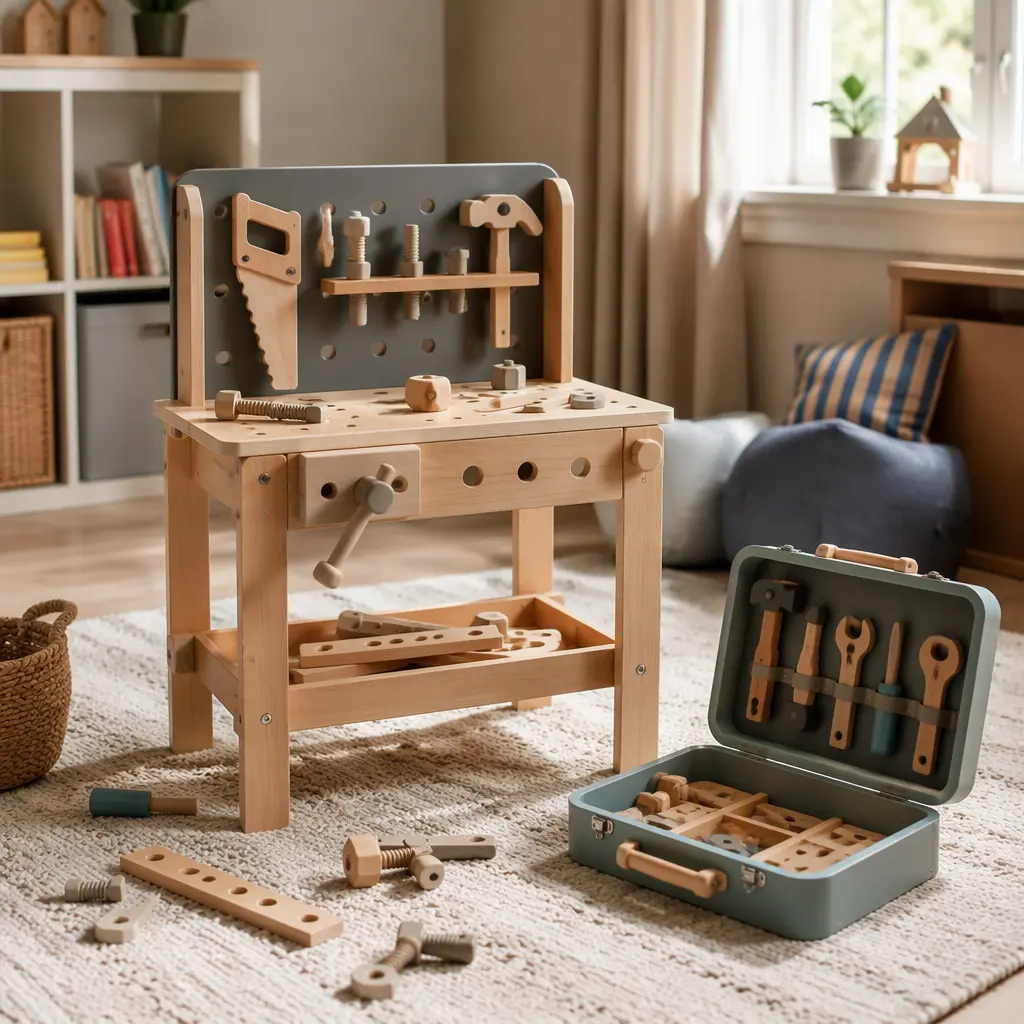
Toy tool sets and craft benches both appeal to children who enjoy building, fixing and hands-on pretend play, but they fit different homes and different play habits. For children aged 6–8, the choice often comes down to how much space is available, how much supervision a parent can realistically provide and whether the child prefers imaginative role-play or longer project-based activities. A compact tool set can encourage portable, flexible play with lower setup demands, while a larger craft bench can support more immersive building sessions and collaborative play. The best option depends less on novelty and more on how often the toy can realistically stay in use without becoming clutter, noise or frustration.
What to look for
Children in the 6–8 age range usually want toys that feel more realistic and capable than toddler-focused pretend tools. At the same time, parents often need something durable enough for regular use and manageable enough to store between play sessions. Before choosing between a tool set and a craft bench, it helps to think about where the toy will live, how independently the child plays and whether the activity needs frequent adult setup.
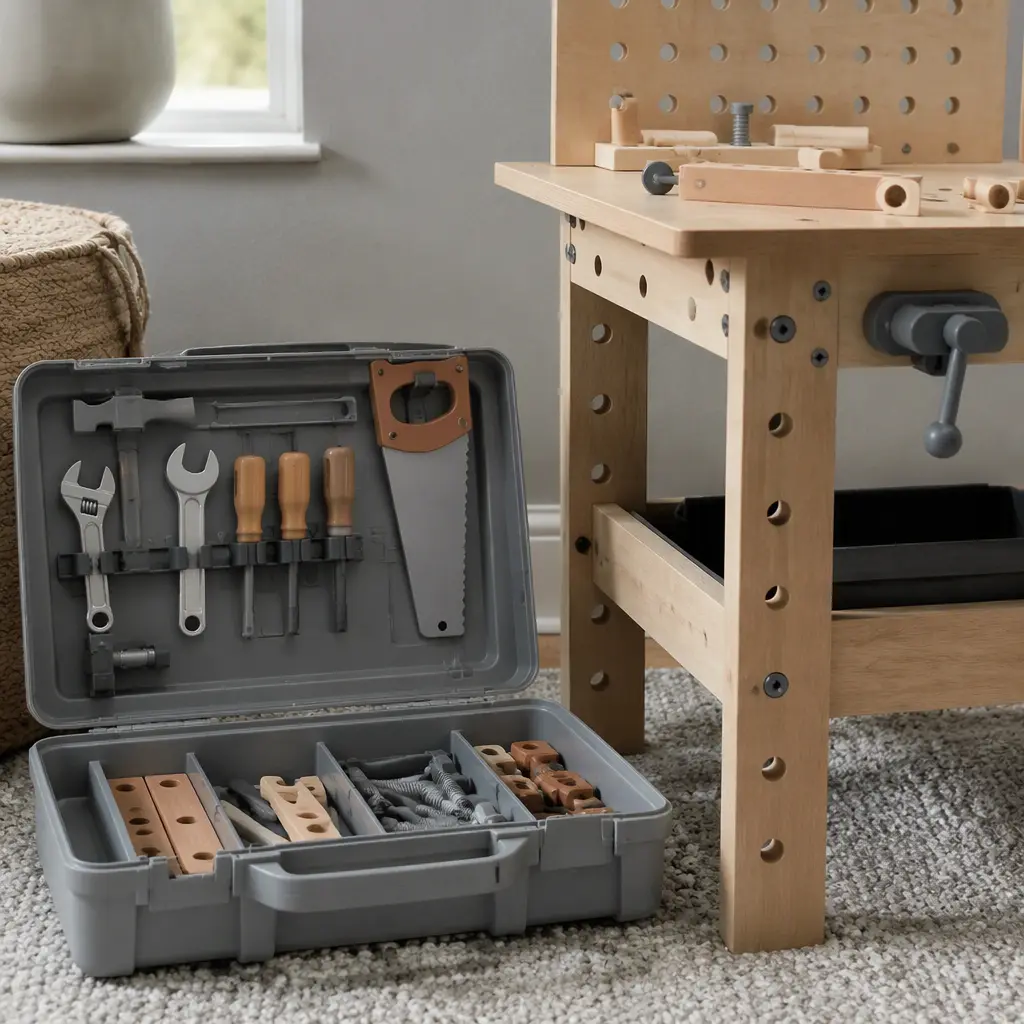
- Storage footprint matters more than box size. Some compact-looking benches require permanent floor space, while portable tool sets can fit into a closet or under a bed.
- Consider noise levels. Plastic hammers, clicking drills and repeated banging can become tiring in apartments or shared spaces.
- Look for replay value instead of sheer accessory count. Interchangeable pieces, open-ended building parts and multiple ways to assemble objects usually stay interesting longer.
- Check durability around hinges, storage clips and fastening pieces. These areas often wear out first during active play.
- Think about supervision needs. Pretend play tool sets are usually easier for independent use, while craft benches with small construction pieces may need occasional help.
- Wooden sets often feel sturdier and quieter, but plastic sets can be lighter and easier to wipe clean after messy play.
- Some benches encourage standing play and collaboration, which suits siblings or visiting friends but requires more floor clearance.
Age suitability
Most children aged 6–8 can handle more detailed assembly play than younger children, including simple fastening systems, pretend measuring tasks and multi-step builds. Portable toy tool sets often suit children who enjoy role-playing repair jobs around the house, acting out construction scenarios or carrying toys from room to room. Craft benches are usually better for children who like staying focused on one activity for longer periods and who enjoy repeatedly building and rebuilding structures. For children who lose interest quickly or become overwhelmed by too many loose pieces, a smaller curated tool kit may be easier to manage. Children who already enjoy model kits, LEGO-style construction or arts-and-crafts activities may get more long-term use from a bench-style setup with organized work surfaces and attached storage.
Options compared
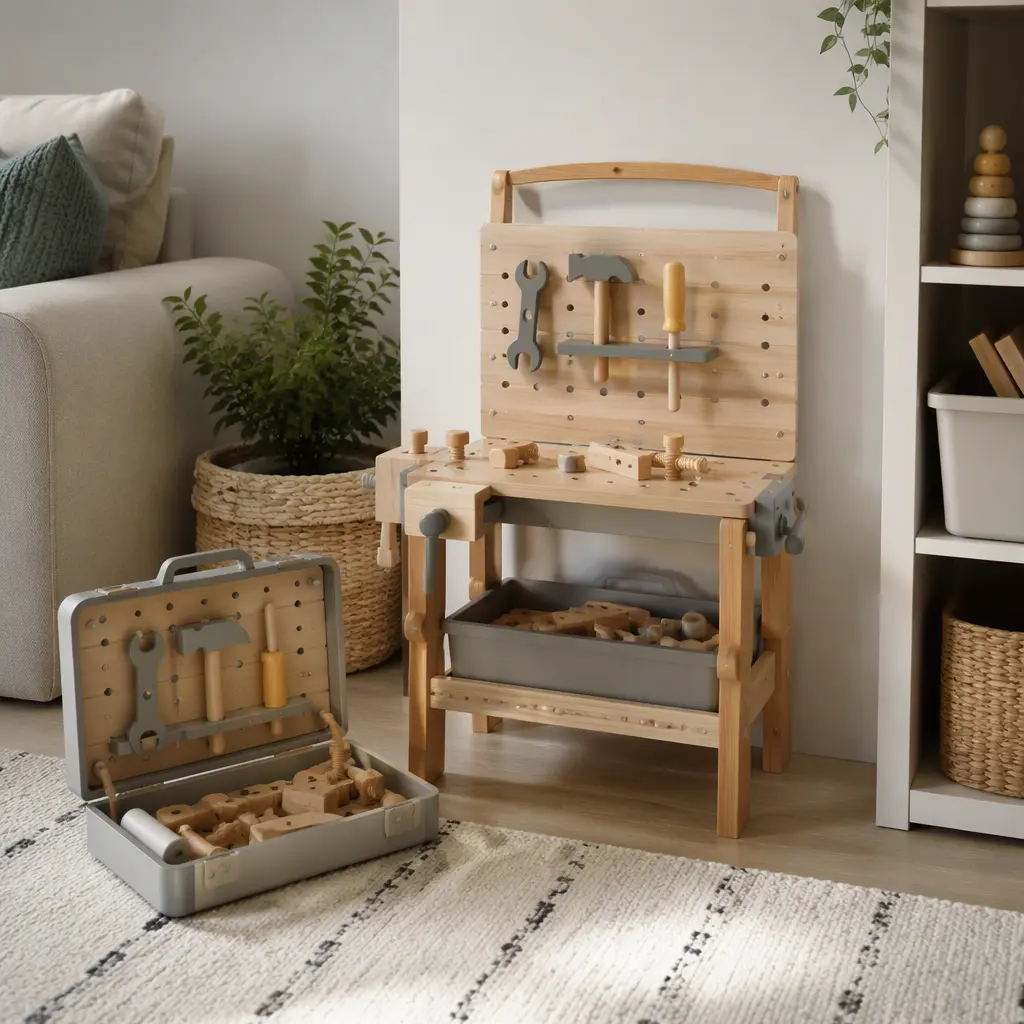
Portable toy tool sets are usually the easiest option for smaller homes or families who prefer toys that can be packed away quickly. They tend to support imaginative role-play more than structured building. A child can pretend to repair furniture, build imaginary inventions or imitate household tasks without needing a dedicated workspace. This flexibility often leads to spontaneous play sessions, especially for children who move frequently between rooms or like taking toys to grandparents' homes or playdates. Tool sets also tend to involve fewer large parts, which simplifies cleanup and storage.
Craft benches trade portability for immersion. A bench creates a defined play zone where children can organize tools, attach pieces and return to unfinished projects. This setup can encourage deeper concentration and longer independent sessions, particularly for children who enjoy process-oriented activities. However, benches work best when they can remain assembled. Constantly folding or moving a bench often reduces how frequently it gets used. Parents should also expect more visible clutter because benches typically include bins, screws, pretend wood pieces or accessory trays that spread beyond the immediate play area.
- Choose a portable tool set if storage space is limited, the child prefers imaginative role-play or toys need to travel between rooms.
- Choose a craft bench if there is permanent play space available and the child enjoys longer building sessions or collaborative projects.
- Wooden styles usually suit quieter households and may blend more easily into shared living areas.
- Plastic-heavy sets can be lighter and more colorful but sometimes create more noise during active play.
- Children who become frustrated by complicated assembly may prefer simpler repair-style role-play rather than structured bench activities.
- Families with multiple children may get more shared use from a bench because it creates a central activity area.
Frequently asked questions
Are craft benches too young for children aged 6–8?
Not necessarily. While some preschool-focused benches may feel limited for older children, many open-ended workbenches remain engaging because children create more complex pretend projects as they grow. The key is avoiding overly simplistic designs with very few build options.
Which option usually lasts longer?
Replay value depends more on flexibility than size. Tool sets with interchangeable attachments and benches with adaptable building pieces tend to stay useful longer than highly themed sets tied to one specific activity.
Do these toys create a lot of mess?
Craft benches generally create more visible clutter because they encourage ongoing projects and include more loose components. Portable tool kits are easier to reset quickly, especially if every piece stores inside one case or toolbox.
Are wooden tool toys better than plastic ones?
Wooden toys are often quieter and may feel sturdier, while plastic toys can be lighter and easier for children to carry independently. Neither material is automatically better for every family. The better choice depends on storage, durability expectations and household noise tolerance.
What if a child loses small pieces easily?
A simpler tool kit with fewer accessories is usually easier to maintain than a large bench filled with connectors and removable parts. Some families rotate only part of the accessory set at a time to reduce cleanup and prevent missing pieces.
For most families, the practical decision is less about which toy looks more impressive and more about how naturally it fits into daily routines. A toy that stores easily and gets used often usually provides better long-term value than a larger setup that feels difficult to manage. Children who enjoy active pretend play and mobility often do well with portable tool sets, while children who like sustained building projects may benefit more from a dedicated craft bench space.