Toy Vacuum vs Broom Sets for Toddlers Ages 1–2
Choosing between a toy vacuum and a toddler broom set? This guide compares noise, durability, storage, supervision and realistic pretend-play value for children ages 1–2.
Compare prices and availability
Check current prices and availability for this guide on eBay.
As an eBay Partner, we may be compensated if you make a purchase.
Many toddlers enjoy copying everyday routines long before they can fully join in. Pretend cleaning toys appeal to children around 1–2 years because they match what toddlers regularly see at home: sweeping floors, pushing a vacuum or tidying up after meals. For parents deciding between a toy vacuum and a broom set, the biggest differences usually come down to noise, durability, storage space and how realistically the toy fits into daily play. Some toddlers love buttons, sounds and movement, while others prefer simple open-ended tools they can carry around independently. The right choice often depends less on novelty and more on your child’s temperament, your available space and how much sensory stimulation your household can comfortably handle.
What to look for
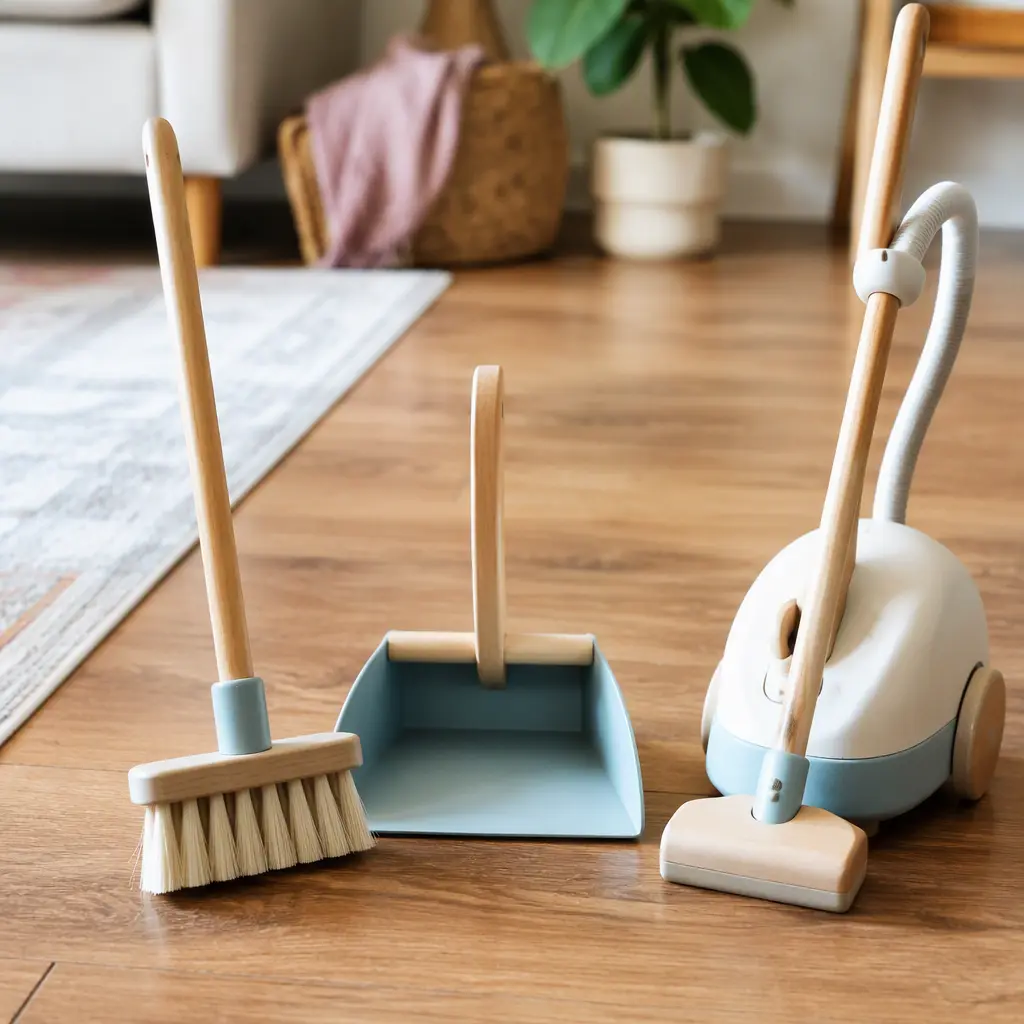
Cleaning toys for very young toddlers work best when they are lightweight, stable and easy to understand. Children in the 1–2 age range are still developing balance and coordination, so oversized or top-heavy toys can quickly become frustrating. Simpler designs also tend to stay interesting longer because toddlers can invent their own routines instead of relying on buttons or fixed sound effects. Parents may also want to consider how the toy fits into the household environment. A loud battery-powered vacuum can feel exciting for a child but exhausting in a small apartment or shared space.
- Choose handles sized for early walkers rather than taller preschoolers.
- Check whether pieces are sturdy enough to survive drops and rough pushing.
- Consider noise levels carefully if your child is sensitive to sound or the toy will be used indoors frequently.
- Look for rounded edges and secure attachments that cannot easily loosen.
- Think about storage: broom sets often hang neatly while bulky toy vacuums take more floor space.
- Simple screen-free toys usually encourage longer imaginative play and less overstimulation.
- Avoid sets with many tiny accessories for children who still mouth objects.
Age suitability
For children between 12 and 24 months, realistic movement matters more than detailed pretend features. Younger toddlers often enjoy pushing, carrying and imitating motions rather than acting out complex cleaning scenarios. A lightweight broom or mop can support gross motor development because it encourages walking, turning and coordination. Toy vacuums may appeal more to toddlers who are fascinated by household machines or who enjoy cause-and-effect play such as pressing buttons to activate sounds or airflow. However, some electronic versions are better suited closer to age 2 because they can be heavier and harder to maneuver. Parents of younger toddlers may find that basic wooden or plastic cleaning tools hold attention more effectively than feature-heavy electronic toys.
Options compared
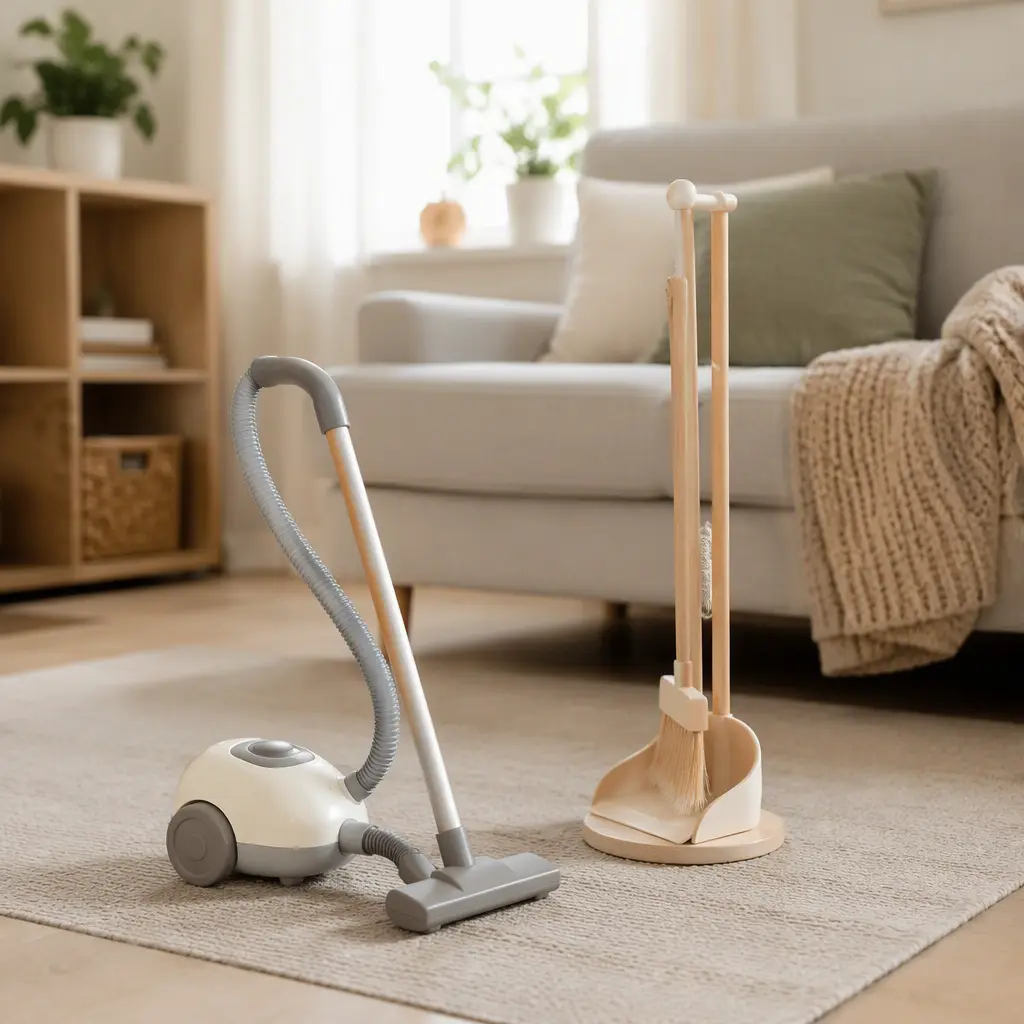
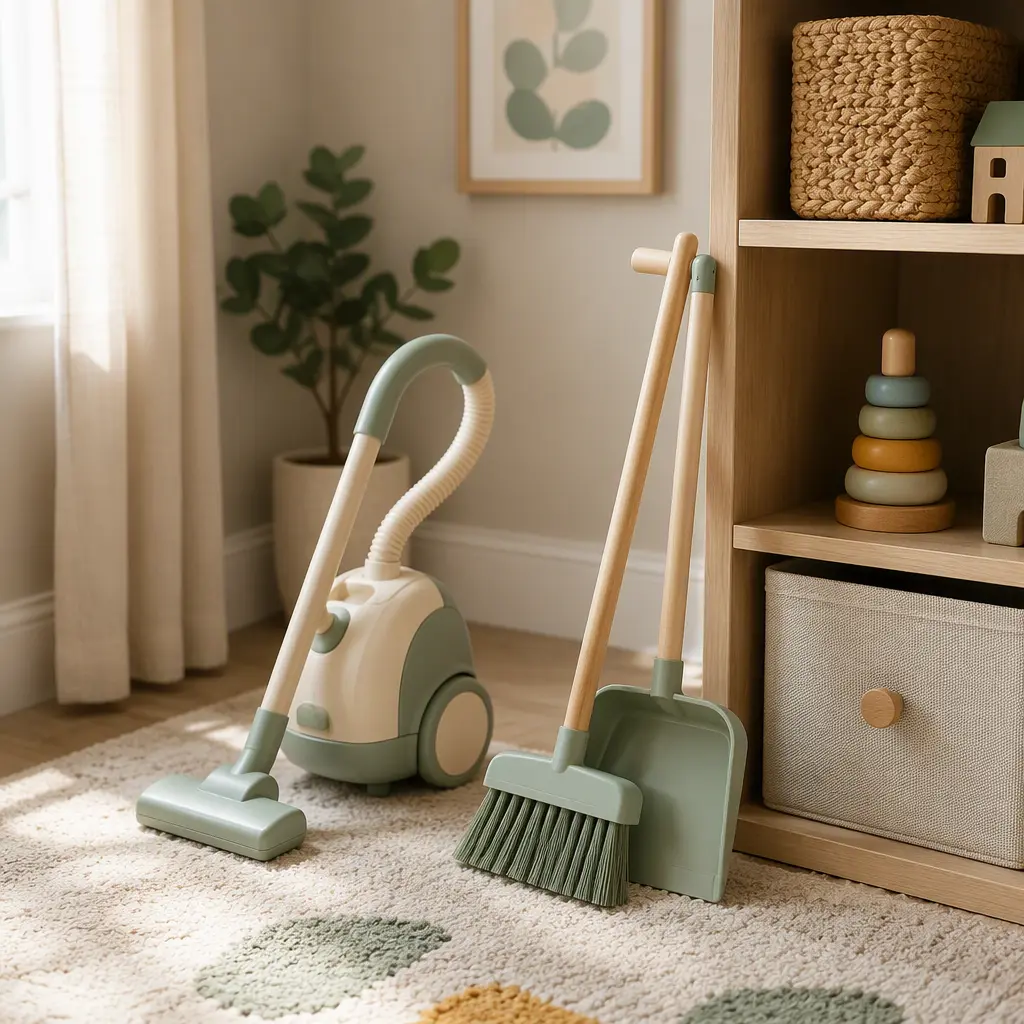
Toy vacuums are usually the more exciting option at first glance because they imitate a recognizable household machine. Some include spinning beads, popping balls or vacuum-like sound effects that create immediate sensory feedback. For toddlers who actively follow a parent around during real vacuuming, this realism can make play feel meaningful and engaging. The trade-off is that electronic features often increase both noise and maintenance. Battery compartments, moving wheels and plastic hinges can wear out faster than simpler toys, especially when used roughly by very young children. Larger toy vacuums can also become awkward in smaller homes because they do not store as neatly as compact cleaning sets.
Broom and cleaning sets tend to support broader pretend play over time. A toddler can sweep, wipe, carry the dustpan, organize the tools or imitate multiple household routines using the same set. These toys are usually quieter, lighter and easier for young toddlers to manipulate independently. Wooden versions often appeal to parents looking for durable screen-free toys with less sensory stimulation, though some plastic sets are lighter for early walkers. The main downside is that broom sets may seem less immediately exciting to children who strongly prefer lights, movement or mechanical sounds. They can also shed small dustpan pieces or detachable cloth accessories if poorly made. For families prioritizing calm indoor play, simple storage and long-term pretend use, broom sets are often the easier everyday choice. For toddlers fascinated by machines and action-oriented imitation, a toy vacuum may deliver more engagement despite the added noise and bulk.
Frequently asked questions
Are toy vacuums too loud for toddlers?
Some are surprisingly noisy, especially battery-powered versions designed to imitate real vacuums. Parents in apartments or noise-sensitive households may prefer non-electronic push vacuums or traditional broom sets instead. Checking whether sounds can be turned off is useful when possible.
Which option lasts longer as a toy?
Simple broom sets often have a longer play life because they support many kinds of pretend household play without relying on electronics. Toy vacuums can remain popular too, but electronic features may stop working over time if the toy is dropped frequently.
Is a wooden cleaning set better than plastic?
Wooden sets are often sturdier and may feel more stable during play, but they can also weigh more. Lightweight plastic tools are sometimes easier for younger toddlers to carry. The better choice depends on your child’s coordination and how rough their play tends to be.
Do toddlers actually play with pretend cleaning toys?
Many do because toddlers naturally imitate familiar routines. Cleaning toys often work best when children can participate alongside real household tasks, such as sweeping near a parent or pretending to tidy the same room.
What should parents avoid when choosing a set?
Avoid toys with fragile handles, sharp edges or many small detachable accessories for this age group. Very tall tools designed for older preschoolers can also frustrate younger toddlers because they are difficult to control safely.
Both toy vacuums and toddler broom sets can support imaginative, screen-free play that feels meaningful to young children. The better fit depends on your child’s interests and your household tolerance for noise, clutter and electronic features. Families wanting simple, durable and quieter play often lean toward broom sets, while toddlers fascinated by machines may enjoy the movement and realism of a toy vacuum. Choosing a sturdy, age-appropriate toy with manageable size and minimal frustration factors usually matters more than choosing the most feature-packed option.