Wooden Ride-Ons vs Plastic Push Cars for Toddlers
Compare classic wooden ride-ons and plastic push cars for toddlers aged 1–2 years, with practical guidance on durability, steering, indoor noise, storage, supervision, and play style.
Compare prices and availability
Check current prices and availability for this guide on eBay.
As an eBay Partner, we may be compensated if you make a purchase.
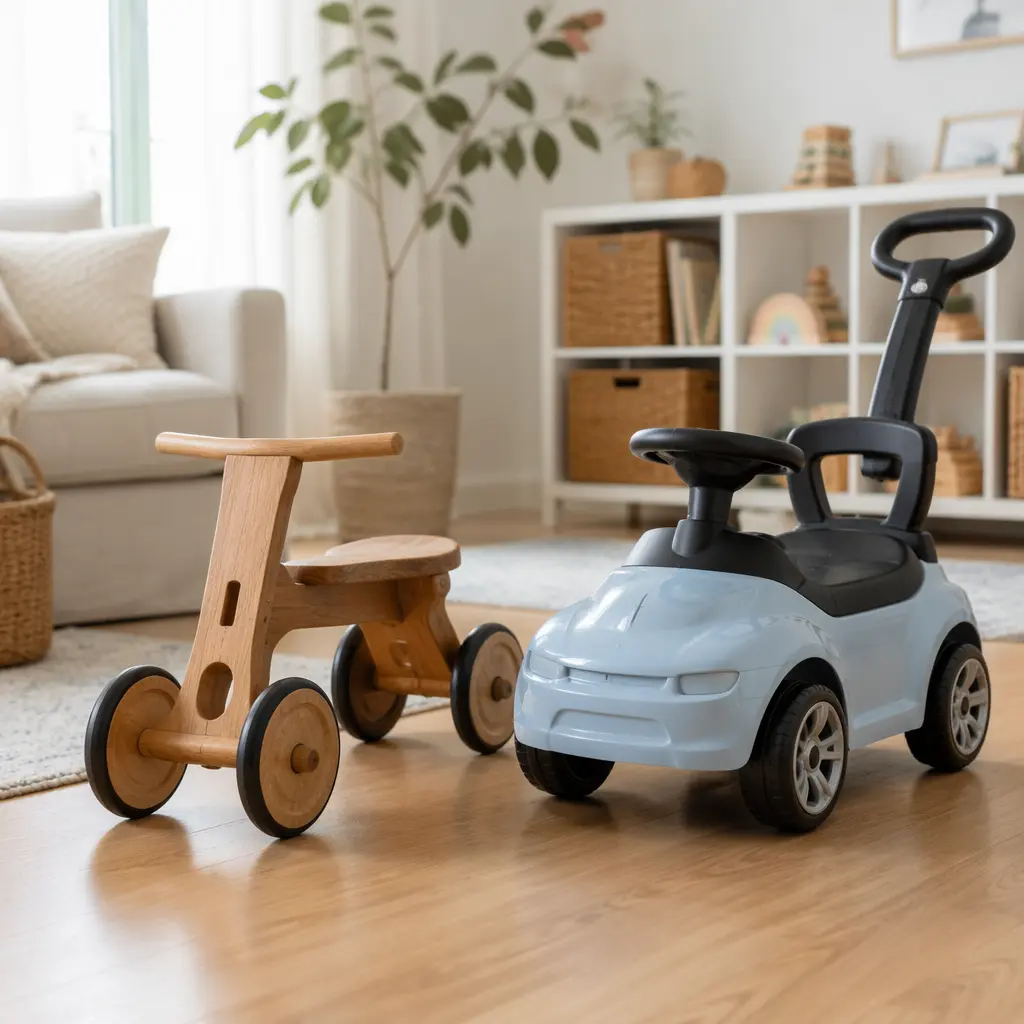
Ride-on toys are often one of the first ways toddlers practice balance, coordination, and independent movement indoors or in the garden. For children aged 1–2 years, two common choices are classic wooden ride-ons and lightweight plastic push cars. Both encourage active, screen-free play, but they suit different homes, play styles, and parent priorities. The biggest differences usually come down to steering control, durability, indoor noise, floor protection, storage space, and how easily the toy handles rough toddler use.
What to look for
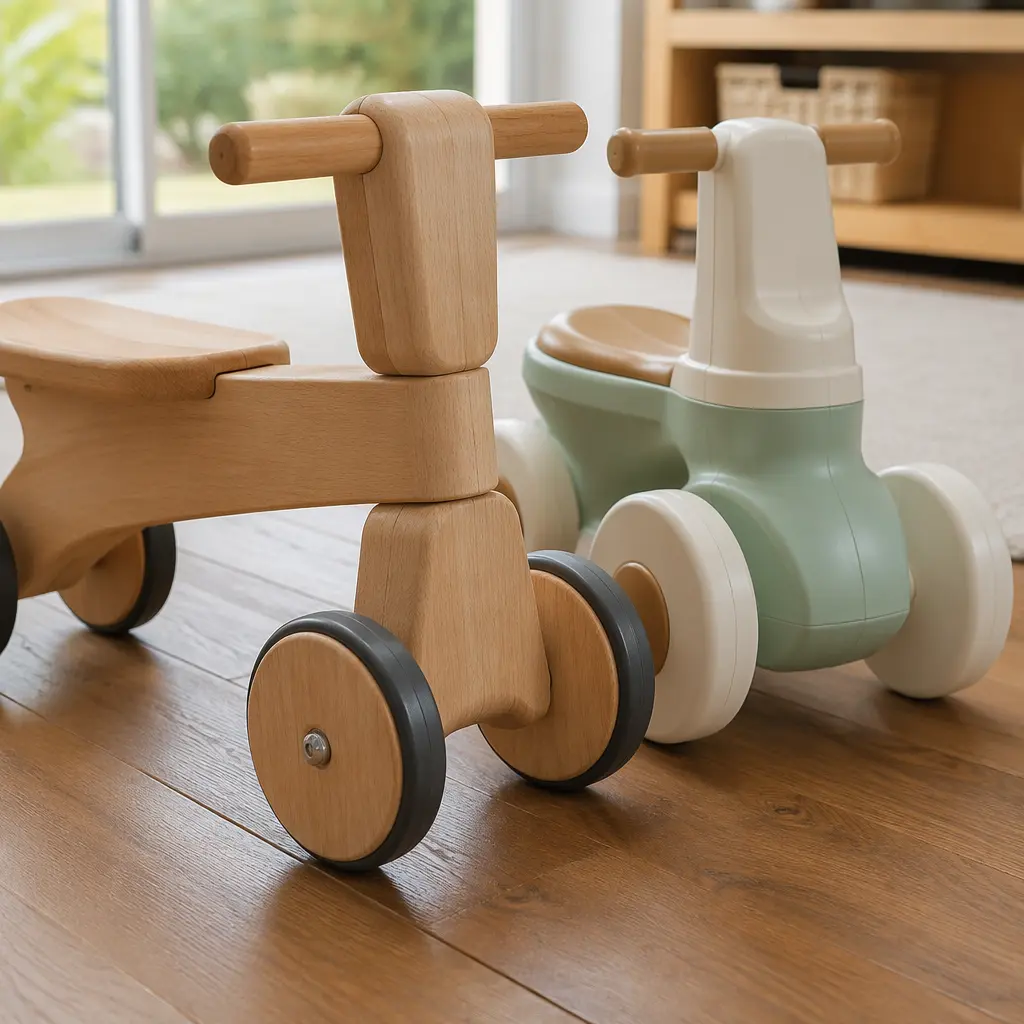
At this age, stability matters more than speed or extra features. Toddlers are still learning how to push off, steer around furniture, and stop safely. A ride-on that feels secure and predictable is usually more useful than one packed with sounds, lights, or complex moving parts. Parents should also think about where the toy will mostly be used. A smooth indoor floor, small apartment, shared walls, or outdoor paving can all affect which style works best.
- Wide wheel spacing helps reduce tipping during quick turns.
- Low seat height allows toddlers to place both feet flat on the floor.
- Rounded edges and smooth finishes are easier on furniture and walls.
- Rubberized or softer wheels tend to reduce indoor noise.
- Lightweight toys are easier for toddlers to reposition independently.
- Simple steering systems are often easier for younger toddlers to control.
- Check whether the toy fits your available storage space when not in use.
Age suitability
Most ride-ons aimed at 1–2 year olds are designed for early walkers who can already stand steadily and move confidently along furniture. Younger toddlers near the start of this age band may do better with slower, stable wooden ride-ons that encourage careful movement. Older toddlers approaching age two often enjoy faster push cars with tighter turning ability and more energetic play. Weight and height matter as much as age recommendations, especially for children who are tall for their age or still cautious with balance. Indoor use is usually easier to supervise at this stage, while outdoor use may require smoother surfaces and closer attention to slopes or uneven ground.
Options compared
Classic wooden ride-ons are usually chosen for their durability, simple appearance, and quieter feel indoors. Many have sturdy wooden frames with fewer detachable parts, which can make them appealing for families who want long-lasting toys that stay relatively tidy. Their weight can help prevent sliding on smooth floors, but it also means some toddlers may find them harder to push or turn sharply. Wooden wheels can create more noise on hard flooring unless they include rubber trims. Some parents also prefer the furniture-like appearance of wooden toys in shared living spaces.
Plastic push cars are often lighter, easier to steer, and more forgiving for energetic toddlers who enjoy quick movement. Their lighter construction can make them simpler for younger children to maneuver around corners or carry short distances. Many also include molded seats, storage compartments, or interactive features, though sound buttons and electronic add-ons may increase noise and distraction. Plastic bodies generally handle damp outdoor conditions more easily than unfinished wood, but lighter toys can slide more on smooth indoor flooring and may feel less stable during fast play.
- Wooden ride-ons often suit quieter indoor play and smaller shared spaces.
- Plastic push cars may work better for active toddlers who enjoy faster movement.
- Heavier wooden toys can feel steadier but harder to transport.
- Lightweight plastic toys are easier to carry but may bump walls more often.
- Minimal wooden designs usually create less visual clutter in living areas.
- Plastic ride-ons can offer tighter steering for obstacle-style play.
- Families with downstairs neighbors may prefer softer wheels regardless of material.
Frequently asked questions
Are wooden ride-ons safer than plastic ones?
Material alone does not determine safety. Stability, wheel design, seat height, and supervision matter more. A well-designed wooden ride-on can feel very stable, while a lightweight plastic model may be easier for beginners to control. Parents should focus on age suitability, smooth construction, and how the toy behaves on their home surfaces.
Which type is quieter indoors?
Noise levels depend heavily on wheel material and flooring. Hard plastic or wooden wheels can become loud on tile or hardwood floors. Models with rubberized wheel trims generally create less rattling and vibration. Heavier toys may also produce deeper impact sounds when bumped into furniture.
Do toddlers outgrow ride-ons quickly?
Many toddlers use basic ride-ons from around 12 months through age two and sometimes beyond, depending on the toy size and the child’s interest. Simpler ride-ons without baby-specific supports can sometimes stay useful longer because they allow more independent movement as coordination improves.
Are plastic push cars easier to clean?
Plastic surfaces are often simpler to wipe down after outdoor use or snack-time messes. Wooden ride-ons may require more care if they have natural finishes or exposed wood grain. For families using the toy mostly outdoors, weather resistance and drying time may become more important.
What works best for small apartments?
Compact ride-ons with shorter wheelbases are usually easier to store and maneuver indoors. Wooden ride-ons are sometimes narrower and visually simpler, while lightweight plastic toys may be easier to lift onto shelving or into closets. Quiet wheels and controlled steering are especially useful in tighter living spaces.
Choosing between a wooden ride-on and a plastic push car comes down to how your toddler plays and how your home functions day to day. Wooden options often appeal to families prioritizing durability, quieter aesthetics, and steady movement, while plastic push cars usually favor lighter handling and energetic play. Looking closely at wheel noise, steering style, indoor space, and supervision needs will usually lead to a more satisfying choice than focusing on appearance alone.