Screen-Free STEM Toys for Teens Who Like Gadgets
Explore screen-free STEM toys for teens aged 13+ who enjoy gadgets, engineering and problem-solving without relying on apps, phones or constant screen time.
Compare prices and availability
Check current prices and availability for this guide on eBay.
As an eBay Partner, we may be compensated if you make a purchase.
Finding STEM toys for teens can be harder than shopping for younger children. Many products aimed at older kids depend heavily on apps, tablets or online subscriptions, which may not suit families trying to reduce screen time. A good screen-free STEM toy still taps into the appeal of gadgets and technology, but shifts the focus toward hands-on building, experimentation and problem-solving. For teenagers aged 13 and up, the most useful choices usually feel closer to real tools, engineering projects or hobby equipment than traditional toys.
What to look for
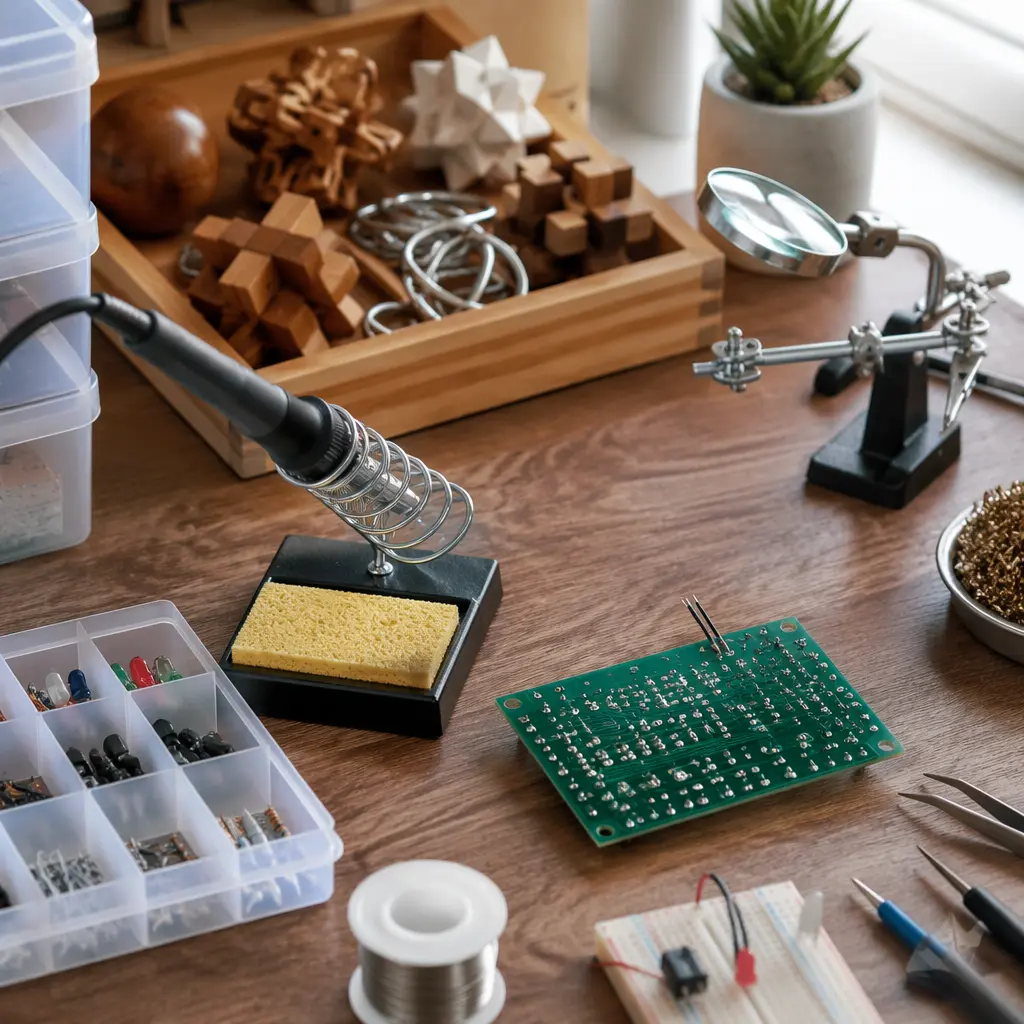
Teen-focused STEM toys work best when they offer genuine challenge without becoming frustrating. Many older kids quickly lose interest in kits that feel overly simplified or repetitive. Look for activities that build practical skills such as electronics assembly, mechanical reasoning, coding logic without screens, physics experimentation or engineering design. Durability matters too, especially if the project will be rebuilt or modified multiple times. Storage can become an issue with larger construction systems, while chemistry and electronics sets may require careful organisation to avoid losing small parts.
- Choose projects with a clear difficulty level suited to ages 13+ rather than broad '8-14' age ranges.
- Look for open-ended building systems that allow experimentation beyond a single finished model.
- Consider noise levels if the toy includes motors, alarms or mechanical launch features.
- Check whether adult supervision is needed for soldering, cutting tools or chemical experiments.
- Think about storage space for larger engineering kits or marble-run style systems.
- Prioritise offline functionality if avoiding app-connected features is important.
Age suitability
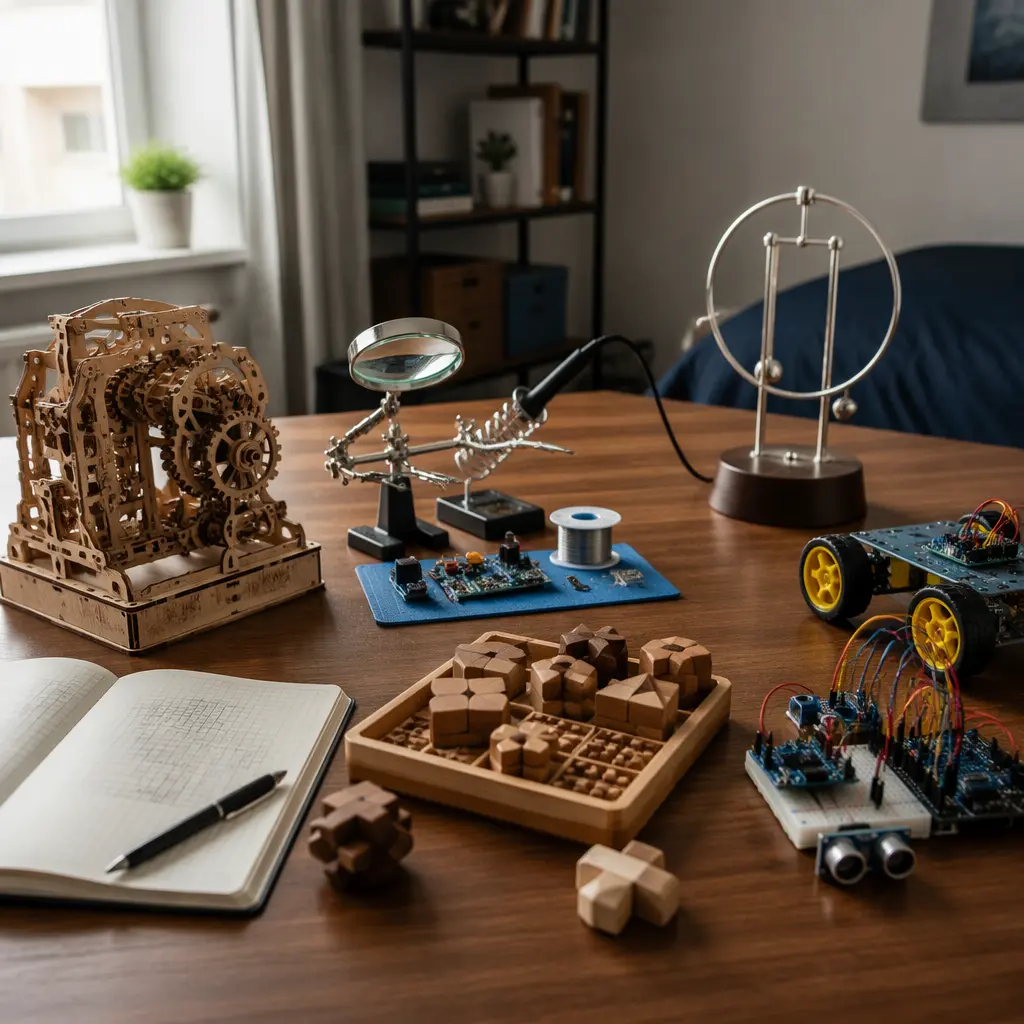
The 13+ age group covers a wide range of abilities and interests. Some teens enjoy highly structured projects with step-by-step instructions, while others prefer experimenting independently. Mechanical model kits and logic puzzles often suit teens who like patient, detail-focused activities. Electronics kits, radio-building sets and soldering projects appeal more to teens interested in how devices work internally. Physics gadgets such as pendulum systems, desktop catapults or kinetic sculptures can work well for teens who enjoy visual experimentation but may not want a lengthy build process. Parents should also consider frustration tolerance: advanced kits can involve trial and error, delicate assembly and troubleshooting.
Options compared
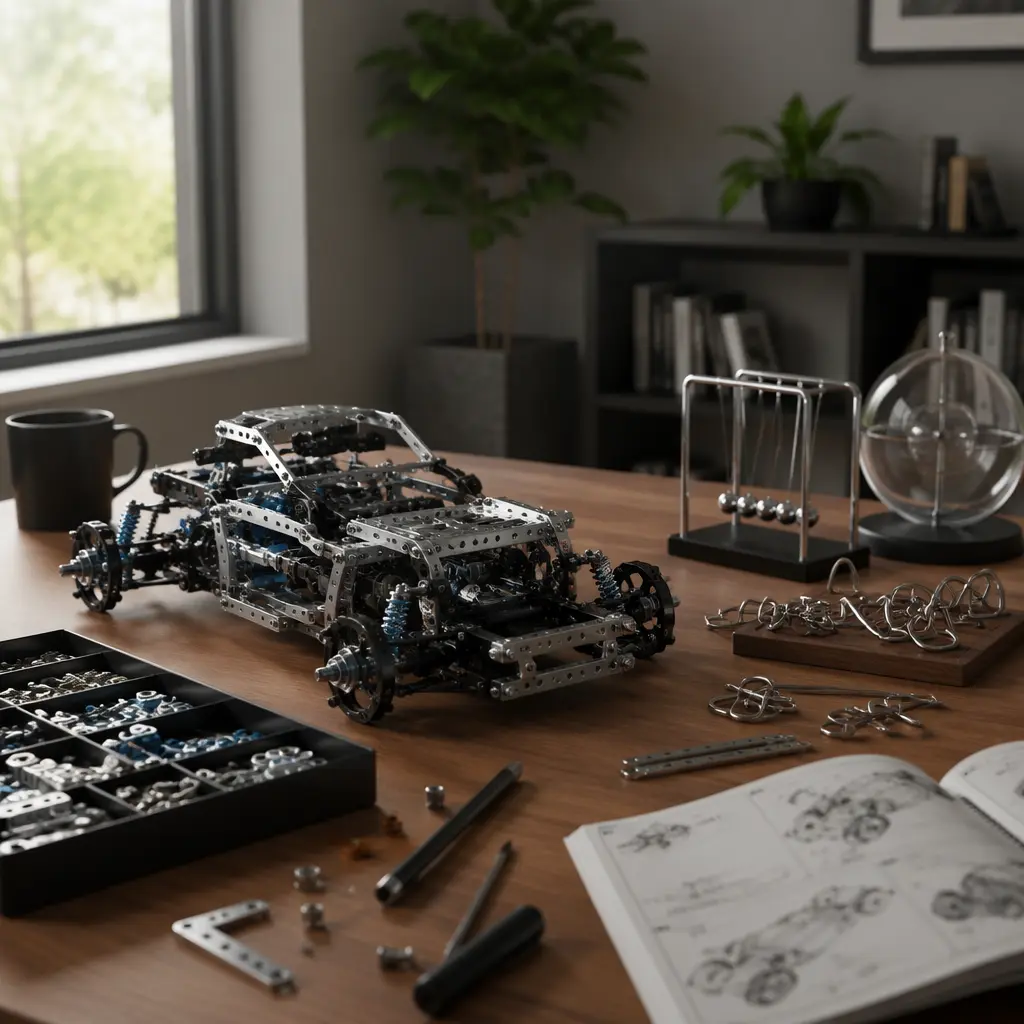
Mechanical engineering kits are often the safest starting point for gadget-focused teens who enjoy building things physically. These sets typically involve gears, motors, linkages or precision assembly and can encourage patience and spatial reasoning. They tend to be quieter and lower mess than chemistry kits, although larger builds may take up table space for days at a time. Teens who enjoy model making, vehicles or architecture may get the most value from this category.
Electronics kits and soldering projects usually offer the closest connection to real-world technology. They can teach circuit design, troubleshooting and component identification in a hands-on way without requiring a phone or computer. However, they are not ideal for every household. Small parts are easy to lose, beginner soldering creates heat and fumes, and some kits can become frustrating if instructions are unclear. These projects tend to suit focused teens who enjoy careful assembly rather than quick results.
- Logic puzzles and mechanical brainteasers: compact, reusable and low mess; best for analytical thinkers and travel-friendly play.
- Physics experiment kits: good for visual learners who enjoy cause-and-effect demonstrations; some require more setup and supervision.
- Construction systems with gears or motors: encourage creativity and repeated rebuilding; larger sets may need significant storage space.
- Ham radio or crystal radio projects: suited to older teens interested in communication technology and electronics history.
- Chemistry kits: strong educational value but higher supervision needs and greater cleanup demands than most other STEM categories.
- Desktop robotics kits without app control: appealing for gadget-focused teens who want mechanical interaction without relying on screens.
Frequently asked questions
Are screen-free STEM toys still engaging for teens?
They can be, especially when the activity feels authentic rather than simplified. Older kids often respond well to projects connected to real engineering, electronics or design skills. The key is choosing something challenging enough to hold attention without becoming overly difficult.
Which STEM toys are best for independent play?
Mechanical model kits, logic puzzles and many engineering construction systems work well independently once the teen understands the instructions. Chemistry and soldering projects usually benefit from at least occasional adult oversight, particularly for beginners.
Do STEM kits for teens require prior knowledge?
Not always. Many beginner-friendly electronics and engineering kits introduce concepts gradually. However, some advanced products assume familiarity with tools, wiring or technical terminology. Reading the recommended age and difficulty guidance carefully can help avoid frustration.
What if a teen loses interest quickly?
Open-ended systems usually provide better long-term value than single-build novelty kits. Construction sets, reusable circuit systems and mechanical projects that can be modified or rebuilt tend to stay interesting longer than one-time experiments.
Are these toys suitable for small bedrooms or shared spaces?
Some are much easier to manage than others. Logic puzzles, compact electronics kits and tabletop mechanical models store relatively neatly. Large engineering systems, marble runs and chemistry sets may need dedicated shelf or desk space between sessions.
The best screen-free STEM toys for teens balance genuine challenge with practical day-to-day use at home. A kit that matches a teenager's interests, patience level and available space is more likely to stay in regular use than a complicated set chosen purely for impressive features. Whether the goal is encouraging engineering skills, supporting independent problem-solving or simply reducing recreational screen time, hands-on gadget-inspired projects can offer meaningful long-term value.