Outdoor Toys for Toddlers That Don’t Need Batteries
A parent-friendly guide to classic outdoor toys for ages 1–2 that encourage movement, balance, and sensory play—no batteries required. Learn what to look for, age fit, and safety tips.
Compare prices and availability
Check current prices and availability for this guide on eBay.
As an eBay Partner, we may be compensated if you make a purchase.
For toddlers ages 1–2, outdoor play is about movement, discovery, and building confidence. The good news is that the most effective toys at this age don’t need batteries or screens. Simple, classic toys encourage children to push, pull, climb, scoop, and explore at their own pace while caregivers stay close by. These options are often quieter, more durable, and easier to understand for young learners.
What to look for
Toddlers are still developing balance, coordination, and strength. Outdoor toys should support these skills without overwhelming them. Look for designs that are simple to use, sized for small bodies, and built to handle bumps and falls. Because this age group explores with their hands and mouths, materials and construction matter just as much as fun.
- Stable bases and wide wheels to reduce tipping
- Smooth edges and rounded corners
- Lightweight materials that toddlers can move themselves
- Weather-resistant finishes for outdoor use
- Easy-to-clean surfaces like sealed wood or durable plastic
Age suitability
For children 1–2 years old, toys should match early motor milestones. Many toddlers are learning to walk confidently, squat, climb low steps, and push objects forward. Outdoor toys that stay close to the ground and allow supported movement are usually the best fit. Avoid items meant for older preschoolers, which may be too tall, fast, or complex for this stage.
Standout categories or types
Battery-free outdoor toys for toddlers often fall into a few reliable categories. These toys focus on physical effort and open-ended play, allowing children to repeat actions and build skills through practice.
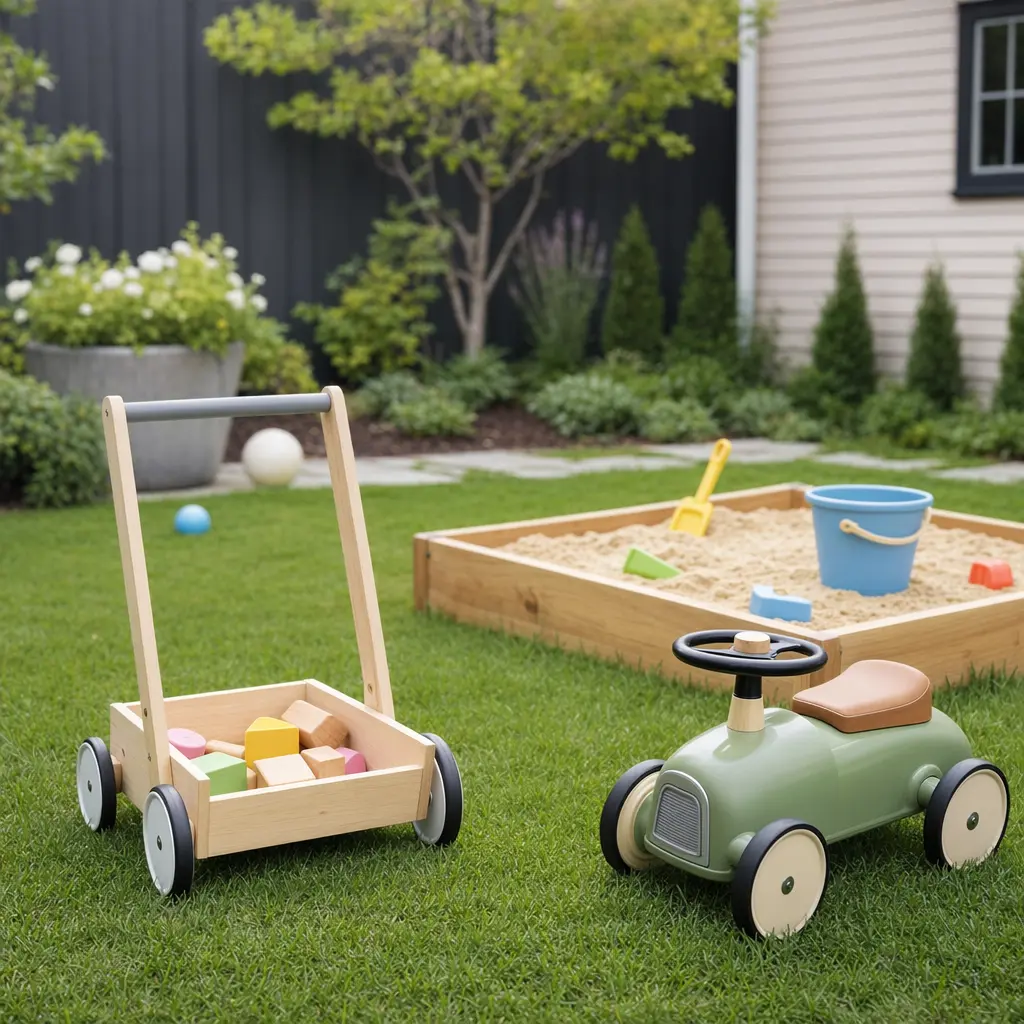
- Push walkers and wagons: Help strengthen legs and improve balance while giving toddlers a sense of independence.
- Ride-on toys: Low-to-the-ground designs let toddlers scoot with their feet, supporting coordination without speed.
- Climbing and sliding sets: Small slides or foam-covered climbers provide safe ways to practice climbing and controlled movement.
- Balls and rolling toys: Large, lightweight balls encourage chasing, kicking, and simple games.
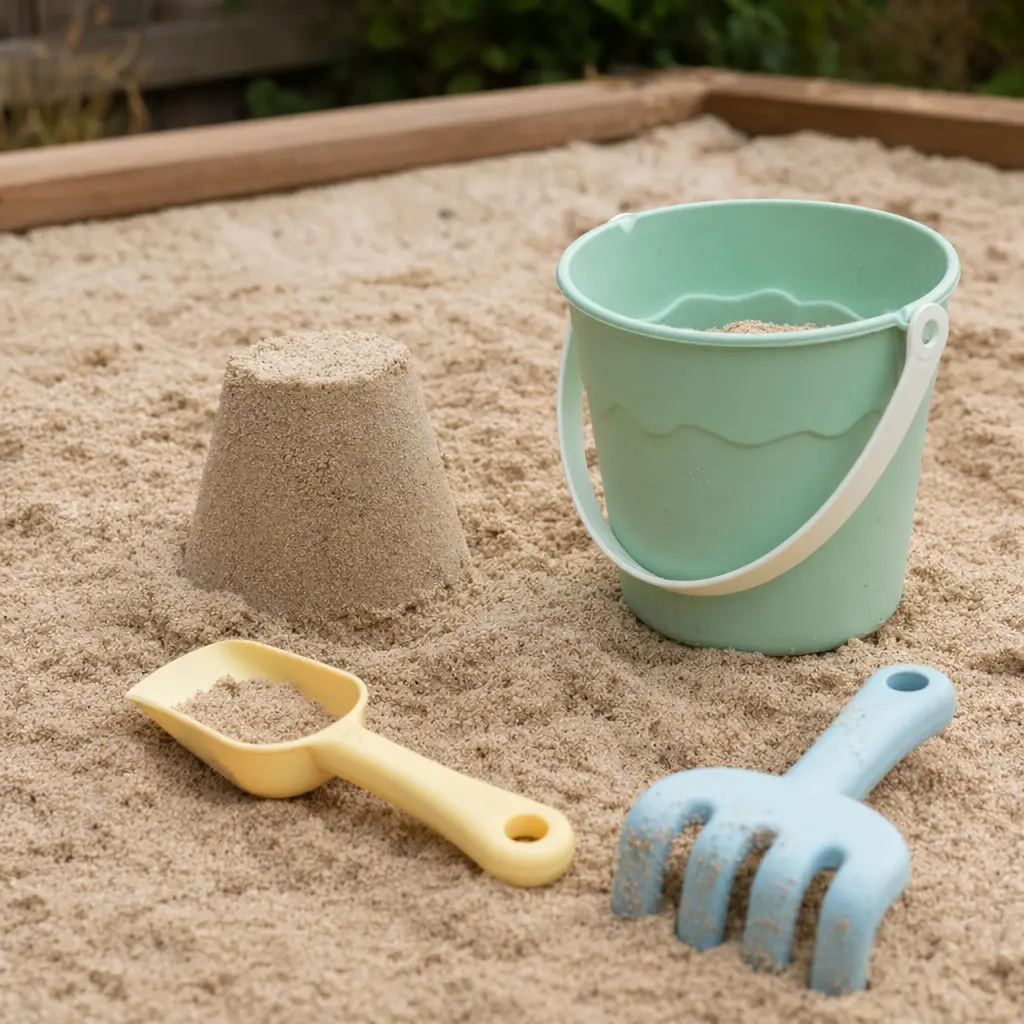
- Sand and water play tools: Buckets, scoops, and pouring cups support sensory exploration and hand-eye coordination.
Frequently asked questions
Are battery-free toys better for toddlers?
They can be. Toys without batteries rely on a child’s own movement, which supports physical development and problem-solving. They also tend to be simpler and less distracting for very young children.
Can these toys be used indoors too?
Some can, especially push toys or soft climbing sets, but many are designed for outdoor surfaces. Check wheel types and sizes, and make sure there is enough open space to move safely indoors.
What materials are safest for outdoor toddler toys?
Common safe options include sealed wood, thick molded plastic, and coated metal. Look for non-toxic finishes and materials labeled as suitable for young children.
How long will a 1–2 year old use these toys?
Many classic outdoor toys can be used for several years. While skills change quickly at this age, simple designs often remain useful as toddlers gain confidence and coordination.
Outdoor toys that don’t rely on batteries offer toddlers a chance to move, explore, and learn in straightforward ways. By choosing sturdy, age-appropriate options and supervising play, parents can create outdoor experiences that support healthy development and joyful activity—one push, scoop, or step at a time.